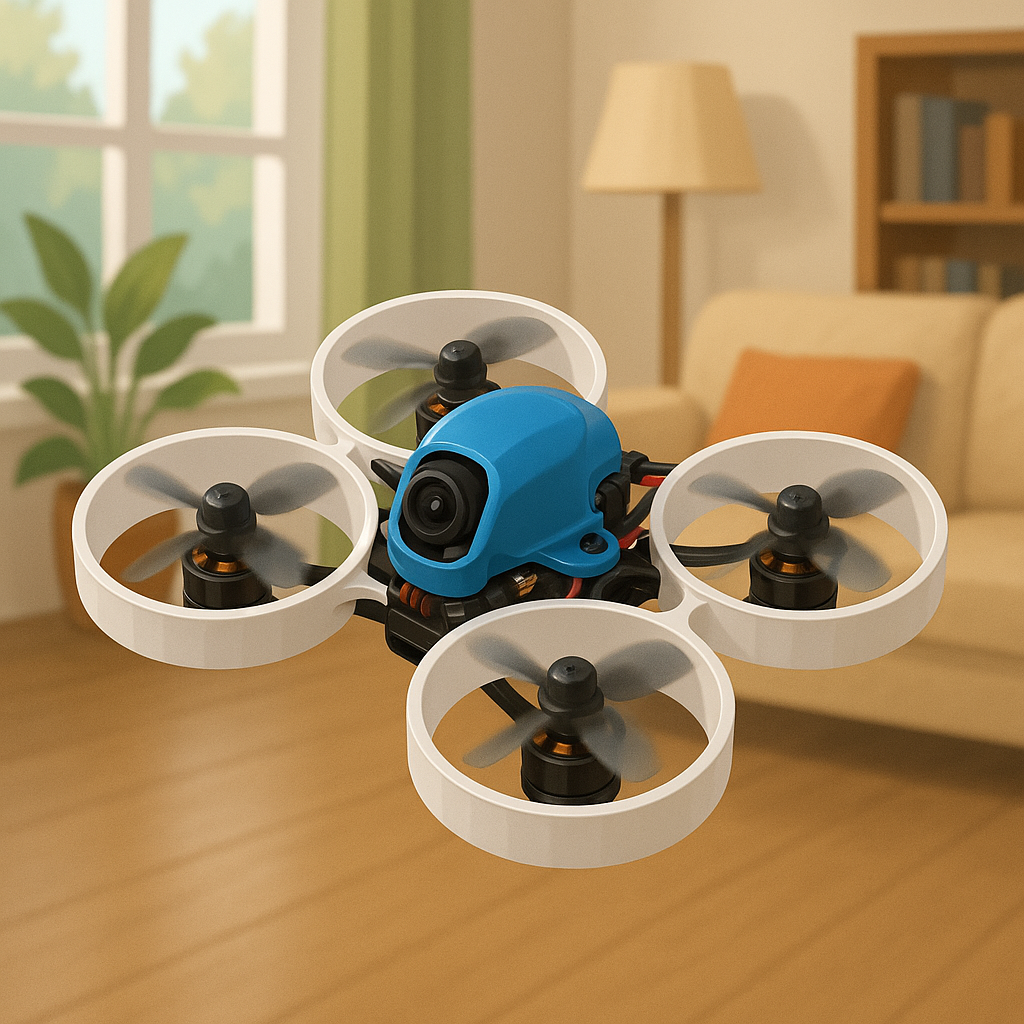
Micro Whoops for Hobbyists: Indoor Flying, Brushless Tips, Duct Efficiency and Betaflight Tricks
Micro whoops are a brilliant way to enjoy fast, precise flying in compact indoor spaces while remaining safe around people and furniture, and this guide collects practical tips for getting the most from brushless whoops, ducts and Betaflight setups.
When flying indoors, set your rates and expo conservatively to keep control smooth and predictable, and practise throttle management at low heights so you can learn how the craft responds in tight quarters. Use prop guards or full ducts to protect walls and soft furnishings, and make sure your flight area is clear of loose cords and breakables before each session. For training flights, switch between Angle mode for learning orientation and Acro for skill development, and always fly at reduced throttle limits until you are confident with the model's behaviour.
Brushless whoops bring more power and efficiency than brushed models and also last significantly longer with lower maintenance, but they demand attention to motor and ESC choices to remain safe and tidy indoors. Select low-to-mid KV motors that match your prop size so you get smooth midrange thrust rather than spiky punch, and pair them with DShot-capable ESCs for reliable digital signal and telemetry. Keep total weight down by opting for minimal but robust canopies and choose a battery that balances flight time with manageable recovery weight, typically a 1S or lightweight 2S pack depending on motor and prop configuration.
Duct efficiency is key to the feel and safety of micro whoops, because the shrouds both change airflow and protect the props, and small changes can have large effects on performance. Aim for a minimal gap between the prop tips and the duct, but allow a few tenths of a millimetre to prevent rubbing in flight movements and under load, and smooth any rough edges or manufacturing seams inside the duct to reduce turbulent losses. Three-blade props often work better for ducted setups because they present more consistent load to the motor and reduce vibration, and careful balancing of props plus rigid duct mounting will give you crisper response and less motor heating.
Betaflight tuning will transform a good micro whoop into an exceptional one, and a few specific settings deserve attention for ducted brushless builds. Upgrade to a recent stable version of Betaflight and enable RPM filtering if your ESC supports telemetry, since this filter is extremely effective at taming motor-driven vibrations and allows you to run higher D gains safely. Use conservative D and filter settings when starting out and increase P slowly while watching blackbox logs for oscillations, and configure safe throttle and battery voltage limits to avoid overdischarge during intense indoor bursts. Set your RC rates low for indoor circuits, enable anti-gravity and set up a smooth throttle curve for hover precision, and use blackbox logging to review gyro traces if the craft feels twitchy or resonates in certain throttle ranges.
Before each flight do a quick checklist: inspect props and ducts for cracks, test motor spin and freeplay, verify receiver signal and failsafe, and confirm battery balance and connector security to prevent midair surprises. Keep spare props and a spare canopy in your bag so you can repair quickly after a bump, and log a few flights after changes so you can correlate configuration tweaks with handling differences. For build notes, parts lists and example PID files I often share more detailed walkthroughs on my site WatDaFeck which can help speed up your setup process.
Comments
Post a Comment