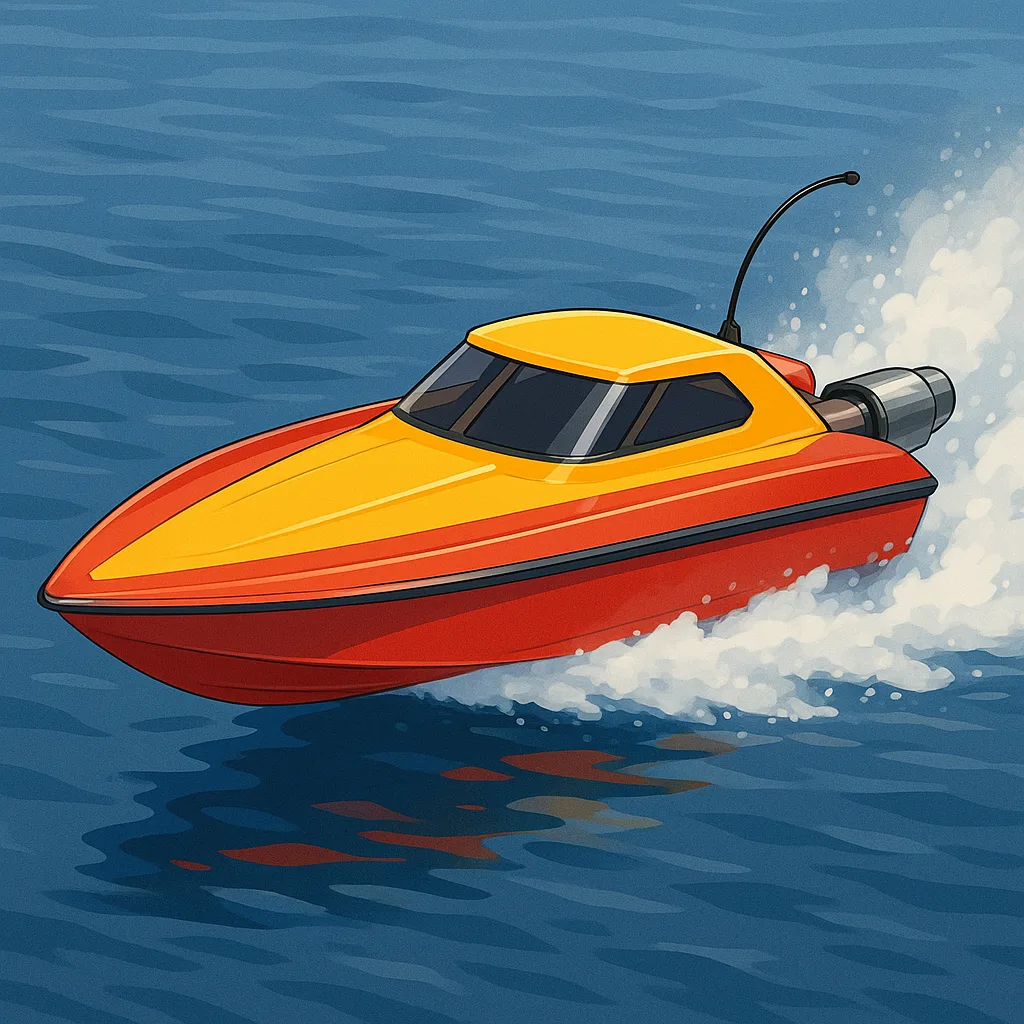
Project Ideas Roundup: RC Jet Boats for Hobbyists
RC jet boats are a rewarding niche for model makers who enjoy speed, water dynamics and compact engineering, and this roundup brings together a set of project ideas aimed at tinkering and learning rather than competition alone.
Impeller design is the heart of a jet boat project and offers a deeply practical area for experimentation, with projects ranging from simple pitch and diameter swaps to custom-shaped blades created with CAD and CNC or 3D printing for test fitting, and each change affects thrust, cavitation tendency and efficiency in different water depths.
For hobby projects focused on impellers, try three small experiments: modify blade pitch while keeping diameter constant to see changes in top speed versus acceleration, test a closed impeller against a semi-open design to evaluate cavitation resistance in shallow water, and print interchangeable impeller hubs to trial unusual blade counts and skew angles without committing to expensive machining.
- Swapable impeller hub project for rapid testing and comparison.
- Shallow-water intake and nozzle geometry trials for minimal suction loss.
- 3D printed hull inserts to test chines and spray rails for different launch behaviours.
- Active cooling ducting prototypes using small fans and water channels.
Shallow water running is another essential topic for many hobbyists because ponds and canals often have weeds, reeds and uneven beds, so try projects such as raising the intake position with a short riser, experimenting with grates and weed guards that reduce pick-up of debris, and designing a sacrificial intake strut that breaks away rather than wrecking the drive train if you touch the bottom.
3D printed hulls and components have democratised boat building and invite projects where you iterate the hull form quickly, test different chines and tumblehome shapes, and integrate internal mounting bosses for batteries and electronics; for build files and write-ups I publish step-by-step notes at WatDaFeck so you can see how a design evolves from CAD to sea trial.
Cooling and thermal management are often overlooked but vital for reliable running, so project ideas include a water-cooling jacket around the ESC, a pumped loop using a small bilge pump to channel lake water through aluminium heatsinks, and temperature logging with a small telemetry module to learn how different hull insulation and ventilation strategies affect component temperatures.
When combining these areas you can start a capstone project that brings impeller optimisation, shallow water adaptations, 3D printed hull iteration and robust cooling into one boat, and practical tasks such as a modular keel system, removable cooling plates and a standardised mount for interchangeable impellers will make future experiments far easier.
To finish, keep test runs controlled and record data such as speed, temperature and battery voltage for each change so that improvements are measured rather than guessed, and remember that small, incremental changes and repeatable tests will teach you more than chasing outright top speed from the start.
Comments
Post a Comment