RC Submarines: Practical Tips for Ballast, Fail-Safe Surfacing, Waterproof Servo Bays and FPV Underwater.
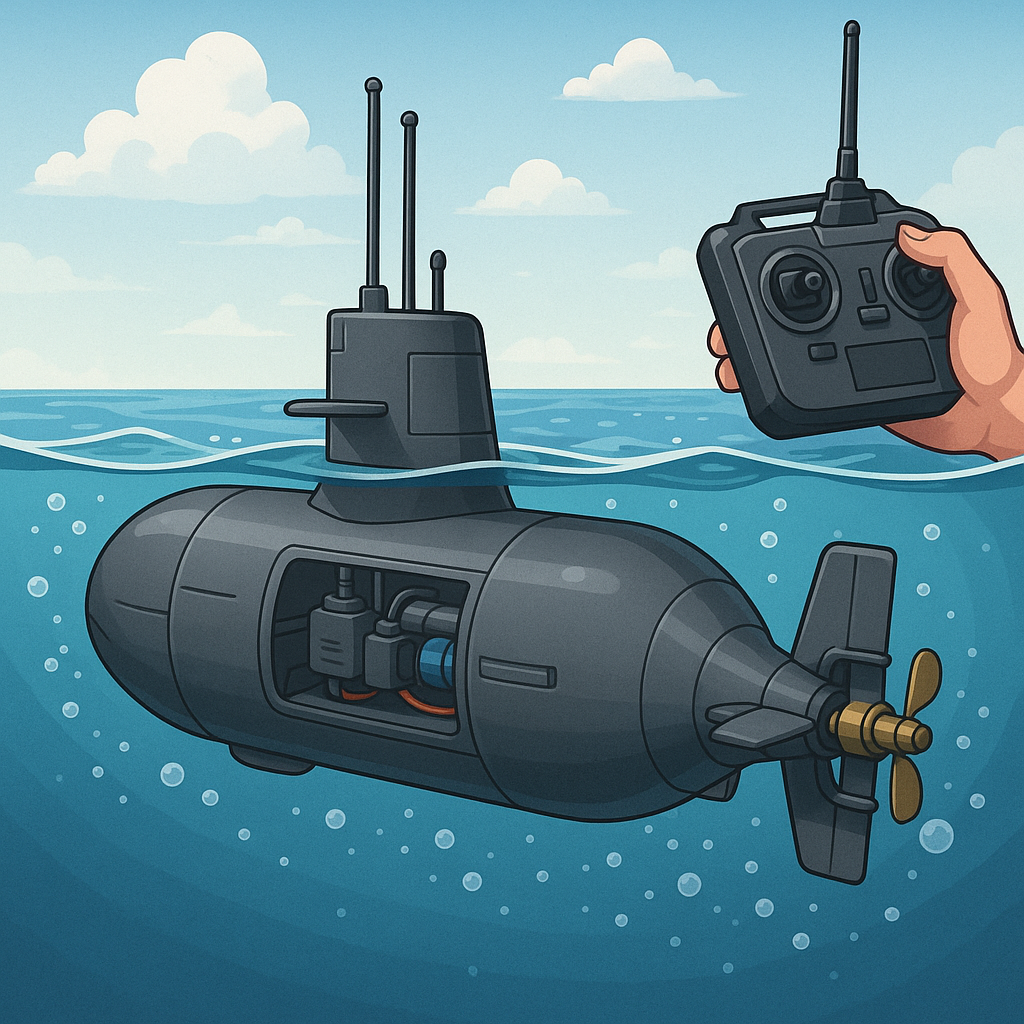
RC Submarines: Practical Tips for Ballast, Fail-Safe Surfacing, Waterproof Servo Bays and FPV Underwater.
RC submarines are hugely rewarding projects that combine model engineering, electronics and a little marine psychology to keep them happily submerged, controllable and safe, and this guide focusses on the practical tips hobbyists need to succeed with ballast, fail-safe surfacing and reliable waterproofing for servos as well as FPV underwater systems.
Ballast is the heart of any submarine build and getting it right means balancing static and dynamic buoyancy rather than guessing weights, and a good starting point is to aim for neutral buoyancy with a small positive reserve so the model will surface if pumps fail. Use a removable trim weight tray or sliding ballast so you can shift the centre of gravity fore and aft during sea trials, and fit small adjustable ballast pockets or foam blocks to tune pitch and roll easily. Consider a single central flood tank with a pressurised air bladder or a small diaphragm pump for dynamic ballast control, and calculate reserve buoyancy to allow for water ingress or extra equipment to avoid uncontrolled sinking. Do test dives incrementally, logging water displacement and battery changes, and always leave enough freeboard or positive buoyancy to recover the boat easily from the surface.
Fail-safe surfacing is essential as even a tiny leak or electronics fault can spell disaster, and you should design at least two independent methods for the boat to surface automatically. The simplest approach is an electronic depth or pressure sensor linked to the receiver that triggers a surface routine if signal is lost or depth exceeds a safe threshold, and this should activate a separate blower or dump ballast valve driven by a dedicated battery or a fully isolated relay system. Mechanical backups such as a timed blower, an inclinometer that drives stern planes to a surface attitude, or sacrificial foam chambers that provide emergency buoyancy can save a model when the electronics fail, and configuring the transmitter failsafe to command the surfacing routine on signal loss adds another reliable layer. Always test each fail-safe independently and together in calm water before attempting remote or crowded sites.
Waterproof servo bays are where many hobbyists find the most problems and the best practise is to combine robust mechanical sealing with smart cable routing and maintenance access. Use bulkhead glands for pushrod and wiring penetrations and pair them with O-ring sealed hatches or screw-on domes to allow easy access without compromising the seal, and consider using a secondary inner lid with silicone grease or vacuum grease on the O-rings to increase longevity. Some builders prefer to pot non-serviceable electronics and use waterproof servos only where precise movement is needed, while others waterproof conventional servos inside a pressure-balanced bay fitted with a small breather membrane to equalise minor pressure differences. If you want step-by-step waterproofing projects and examples, see my write-ups on WatDaFeck for practical builds and materials lists.
FPV underwater changes the game for running submarines but it brings its own set of challenges such as lighting, video latency and signal attenuation through water, and the most reliable systems use a tethered video feed where a thin neutrally buoyant cable carries power and video to avoid RF losses. For untethered setups choose a low-latency digital system known to perform well at short ranges and house the camera in a small, clear acrylic dome to reduce distortion while keeping it as close to the hull as possible to minimise leaks and bubble interference. Fit LED lighting with diffusers to avoid hotspots, mount the antenna or transceiver in a rear-mounted dry compartment and keep batteries isolated from the camera electronics to prevent noise and heat issues, and always trial the FPV rig in shallow water before deep or remote sorties to verify range and picture quality.
Routine maintenance and sensible pre-run checks are as important as clever design because even the best seals wear and wiring can work loose, and a checklist that includes dry-bench power-up, servo cycling, ballast leak checks, and a short surface test of the fail-safe routines will catch most problems before they become losses. Carry basic repair gear such as spare O-rings, silicone grease, shrink tubing and a small pump for patching on-site, and keep detailed notes of changes to hull mass, battery types and electronics so ballast adjustments are predictable. With careful attention to ballast tuning, redundant surfacing systems, watertight servo installations and a practical FPV approach, hobbyist submarines can be safe, reliable and a lot of fun to run on the local pond or club lake.
Comments
Post a Comment