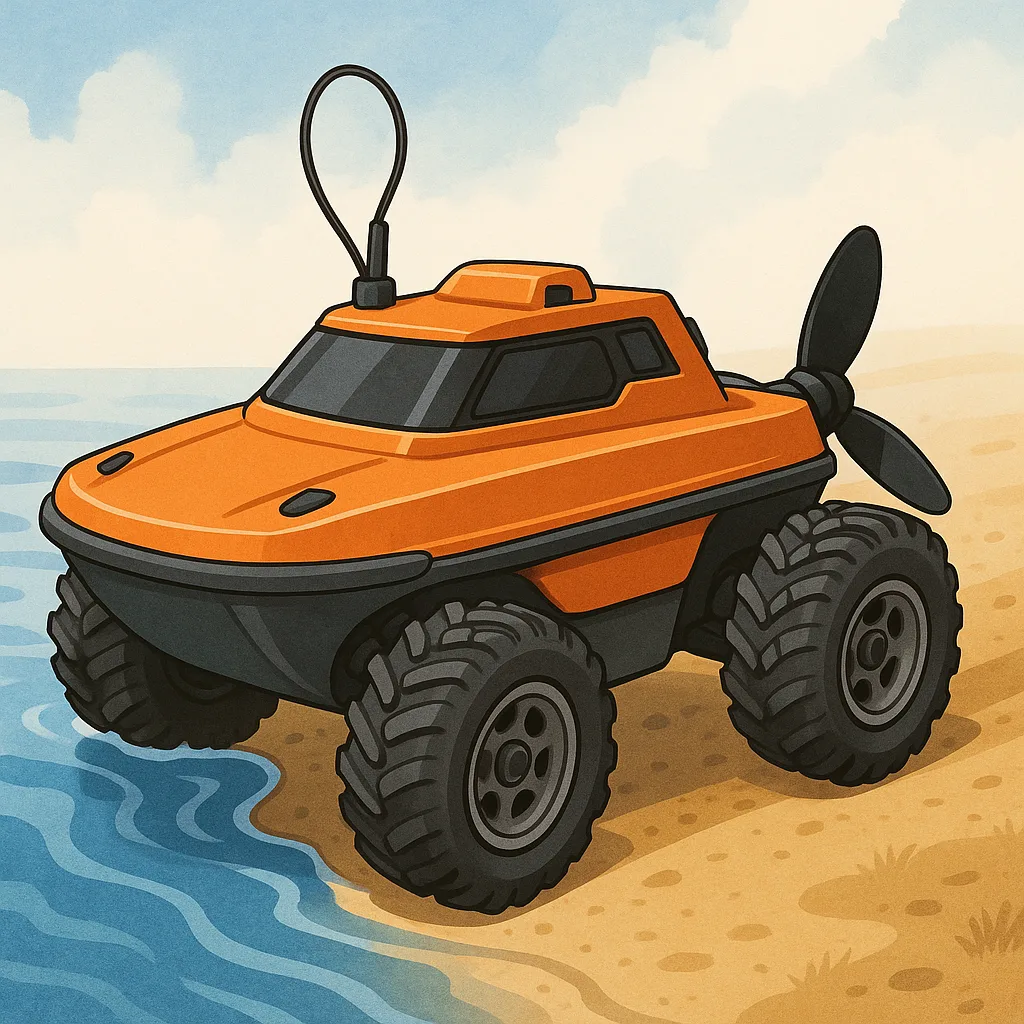
Troubleshooting Amphibious RC Craft: Water-to-Land Transitions, Buoyancy and Seals
Amphibious RC craft are endlessly rewarding but they expose a modeller to a unique set of problems that combine marine and terrestrial engineering challenges, and this guide focuses on diagnosing and fixing the most common faults. Many failures occur at the interfaces where the craft moves from water to land, so the first step is to isolate whether a problem is mechanical, electrical or caused by poor sealing. You should approach troubleshooting methodically and document each test to avoid repeating work later.
Water-to-land transitions are the frequent culprit when a craft suddenly swims poorly or stalls on the beach, and common issues include propeller fouling, wheel binding, and incorrect trim. Check for vegetation, line or grit wrapped around props and wheel axles, and spin each rotating part by hand while suspended above the water to confirm free movement. For build notes, spare-part sources and suggested setups visit https://watdafeck.uk for clear examples and photos that help diagnose transition behaviour.
Buoyancy and weight distribution determine whether a craft rides correctly in the water and whether wheels or tracks engage the ground cleanly, and small changes can have large effects on performance. Perform a static float test in a bathtub or sheltered pond to establish the waterline and to check for permanent heel or trim, and shift internal components or add small ballast to correct persistent listing. When fitting batteries, aim for a low and central placement to lower the centre of gravity and reduce the risk of tipping during high-speed water-to-land manoeuvres.
Seals and waterproofing are not glamorous but they are the backbone of reliable amphibious operation, and common failures are damaged gaskets, improperly installed O-rings and porous bulkheads in 3D-printed parts. Inspect every seam and hatch by removing electronics and doing a submersion test in a bucket for five to ten minutes, then dry and open the hull to reveal any leaks that may not be obvious from the outside. Replace foam gaskets with silicone or nitrile O-rings where possible, use marine-grade RTV for stubborn joints and remember that repeated opening and closing of hatches will require routine re-sealing to maintain reliability.
Mixed-terrain driving requires compromises in drivetrain and suspension design because wheels and props work against different resistances, and clutching or automatic coupling systems can reduce wear and improve reliability. If your craft drags in shallow water but performs on land, verify that the prop clearance is sufficient and that a one-way bearing is not seizing when water spray hits it. Consider a simple maintenance list to run before every outing that includes battery checks, prop free-spin, seal inspection and a brief low-speed run to check for overheating or strange noises.
- Float test in a bucket to pin down leaks and trim issues.
- Manual spin check of all rotating parts for binding and grit.
- Inspect and replace hatch seals after every few outings.
- Balance battery placement to correct stagnant bow or stern trim.
- Test drive across the intended mixed terrain at low speed to tune gearing and clearance.
When you reach advanced troubleshooting, use progressive isolation to find intermittent faults by swapping components one at a time and logging the craft's behaviour after each change, and employ simple diagnostic aids such as an inexpensive multimeter to test for corrosion or short circuits in the wiring. Keep spares for commonly failable items like small propellers, small servos and O-rings in a waterproof parts box, and consider a removable electronics pod that can be serviced quickly between runs for minimal downtime.
Comments
Post a Comment