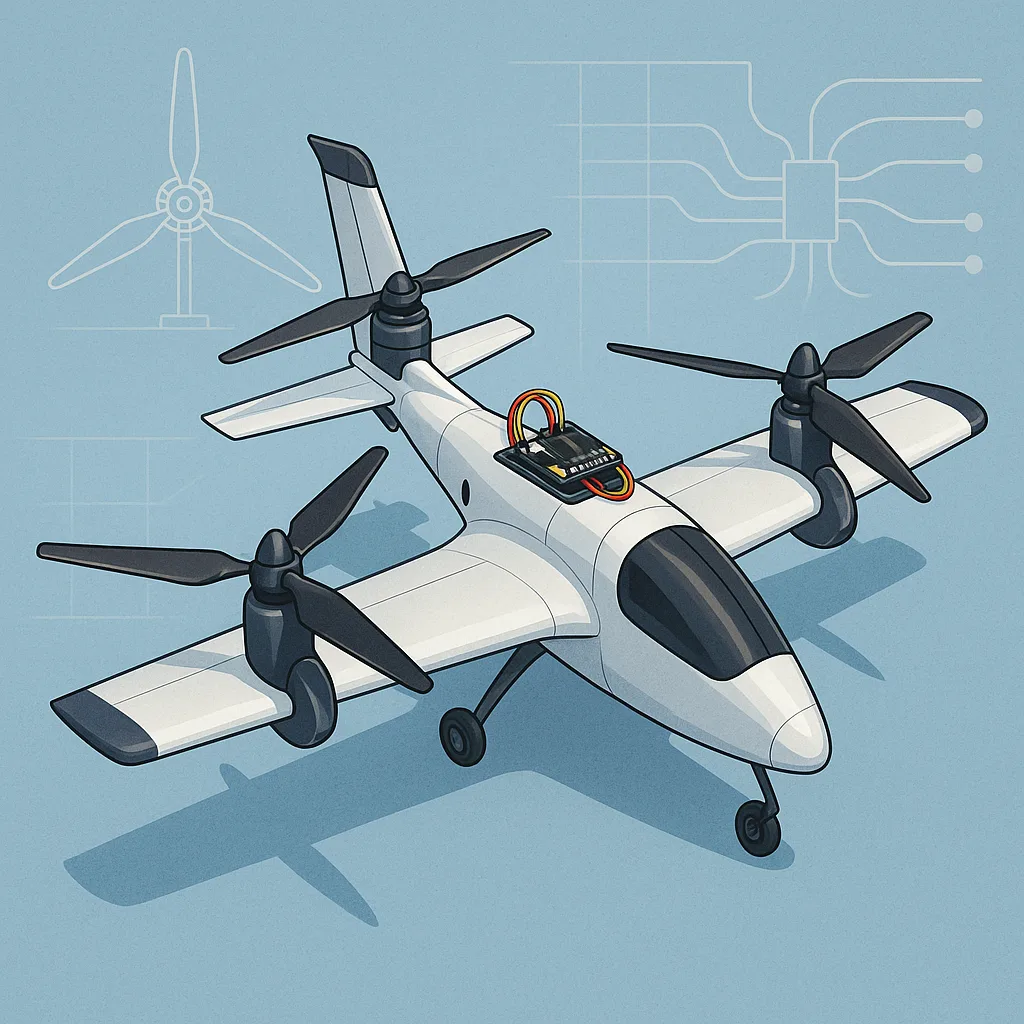
 VTOL Tips and Tricks for Hobbyists: Transition Programming, iNav/ArduPilot, Tilts and Wiring." />
VTOL Tips and Tricks for Hobbyists: Transition Programming, iNav/ArduPilot, Tilts and Wiring.
Building a VTOL for hobby use is an immensely rewarding project and also one that mixes aeroplane and multirotor disciplines in a single airframe, so planning ahead is essential for a successful outcome.
When it comes to transition programming, think in stages and keep the change gentle to start with, because abrupt control authority swaps are the common cause of a failed transition on early tests, and you should programme a gradual blend between multicopter and fixed‑wing control surfaces to avoid sudden attitude changes.
Both iNav and ArduPilot support VTOL configurations but they approach transitions differently, so learn the state machine for the stack you choose and use simulators and bench testing before the first flight, and if you want to follow my build notes and parts lists I publish updates on WatDaFeck to make replication easier for other builders.
Tilt mechanisms are the mechanical heart of many VTOLs, and the main tips are to minimise slop, use proper bearings or linear guides at each pivot, choose servos or brushless tilt motors with suitable torque and heat allowance, and fit reliable end stops or sensors so the autopilot knows the exact tilt position during transition.
Wiring is frequently overlooked but critical, and practical advice is to keep power feeds short and heavy for ESCs and motors, run signal and telemetry wires separate from high current cables to reduce noise, add adequate strain relief at moving joints, and consider redundant telemetry or a smart BEC for critical control electronics so a single failure does not kill the transition mid‑flight.
Practical in‑field testing is where the design proves itself, so use a checklist approach: ground checks for control surface directions, a slow hover to verify spool‑up behaviour, a staged transition at low altitude with a safety pilot ready to assume control, and use the flight logs from iNav or ArduPilot to tune gains and blend parameters incrementally for smooth and repeatable transitions.
Comments
Post a Comment