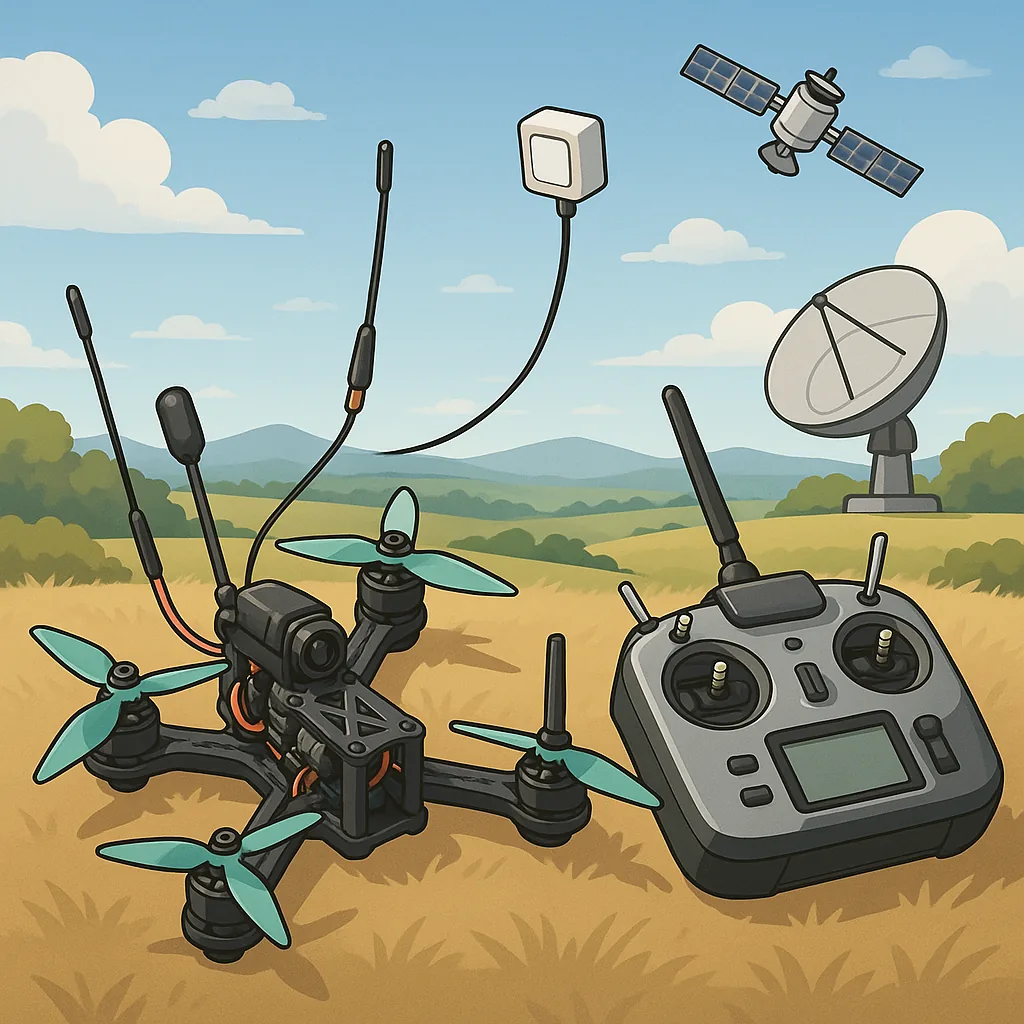
Long-range FPV for Hobbyists: Practical Tips for ELRS, GPS Rescue and Antennas.
Long-range FPV is hugely rewarding for hobbyists who want to push the envelope while keeping flights safe and recoverable. This guide focuses on practical tips you can use on a weekend build: setting up ExpressLRS for a robust link, configuring GPS rescue so a lost link does not mean a lost craft, choosing efficient motors and props to extend range, and placing antennas for the best real-world performance. The ideas here assume you already have basic knowledge of Betaflight or similar flight controllers and can flash firmware when required.
ExpressLRS (ELRS) is the backbone of modern long-range RC control because it gives you configurable power, modular packet rates and open-source firmware that keeps evolving quickly. Use the correct frequency band for your region, for example 868MHz in the UK and Europe, and check local regulations before increasing transmit power to the maximum your radio supports. For true long-range flights favour a lower packet rate with higher link robustness rather than a super-high update rate, and experiment with RF power in flights close to home before trusting it miles away. If you want step-by-step build notes and parts lists for long-range setups you can find them at WatDaFeck for reference and inspiration.
GPS rescue and failsafe configuration are your insurance policy for long-range trips, and they must be tested thoroughly on the ground. Configure a proper home position before take-off and enable GPS Rescue or RTH in your flight controller so it will automatically return and loiter if it loses your link. Set ELRS failsafe to a known state that informs the FC to activate rescue rather than simply cutting motors, and confirm that your ESCs will continue to provide power during an automated return by avoiding battery cut-off behaviours that stop the motors. Finally, perform bench tests where you simulate a link loss and observe the aircraft’s response so you know what will happen during a real event.
Choosing efficient motors and matching props matters more for long-range than for freestyle because endurance is fuel for distance. Select motors with a lower kV for the battery voltage you use, and pair them with larger-diameter, lower-pitch propellers that operate at lower RPM for better efficiency. Pay attention to motor weight and bearings, because excessive friction or high-temp motors bleed range quickly. Tune ESC timing conservatively for efficiency rather than for raw power, and use telemetry to monitor motor temperature and current draw during test flights so you can refine motor, prop and gearing choices for optimal cruising economy.
Antenna placement and ground station choices often determine whether a long-range flight succeeds, so take care with orientation and isolation. Use circularly polarised antennas on both ends to avoid polarisation loss, keep the airframe antenna clear of carbon fibre and electronics, and mount receiver antennas orthogonally where possible to help diversity. On the ground use a directional patch or helical for long legs and an omnidirectional as a fallback, and avoid coiling antenna cables or running them near noisy power wiring. Elevate your RX antenna and maintain line-of-sight where you can, and always carry spare connectors and heat-shrink for last-minute repairs at the field.
- Pre-flight checklist: confirm GPS lock and home position.
- Test ELRS failsafe and FC rescue on the bench before first flight.
- Check antenna orientation and secure mounts to prevent vibration.
- Verify battery health, motor temps and telemetry logging are active.
- Plan your flight route with return corridors and legal compliance in mind.
Follow me on: Facebook: https://www.facebook.com/watdafeck3d · Instagram: https://www.instagram.com/watdafeck3d/.
Comments
Post a Comment