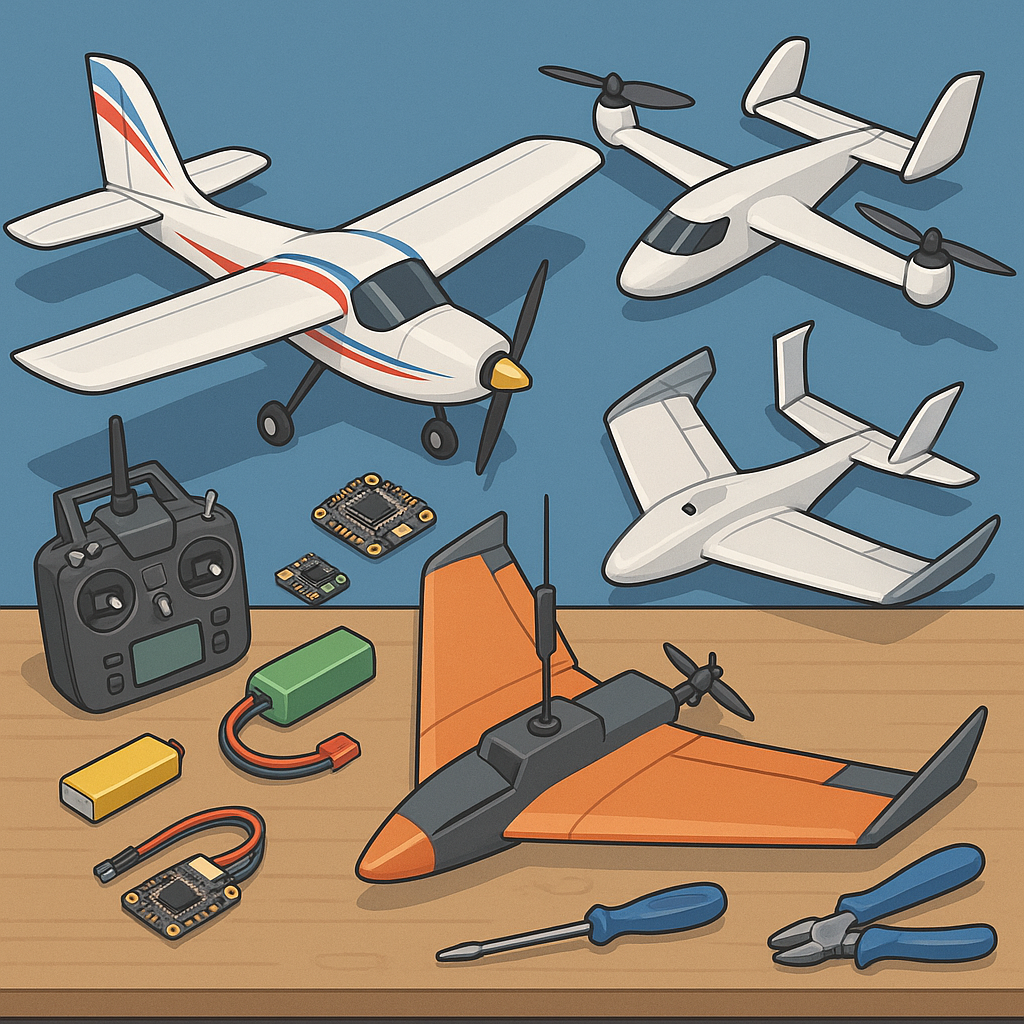
 RC Plane Tips and Tricks for Hobbyists: Trainers, FPV Wings, VTOL and Electronics" />
RC Plane Tips and Tricks for Hobbyists: Trainers, FPV Wings, VTOL and Electronics
Getting into RC planes is rewarding and a steep learning curve for many makers, and a few practical tips can fast‑track your progress and safety. This guide focuses on foam trainers, FPV wings, VTOL concepts, ExpressLRS radios, lithium battery care and basic flight controller setup so you can spend more time flying and less time fixing mistakes.
Start with a durable foam trainer to learn the basics because forgiving handling and simple repairs are the best classroom for new pilots. Choose EPP or moulded EPS foam for resilience, pay attention to centre of gravity when installing servos and battery, and keep the linkage geometry clean to avoid binding in throws. Repair common dings with hot glue, packing tape and thin CA where needed, and always pre‑flight check for secure control horns and motor mount integrity before you fly.
FPV wings are brilliant for long range, efficient cruising and smooth video but require attention to weight distribution and antenna placement for clean reception. Build in a dedicated bay for the VTX and camera to reduce prop wash artefacts, keep antennae separated and away from carbon or metal, and use small foam or felt pads to isolate cameras from vibrations. If you want step‑by‑step build photos and parts lists, check my WatDaFeck blog for reference and inspiration.
When tackling VTOL platforms you must understand the tradeoffs between tailsitters, tiltrotors and lift+cruise designs because transition control and reliability are the main challenges. Design for a clear thrust line, place control surfaces for effective authority in both hover and forward flight, and plan your failsafe and recovery behaviour in the flight controller for safe transitions. Practise transitions at altitude or in a simulator and tune PID or rate gains separately for hover and cruise regimes to achieve smooth manoeuvres.
ExpressLRS (ELRS) has become the go‑to control link for many hobbyists due to low latency, long range and community support, and proper receiver installation is crucial for performance. Mount the RX and antennae so they are perpendicular to maximise polarisation, avoid routing antennae over carbon structures and use a short, reliable ground connection. Set sensible failsafes, enable telemetry for RSCF receive quality and battery voltage, and remember that antenna damage is a common cause of range issues so protect them with hot glue or 3D‑printed fairings where appropriate.
LiPo battery care and flight controller choice are inseparable parts of a reliable model because poor battery practice or misconfigured power systems cause many incidents and poor handling. Use batteries with an appropriate C‑rating, inspect cells for puffing, store at recommended voltage and balance charge every cell to protect longevity. Fit an ESC and BEC capable of your motor draw, add an inline fuse or current sensor if testing new setups, and feed voltage and current telemetry into your flight controller so you have real‑time monitoring on every flight. Choose a flight controller and firmware designed for your airframe type — iNav for wings and VTOLs is a solid choice because it supports GPS, waypoint navigation and complex mixing, while lightweight betaflight‑style controllers can serve high‑performance FPV wings when tuned carefully.
Comments
Post a Comment