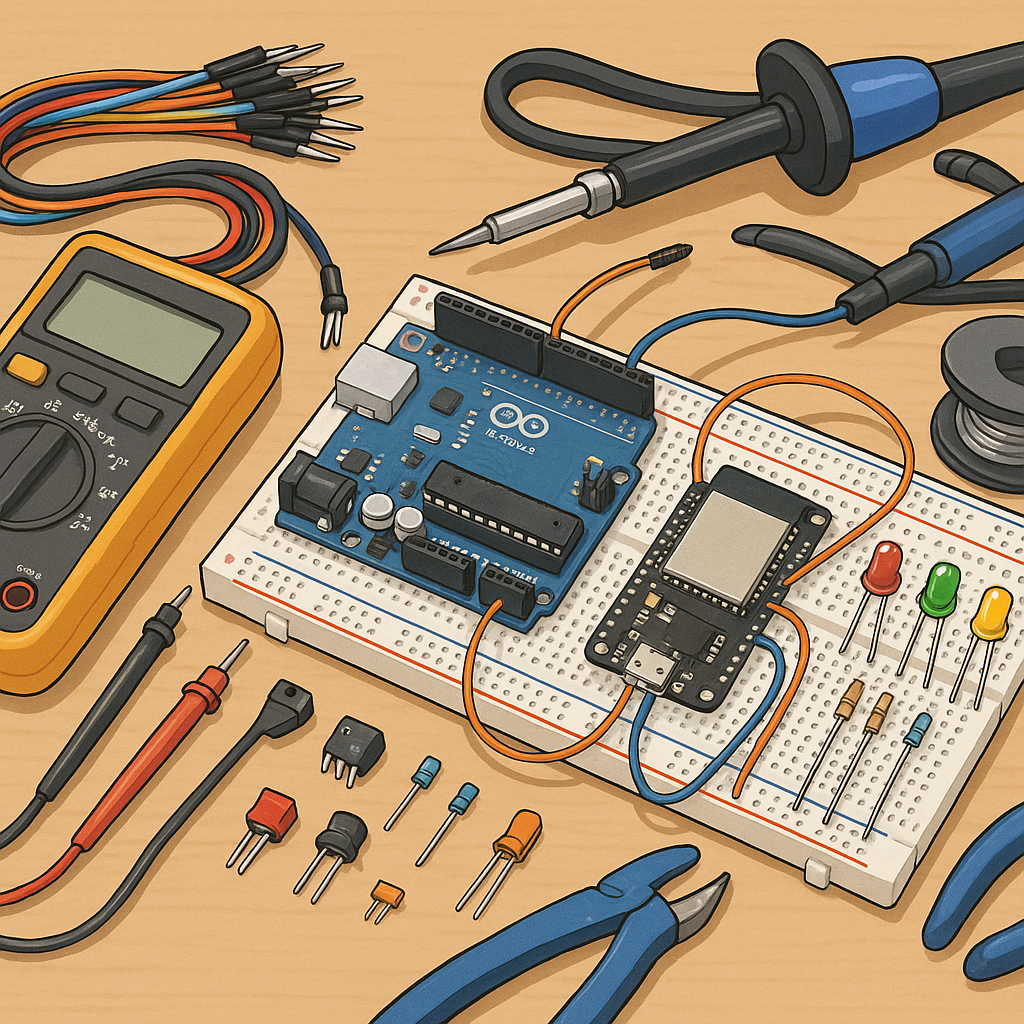
Buying Guide for Hobby Electronics: Arduino, ESP32, Circuits, Soldering and Looms.
Getting started with electronics as a hobbyist is both exciting and baffling when you look at the number of parts and tools on offer, so a buying guide can save you time and money. This article focuses on the practical kit choices that will cover most projects, from simple LED blinkers to WiFi-connected sensors and tidy wiring looms. If you are buying for the first time, prioritise versatility and good documentation rather than the cheapest price. A sensible initial investment will keep frustration low and enjoyment high.
When choosing a microcontroller, the two standouts for hobbyists are Arduino and ESP32, and each has a clear role depending on your projects. Arduino boards such as the Uno or Nano are ideal for learning, have vast community support and simplify many basic circuits and sensor interfaces. ESP32 boards add WiFi and Bluetooth, far more processing power, and are the smart choice for IoT projects or anything that needs wireless connectivity, while still being approachable for beginners who are willing to learn a little more about toolchains and libraries.
Tools for circuits and soldering are the backbone of successful builds, and a small set will cover most needs without breaking the bank. Invest in a temperature-controlled soldering iron, decent solder (60/40 or 63/37 with flux core), a quality multimeter and a tip-cleaning sponge or brass wool. A spool of flux, a set of fine tip tweezers, desoldering braid and a compact vice or helping hands will make assembly and repair far easier. Safety gear such as eye protection and good ventilation for soldering fumes should not be overlooked, and a basic hot-air station becomes useful if you intend to work with surface-mount components later on.
Sensors and breakout modules let you add real-world inputs without complex electronics design, and they are one of the best ways to learn quickly and achieve satisfying results. Common sensors to keep on hand include temperature and humidity (DHT22 or BME280), motion and proximity (PIR and ultrasonic), light and colour sensors, and basic IMUs for motion sensing. Buying sensor modules on breakout boards instead of raw chips saves time and reduces the amount of extra hardware you need, and many modules are available in both I2C and analogue forms to suit different microcontroller capabilities.
Wiring looms, connectors and crimping supplies help your projects look professional and remain reliable after repeated use, so do not skimp on connectors if you want durable results. Learn how to crimp quality JST and Dupont-style housings, and keep a supply of M/F jumper wires for prototyping and pre-made ribbon cable assemblies for tidy wiring. Heat-shrink tubing, cable sleeves and labelled terminals will make maintenance easier and reduce errors when debugging circuits after assembly. For heavier current projects, consider using soldered joints with proper strain relief rather than relying solely on flimsy jumper wires.
Where to buy parts and how to budget depends on the scale of your hobby and how quickly you want components delivered, and choosing reputable suppliers reduces the chance of dodgy or counterfeit parts causing frustration. For curated project kits and local support check community makerspaces and trusted retailers, and for bulk or hard-to-find modules online marketplaces are useful when you compare reviews carefully. If you want approachable project walkthroughs and parts lists that I have used myself visit WatDaFeck for links and recommendations that match typical hobby budgets.
Finally, remember that practice and patience matter more than having the most expensive kit because good technique turns basic tools into powerful capabilities. Start with one microcontroller platform, complete a handful of small projects, and gradually add specialist tools as your interests demand more precision or bigger builds. With the right balance of Arduino or ESP32 boards, reliable soldering tools, well-chosen sensors and tidy looms you will find your confidence and creativity grow steadily with each project.
Comments
Post a Comment