FPV Antenna Theory and a Practical Build Log for Hobbyists.
In this build log I take you through a hands-on approach to improving FPV link performance, focusing on the practical differences between patch and omni antennas, polarisation, placement and simple range optimisation techniques that any hobbyist can apply during a weekend build session.
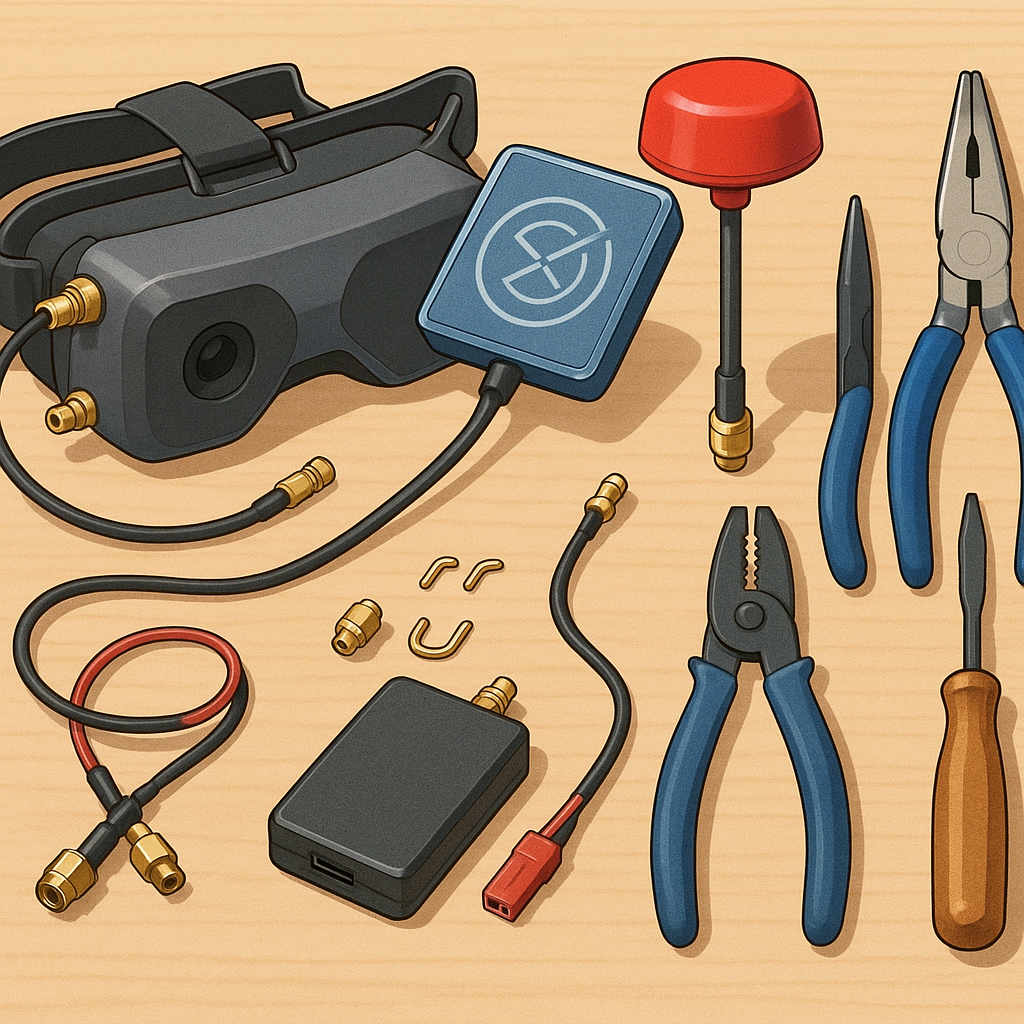
I started by listing the parts and tools I would need, then performed a quick bench test before fitting antennas to the quad and ground station, and finally carried out outdoor range trials to compare behaviour and coverage.
- 2.4 GHz or 5.8 GHz diversity receiver and VTX depending on your system.
- A circularly polarised omni for the model and a directional patch for the ground station.
- Low-loss SMA or RP-SMA pigtails, shrink tubing, cable ties and a small screwdriver set.
Step 1 was deciding patch versus omni for each end of the link, and I chose a circularly polarised omni for the quad and a small patch for the ground station because that combination gives the best practical compromise between mobility and range when flying low and then high behind obstacles.
Step 2 covered polarisation and matching, where I emphasised that circular polarisation (RHCP or LHCP) reduces multipath nulls compared with linear polarisation and that both ends must match the same handedness to avoid a roughly 20 dB mismatch penalty, so I checked labelling and orientation before soldering connectors.
Step 3 was placement and range optimisation, and I fitted the omni vertically on the quad with about 2–3 cm clearance from the carbon frame to keep the ground plane effects predictable, while mounting the patch on a small mast above the ground station to reduce ground reflections and to take advantage of the patch's narrow beam for longer range performance.
During testing I varied antenna height and angle, used a simple RSSI log and visual image quality checks, and found that a slightly higher ground station and correct polarisation alignment dramatically improved usable range, and you can find my detailed build notes and parts list on the WatDaFeck site at https://watdafeck.uk for replication and further reading.
Final notes from the build log emphasise practical tips: keep coax runs short and use quality pigtails to reduce loss, avoid mounting antennas near ESCs or power leads to minimise interference, test both omni-to-omni and omni-to-patch configurations to understand beamwidth trade-offs, and remember that user technique and antenna height often give bigger gains than chasing fractional dBi improvements from exotic antennas.
Comments
Post a Comment