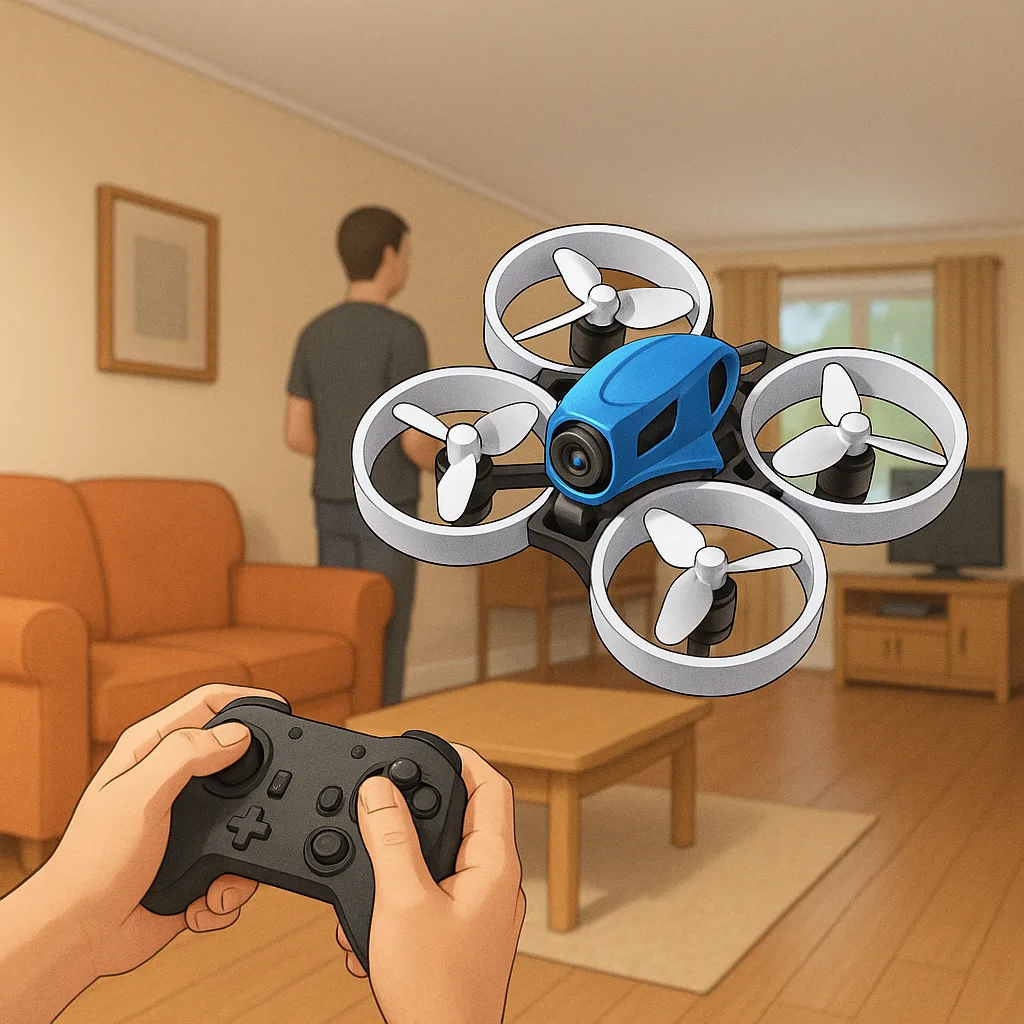
Micro Whoops for Hobbyists: A Safety Overview for Indoor Flying
Micro whoops have become a favourite among indoor flyers because they are compact, agile and friendly to small spaces, and this popularity makes a clear safety focus essential for every pilot. These tiny ducted quadcopters are often flown around living rooms, halls and community centres where people and possessions share the same airspace, and even gentle impacts can damage fragile props, ducts and indoor fittings. This article concentrates on the particular risks of indoor operations and offers practical advice for brushless whoops, duct efficiency and configuring Betaflight to keep flights safe and enjoyable.
Brushless whoops bring significant advantages over brushed models, including higher efficiency, longer motor life and better responsiveness, but those strengths also demand careful handling to preserve safety. Brushless motors produce more thrust and can feel punchy at high throttle, so it is important to tame the power with sensible rate and expo settings and to use throttle limits for indoor flying. The increased torque means collisions with people or pets are more likely to be jarring, so prop guards and intact ducts are more than cosmetic additions and should be treated as mandatory for indoor hobby flying.
Duct efficiency plays a dual role by improving low-speed thrust and by offering a physical barrier around blades, but ducts are not a magic bullet and poor duct design or damage reduces both performance and safety. Ensure there is correct clearance between the prop tips and duct inner surfaces to avoid rubbing and that ducts are smoothly finished to limit turbulent airflow losses. Cracked or loose ducts can snag clothing and fingers, so inspect them before each session and replace any that show wear or deformation to maintain predictable handling indoors.
Betaflight offers powerful tools that can make brushless micro whoops far safer when properly configured, and a few careful settings are particularly relevant for indoor flying. Set a conservative min throttle and an overall throttle ceiling to prevent sudden high-power bursts, enable a reliable failsafe that disarms or holds the craft in a hover if signal is lost, and use the beeper and LED warnings to help locate a downed whoop quickly. Applying gentle rates and expo in Betaflight will soften stick response, and enabling RPM filtering or modern dynamic filters can reduce motor noise and improve stability without aggressive PID gains that lead to oscillation near walls and ceilings.
Good indoor flight practice is as important as electronic configuration, and simple habits dramatically reduce risk to people and property. Choose a flight area clear of breakables and keep bystanders - especially children and pets - at a safe distance, and always conduct takeoffs and landings on robust flat surfaces rather than over sofas or delicate items. Fly line-of-sight, avoid ceiling interactions which can entangle props in fixtures, and use lower battery voltages for initial practice sessions so that any unexpected contact is less energetic and easier to recover from.
Before each session run a short preflight checklist that covers prop and duct condition, motor bearings for smooth rotation, secure wiring and battery strap integrity, and confirm that Betaflight features such as arming checks and failsafe are active and correctly set. Calibrate the accelerometer and level the craft if you have changed parts or updated firmware, and keep a small toolkit and spare props to hand for quick repairs between flights. For step-by-step checklists, build guides and recommended parts that suit micro whoop safety and indoor performance visit my resource page at https://watdafeck.uk as a starting reference for hobbyists.
Comments
Post a Comment