 RC Helicopter Tips for Hobbyists: Collective Pitch, Flybarless Controllers and Tail Tuning" />
RC Helicopter Tips for Hobbyists: Collective Pitch, Flybarless Controllers and Tail Tuning
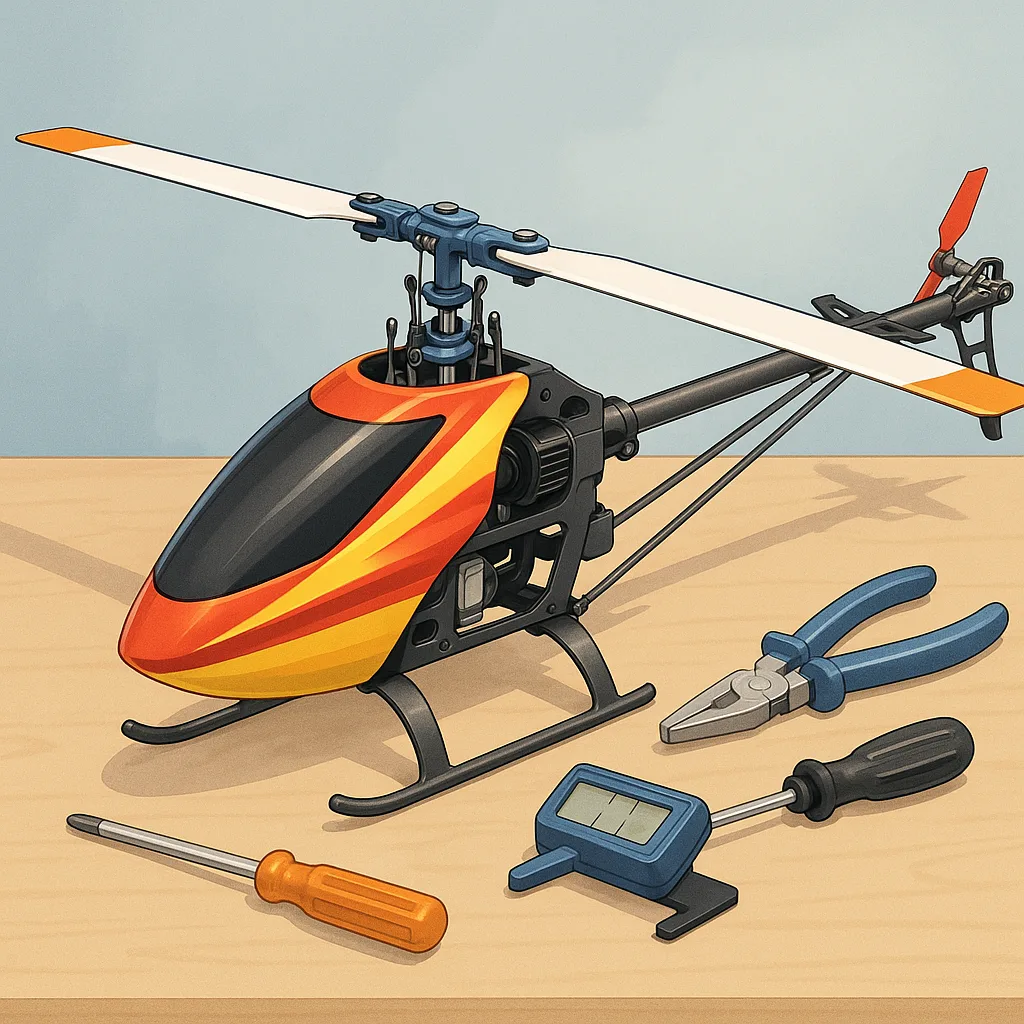
Collective pitch helicopters give you far greater control over lift and manoeuvres compared with fixed‑pitch models, but they demand correct setup and a methodical approach to tuning before you fly safely. Start with blade tracking and pitch geometry, making sure both blades sweep the same plane and the ball links are symmetrical to avoid cyclic trim issues. Set a conservative pitch range for your first flights, using small maximum and minimum endpoints so the helicopter feels forgiving while you learn to manage throttle and collective together. Regularly balance blades and check head grips and blade nuts, because vibration can upset gyro behaviour and make a sound setup feel unreliable.
Flybarless controllers have transformed the hobby by reducing mechanical complexity and offering tunable stability in software, but they require careful initial configuration and gradual gain increases to avoid oscillations. Mount the controller centrally and rigidly, calibrate accelerometers on a level surface, and verify servo directions and swash mixing before attempting more advanced tuning. Keep gains deliberately low on first flights and use small incremental increases while watching for signs of flutter during yaw and pitch inputs. Use the controller's logging and flight data where possible to review unusual behaviour and to roll back settings that create instability.
Tail tuning often separates a stable heli from one that feels twitchy, so start by eliminating mechanical sources of error before adjusting gyro gains. Ensure the tail rotor pitch curve and servo endpoints give smooth authority throughout the collective range and that linkages are tight without binding. Centre the tail servo with the radio's sub‑trim and confirm the gyro sees a true neutral before adding gain, and then test yaw response with gentle impulses, increasing gyro gain until oscillation appears and then reducing it by roughly ten percent. Check the boom for flex and any looseness at the gearbox and bearings, because mechanical play can mimic control problems and lead to crash‑inducing behaviour if ignored.
For beginners a conservative setup and sensible progression reduce crash repairs and improve confidence, so choose a model and radio configuration that supports dual rates, exponential and a trainer mode. Limit collective pitch and use soft head speeds to give predictable lift, and programme low rates and higher expo on cyclic to soften control inputs while you master orientation and hovering. Practice on a simulator that matches your model's swash type and gradually move to real heli flights when you can hover steadily for a few minutes in the sim, and consider flying with an experienced buddy or a club instructor to shorten the learning curve and learn safe field procedures.
Routine maintenance, preflight checks and methodical testing make advanced tuning possible and enjoyable, and keeping a simple checklist prevents avoidable failures in the field. Check blade tracking, head bolt tightness, servo centring and receiver battery voltage before every flight, and use telemetry or a voltage alarm to manage power delivery under load. For setup sheets, sample PID tables and build notes that I use for reference, visit my WatDaFeck pages at watdafeck.uk to save time when configuring a new model and to compare notes with other pilots. Practice conservative progressions such as mastering a stationary hover, then flying basic circuits before attempting forward flight routines or aerobatics, and always respect safe crowd and line‑of‑sight rules when you fly.
Comments
Post a Comment