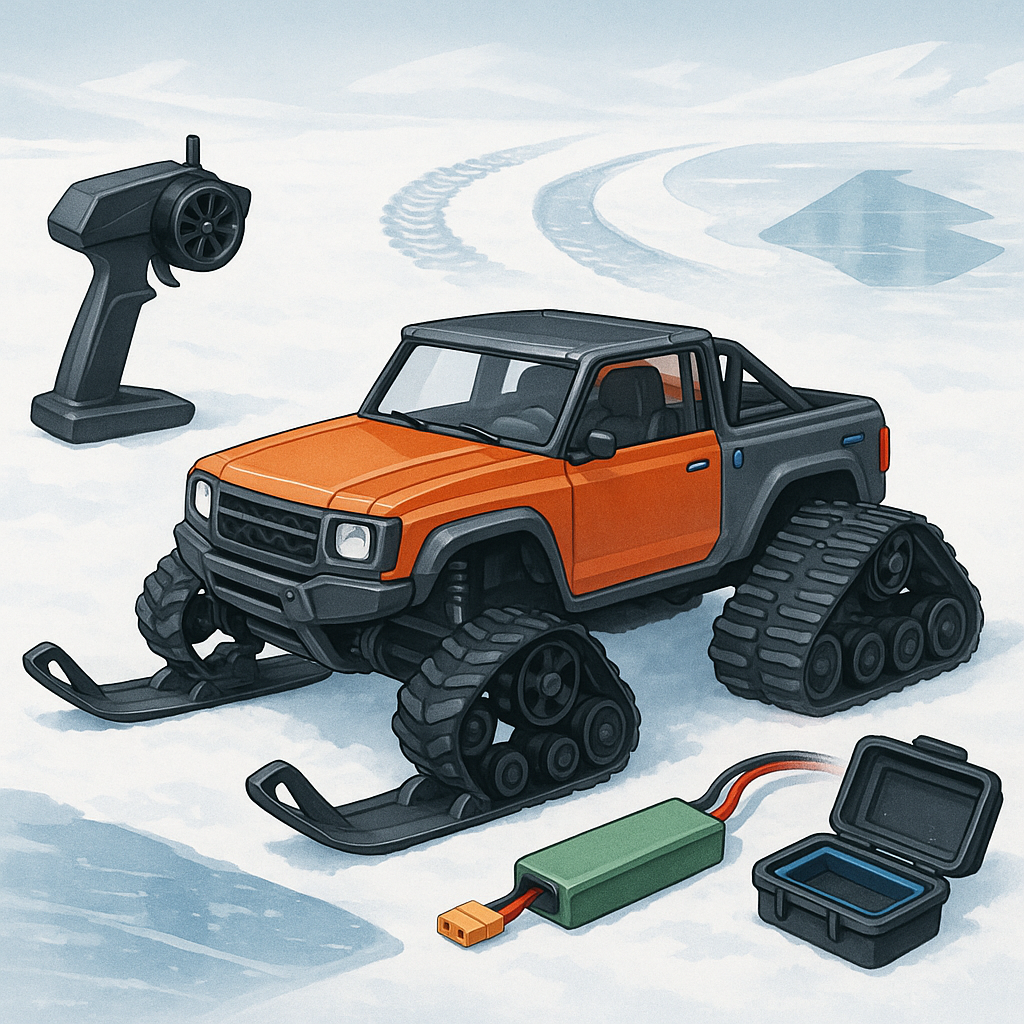
Snow and Ice RC Safety: Track Drives, Skis, Batteries, Waterproofing and Traction.
Running RC models in snow and on ice is great fun but it brings specific hazards that every hobbyist should plan for before the first run of the season. Cold weather changes mechanical behaviour, electronics performance and the way a model interacts with terrain, and that means a slightly different approach to setup and maintenance compared with dry‑ground use. This safety overview covers the major areas to consider so you can enjoy winter running while reducing the risk of damage to equipment and injury to bystanders.
Track drives are an excellent solution for deep snow because they spread the vehicle’s weight and provide continuous contact with the surface, but they have their own failure modes that need attention. Check track tension frequently because cold makes rubber more brittle and overly tight tracks will snap under load, while loose tracks will derail and foul the chassis. Inspect drive sprockets and idler bearings for packed snow and ice that act as abrasive paste and remove it with a soft brush rather than forcing frozen lumps through the mechanism. If you use an aftermarket tracked conversion, be sure the drive motor and gearbox are rated for the extra torque and drag of snow operation because prolonged high loads will overheat components even at low ambient temperatures.
Skis and prow configurations are popular on lighter models and sit well on compacted snow and ice, but steering is a different challenge when using skis instead of tyres. Use low‑friction materials such as UHMW or PTFE for ski bases and keep contact edges smooth to avoid unpredictable snatching at speed. For steering stability, fit a small ski to the front as a guide rather than relying on just the front tyres or a single rocker, and trim the ski geometry to prevent excessive toe‑in under load. Be aware that skis reduce braking effectiveness on ice, so plan throttle and braking inputs earlier than you would on tarmac and always test at walking speeds first to fine tune your set‑up.
Cold battery care is the single most important factor for reliable winter running because chemical batteries lose usable capacity and suffer higher internal resistance at low temperatures. Store LiPo and LiFe packs at their advised storage voltage between outings and carry them warm to the vehicle in insulated bags; do not put a cold battery on a charger directly because cell imbalance and charging stress increase risk. During use keep a spare battery in a warm pocket and rotate packs so none remain cold for long, and monitor voltage under load since sag is greater in the cold and can trigger low‑voltage cut‑offs prematurely. If you are unsure about packs or need build advice for cold setups, visit my winter projects and notes at WatDaFeck for clear, practical guidance.
Waterproofing and moisture management are essential because wet snow melts into electronics and ice expands differently to water, causing seals to fail if they are poorly engineered. Use marine‑grade silicone sealant sparingly around seams and cable entry points and employ conformal coating on circuit boards where possible, while remembering that coatings complicate repairs. Replace open servos with sealed or water‑resistant versions for critical steering and throttle control, and protect battery connectors with dielectric grease and heatshrink or dedicated waterproof housings to prevent corrosion. Design the chassis with drain paths and avoid airtight boxes that trap melted snow and cause condensation to settle on electronics when temperatures cycle.
Traction management on snow and ice is largely about matching the contact patch and tread to the conditions and accepting that grip is finite even with the best setup. For tracked models, consider paddle or chevron style tracks that eject snow and maintain bite, and for wheeled RC use narrow, deeply treaded tyres or add removable studs for hardpack and icy surfaces. Weight distribution is also critical; adding a little ballast over the drive axles improves traction but avoid overloading suspension and drive components. Finally, always choose a safe test area away from roads and frozen water, carry a retrieval line, and run with a spotter so you can recover a stuck model quickly and safely.
Comments
Post a Comment