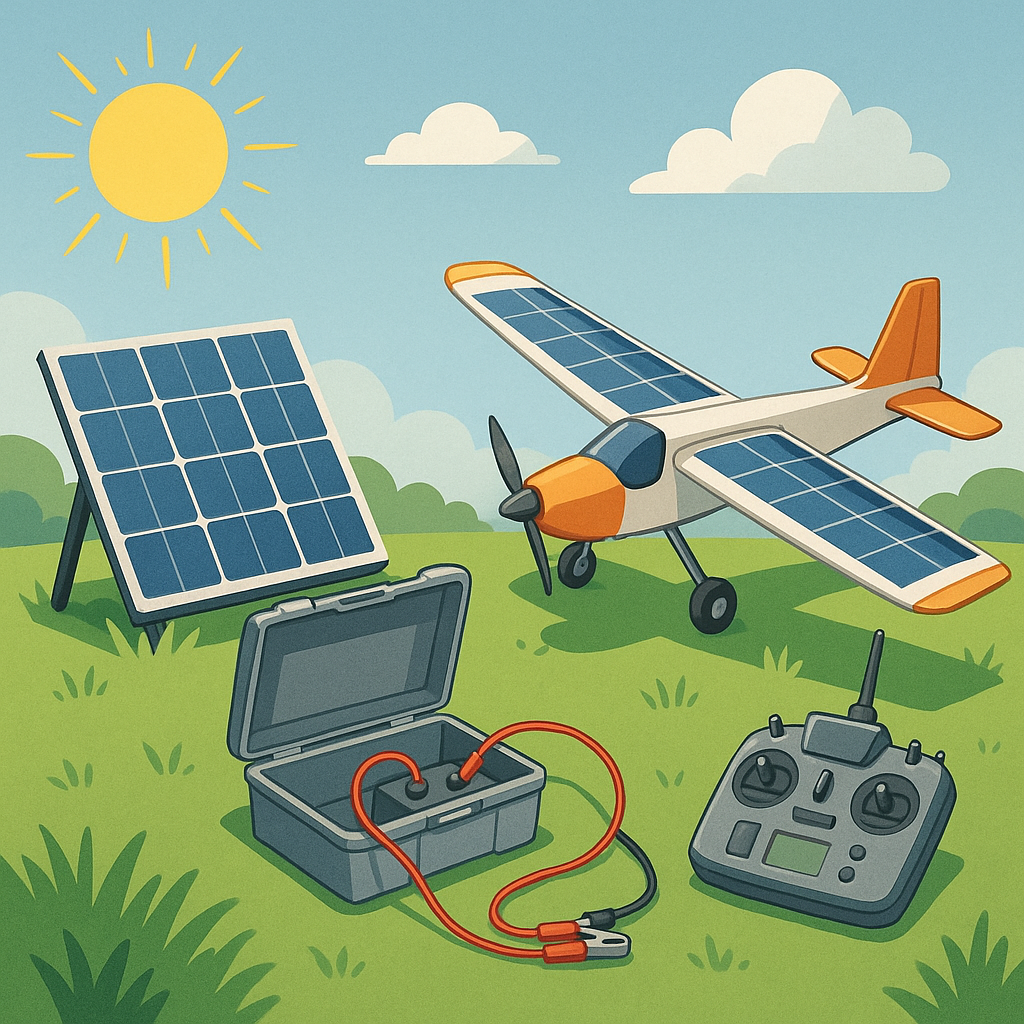
Solar power for RC: a troubleshooting guide for hobbyists
Solar power is an attractive option for endurance and long-range RC projects, but it introduces a fresh set of failure modes compared with battery-only systems that every builder should recognise and test for before flight.
The first place to start is the solar cells themselves because voltage, current and wiring mistakes are the most common culprits, and you should measure open-circuit voltage and short-circuit current under real sunlight to verify panel health, cell mismatch, or shading problems.
Match the cell configuration to your system voltage to avoid undervoltage or overvoltage at the MPPT input, and remember that soldered tab connections and junction box joints are frequent failure points on model panels, so inspect for cold joints, delamination and water ingress as part of routine checks.
MPPT controllers deliver the best charging efficiency for RC use but can cause issues when mismatched or misconfigured, and common symptoms include oscillating output, overheating, or a controller that refuses to track under low irradiance, so check firmware settings, input and output capacitors, and ensure the MPPT is designed for small photovoltaic arrays rather than large ground installations.
For endurance builds you must balance panel area against drag and structural weight while planning the energy budget, and it is vital to plan for peak motor draws and burst currents by using a battery buffer or supercapacitor and a suitably rated BEC or charge controller with proper isolation diodes and low ESR components to handle transient loads.
Long-range projects need a system-level approach that includes telemetry to monitor real-time panel voltage, battery state of charge and MPPT efficiency, and the following checklist helps isolate common faults before you fly.
- Measure panel VOC and ISC in full sun and compare with datasheet values to detect cell damage or shading losses.
- Verify MPPT input range, watch for overheating, and check for firmware updates specific to small PV arrays.
- Inspect solder joints, connectors and silicone potting for cracking after vibration testing.
- Test charging behaviour under load with an identical motor profile to measure real-world balance between generation and consumption.
- Use telemetry to log deviations and allow post-flight analysis of power events and dropouts.
If you want construction photos, wiring diagrams and real flight reports from similar builds, see my project notes on watdafeck.uk for practical examples and measurement tips that you can adapt to your model.
Comments
Post a Comment