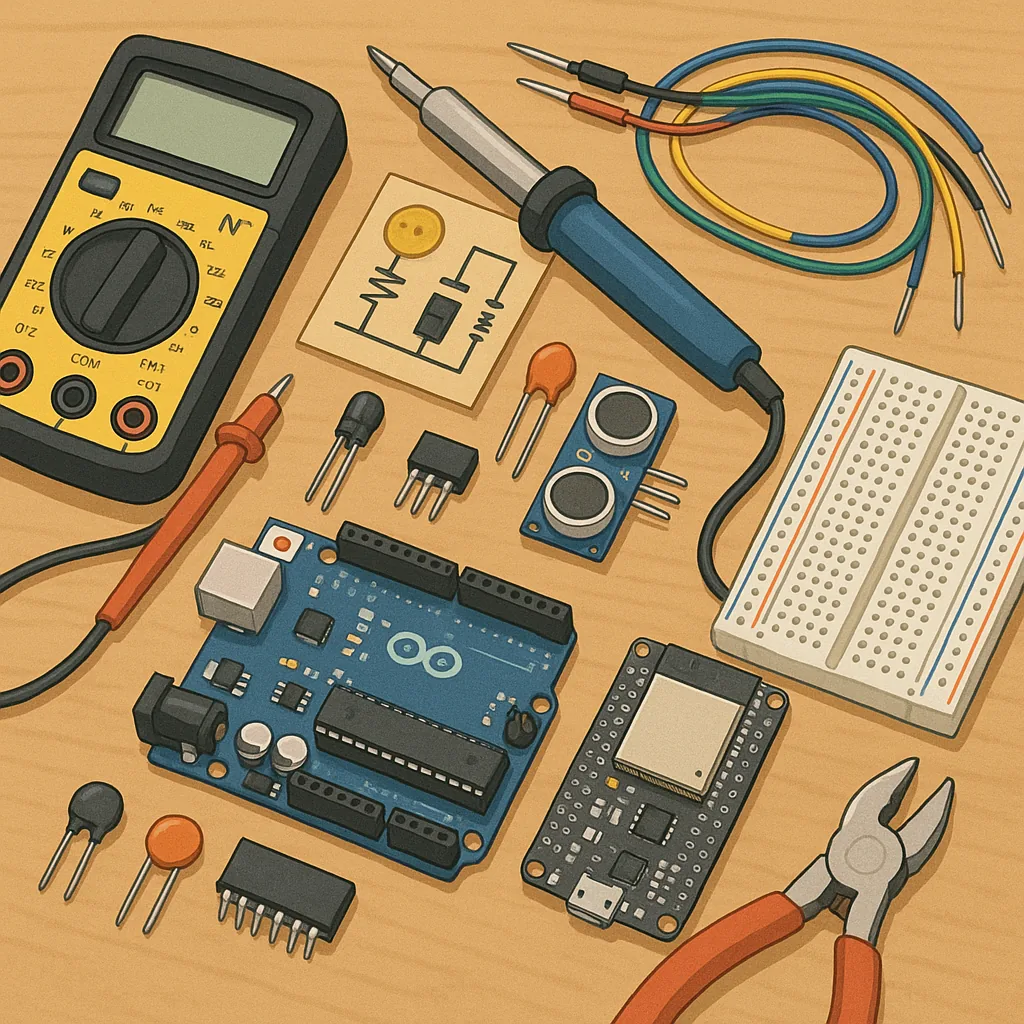
Buying guide: essential electronics kit for hobbyists
Choosing the right kit when you start or expand your electronics hobby can save hours of frustration and a bit of money in the long run, and this guide walks through the key purchases to consider for projects centred on Arduino, ESP32, circuits, soldering, sensors and looms. Focus on versatile items that you will use across many projects rather than single-use modules, and think about the type of projects you want to build before buying expensive specialist tools. A small investment in quality tools and a few reliable components will speed up learning and make hobby time more enjoyable.
When selecting a microcontroller, decide whether you need the simplicity and huge community of Arduino or the connectivity and power of ESP32 devices. Arduino boards such as the Uno and Nano are excellent for beginners and for projects that do not require WiFi or Bluetooth, while the ESP32 family offers WiFi, Bluetooth and significantly more processing capability for IoT or data-logging projects. Buy genuine or reputable clone boards from known suppliers to avoid dodgy voltage regulators and poor USB-serial chips, and consider getting a couple of form factors so you can prototype on a breadboard and move to a compact module for final builds.
Prototyping and circuit work benefits from a small toolkit of repeatable items, such as a decent breadboard, a selection of jumper wires, a perfboard for permanent builds and a modest bench power supply that can safely provide 5V and adjustable higher voltages. A reliable multimeter is essential for diagnosing faults and measuring current, voltage and resistance, and a low-cost oscilloscope or logic analyser can be worth the extra for timing-sensitive digital projects. For PCBs, start with cheap prototyping boards and try ordering one-off fabricated PCBs once your design is stable and you want a cleaner result.
Soldering is one area where quality matters a lot, so invest in a temperature-controlled soldering iron with a selection of tips, a good soldering stand and basic safety kit including a fume extractor or fan. Choose solder wire appropriate to your preference and local regulations; many hobbyists choose leaded 60/40 for its easier flow and lower melting point while taking sensible precautions, whereas lead-free solder is required in some contexts. Other useful items include flux, solder wick, a desoldering pump, magnification and a set of fine tweezers for surface-mount work, and buying replacement tips and spares will keep you working without long interruptions.
Sensors and breakout modules form the heart of many projects, so choose sensors that match the interface and accuracy you need and prefer digital sensors with I2C or SPI where possible for simpler wiring and fewer calibration headaches. Common favourites for hobbyists include temperature and humidity sensors, light and proximity sensors, ultrasonic rangefinders, IMUs for motion sensing and camera modules for vision projects, and it is often worth buying a sensor bundle to experiment with several types before committing to a single supplier. For parts, tutorials and local resources visit WatDaFeck to see practical builds and wiring examples that will help you choose the right module.
Cable looms and connectors are easily overlooked but crucial for a tidy and reliable project, so learn basic crimping and invest in a set of JST connectors, Dupont housings and adhesive-lined heatshrink for strain relief and insulation. Ready-made looms are handy for rapid prototyping or vehicle and robotics builds, but making your own looms with labelled ends and colour-coded wires gives a professional finish and reduces debugging time. Also consider cable management accessories such as cable ties, sleeving and connector locks to avoid intermittent faults and to make maintenance straightforward when projects evolve over time.
Follow me on: Facebook: https://www.facebook.com/watdafeck3d · Instagram: https://www.instagram.com/watdafeck3d/.
Comments
Post a Comment