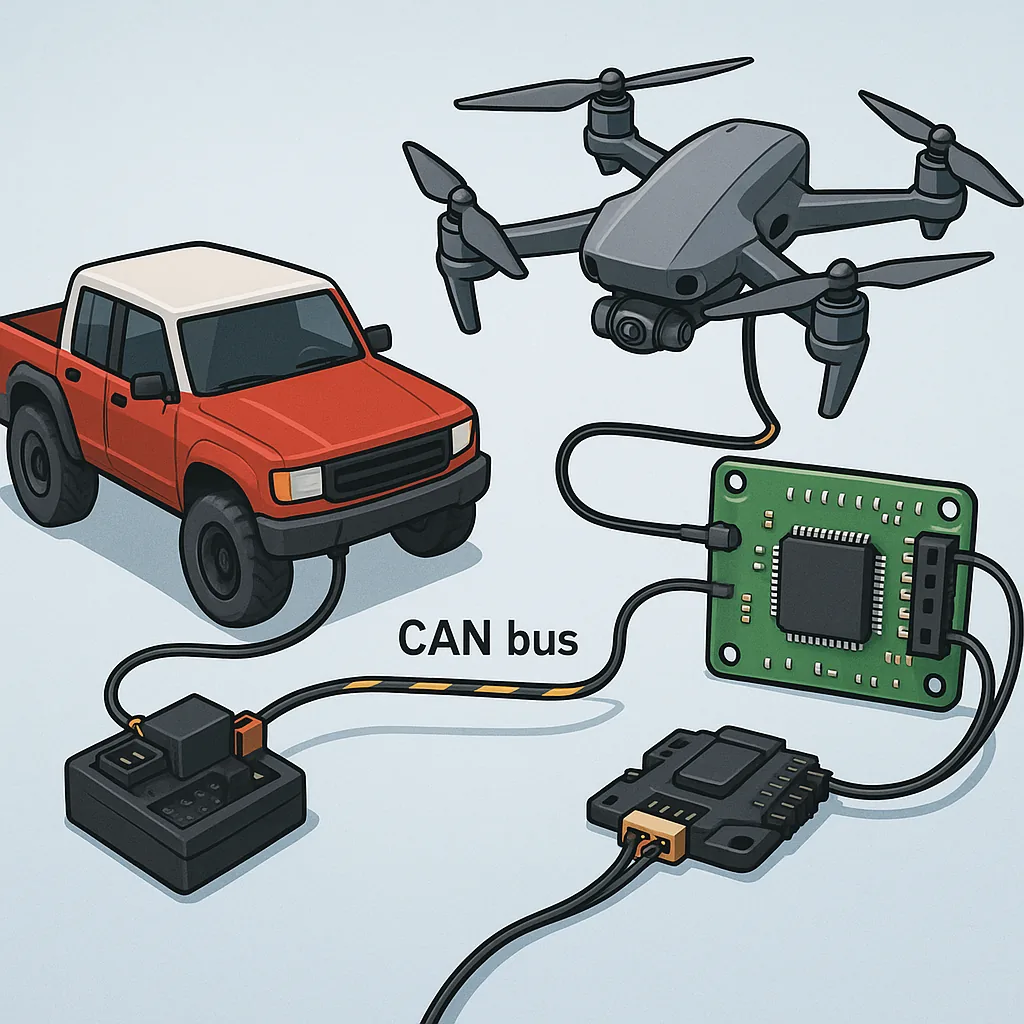
CAN bus for RC hobbyists: a practical buying guide for MAVLink, UAVCAN and servo buses.
CAN bus is increasingly popular in RC projects because it reduces wiring clutter and improves communication reliability when compared with many point-to-point systems, and this buying guide will help you choose the right parts and practices for aerial and surface rigs alike.
When you plan to integrate autopilots and telemetry, check how your chosen flight controller handles MAVLink over CAN or bridges between MAVLink and other buses, since many modern controllers such as PX4 and ArduPilot-compatible boards can speak CAN natively or via an adapter, and choosing hardware with built-in CAN support simplifies wiring and telemetry paths.
UAVCAN sensors are a major reason to adopt CAN for UAVs because they present as addressable devices with health reporting, parameter access and hot-plugging on many implementations, but be careful about protocol versions and compatibility because UAVCAN v0 and the newer Cyphal standard are not always interchangeable and you should favour sensors with clear firmware and community support.
Wiring reliability is where CAN bus really pays off, but it only helps if you wire it correctly, so always use a twisted pair for the CAN_H and CAN_L signals, terminate each end of the bus with the appropriate 120 ohm resistors or choose nodes with configurable termination, avoid long stubs or star topologies that cause reflections, and keep power and ground distribution separate from signal routing so high servo currents do not upset communications.
Servo buses on CAN are worth considering if you run many servos or need fast status updates because CAN servos and smart actuators allow monitoring of temperature and current and reduce the need for PWM harnesses, however you must plan for power distribution since CAN only carries data and servos still need ample gauge power wiring, good connectors and individual fusing for heavy loads.
Before you buy, run through a quick checklist: confirm MAVLink and CAN compatibility for autopilot and ground station, ensure sensors use the UAVCAN version your stack supports, buy controllers or ESCs with configurable termination or known wiring diagrams, look for quality connectors and replace cheap header-only leads where possible, and favour vendors with firmware update procedures and community documentation, and for further build guides and component lists you can visit my site at watdafeck.uk for practical projects and examples.
Follow me on: Facebook: https://www.facebook.com/watdafeck3d · Instagram: https://www.instagram.com/watdafeck3d/.
Comments
Post a Comment