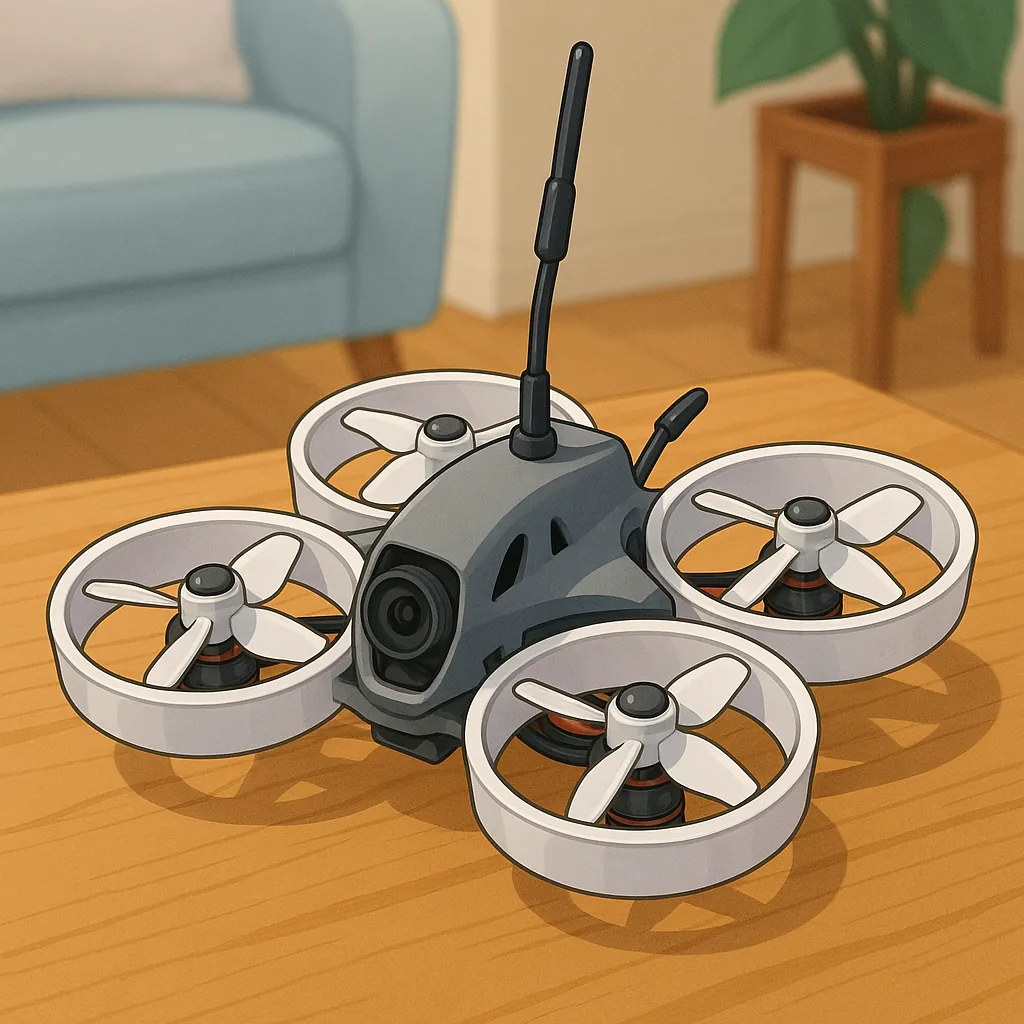
Micro Whoops: A Buying Guide for Hobbyists
Micro whoops are tiny, ducted quadcopters designed for indoor flying and tight spaces, and they make an excellent entry point for hobbyists who want to learn FPV without risking expensive hardware or neighbours' ornaments.
If you are choosing between brushed and brushless whoops, opt for brushless whenever possible because the brushless motors deliver more power, better efficiency, longer motor life, and improved throttle response, which translates into a more controllable indoor experience.
Duct efficiency matters a great deal in micro whoops because the ducts both protect the props and shape the airflow, and a well-designed duct will increase static thrust while reducing turbulence and noise, whereas poorly fitting shrouds can sap performance and increase current draw.
Betaflight is the firmware most commonly used on micro whoops and getting your firmware and tuning right will greatly improve handling, so look for a flight controller that supports RPM filtering and ESC telemetry, use a modern digital ESC protocol such as DShot when available, and take time to tune your filters and PID gains rather than relying solely on defaults.
When shopping, check these essentials before you buy.
- Frame and duct compatibility: ensure replacement ducts and props are available for your model and that the geometry does not pinch the props.
- Motor and prop specs: choose brushless motors with good KV for the battery voltage you plan to use and match them to efficient, lightweight tri-blade or two-blade props as recommended by the manufacturer.
- Battery type and connector: confirm the battery chemistry, cell count and connector type so you can source spares easily, and favour higher-quality cells for stable voltage under load.
- Flight controller features: prefer FCs with Betaflight support, built-in OSD and support for ESC telemetry so you can enable RPM filters and log motor behaviour for tuning.
- Build quality and spares: choose a model with readily available spares such as ducts, props and screws to keep downtime to a minimum after an inevitable indoor impact.
For local build tips, parts recommendations and community projects that will help you get airborne quickly, check the guides at WatDaFeck which often cover indoor flying techniques and component choices for UK hobbyists.
Follow me on: Facebook: https://www.facebook.com/watdafeck3d · Instagram: https://www.instagram.com/watdafeck3d/.
Comments
Post a Comment