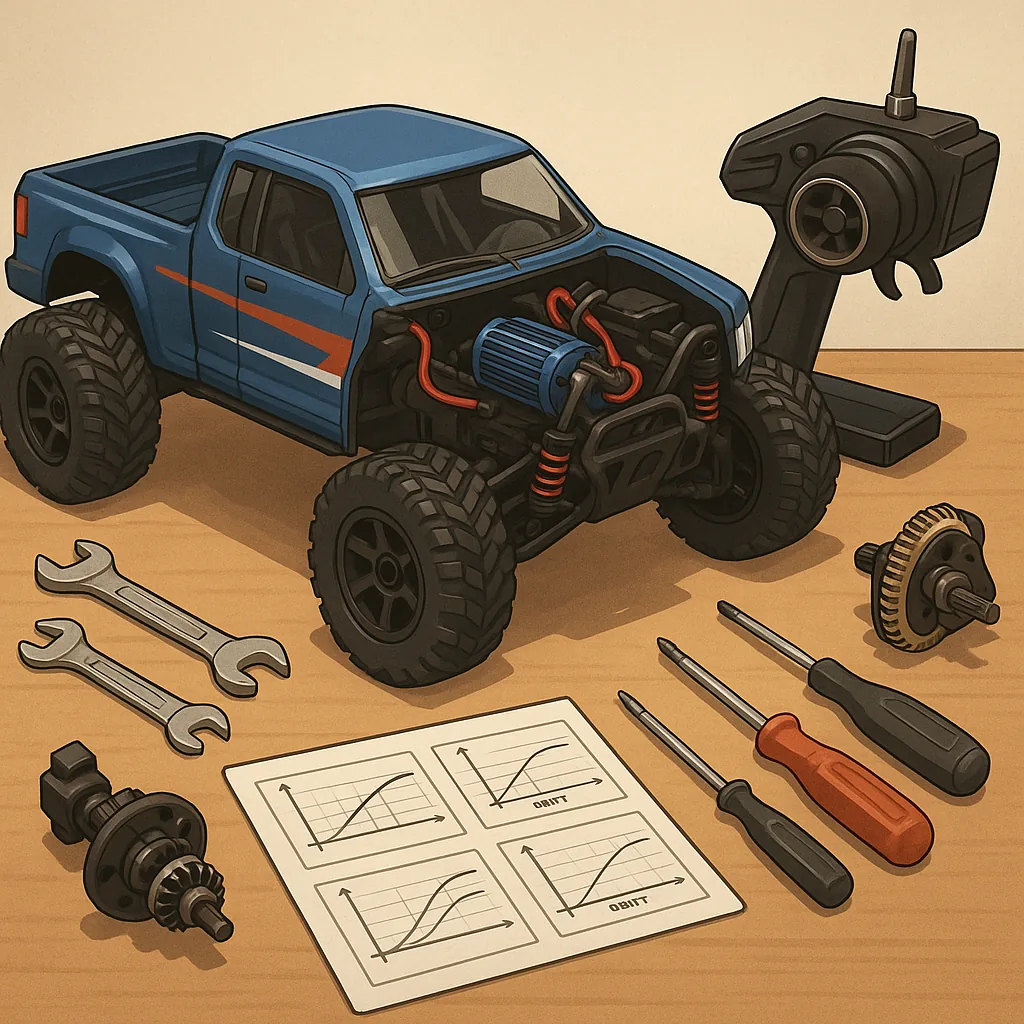
RC Car Troubleshooting for Hobbyists: Gearing, Brushless Motors, Drift Tuning and Traction Control.
This guide is aimed at hobbyists who want clear, practical troubleshooting steps for common RC car issues centred on gearing, brushless motors, drift setups and traction control, and it assumes a basic understanding of your car's parts and tools for field adjustments.
Gearing problems are a frequent cause of poor performance and overheating, and symptoms you should look for include low top speed, sluggish acceleration, or sudden motor heating during a run, and the first checks are correct pinion and spur sizes, gear mesh and the condition of teeth and bearings.
If the motor seems undergeared, try stepping up the pinion by one tooth and test on a measured straight; if it overheats quickly the pinion is too large or final drive is too tall for your track, and if acceleration is weak try a lower pinion or consider a different KV motor matched to your battery voltage, with setup sheets and parts advice available at WatDaFeck for reference.
Brushless motor issues can show as cogging at low throttle, inconsistent output, or ESC cutouts, and you should inspect solder joints, motor connectors and bearings, check that the ESC firmware and timing are compatible with a sensored or sensorless motor, and verify there are no loose magnetic shims or debris rubbing inside the bell.
To fix brushless symptoms, calibrate the ESC throttle range, reduce motor timing to lower heat and current draw if necessary, increase timing only when the motor and ESC can handle the additional thermal load, ensure adequate cooling and consider running a slightly softer punch or throttle curve to reduce wheelspin at low speed for controlled drifts and longer component life.
Drift tuning and traction control often interact, so when your car oversteers uncontrollably or slides inconsistently try a sequence of changes rather than a scattergun approach, starting with tyre choice and slipper clutch adjustment to control torque transfer, then fine-tuning toe, camber and caster for predictable steering response and rear stability.
More specifically for drifters, increase rear toe-in to stabilise slides and soften rear dampers to help the rear break away smoothly, add front steering angle with a limiting brace if needed and adjust the diff or differential preload to balance slip onset, while for traction you can enable or tweak ESC traction control, adjust throttle curves or fit a thicker front tyre compound to reduce snap-back under power.
Quick troubleshooting checklist to run before your next session:.
- Visual inspection of gears, drive shafts and motor mount for wear and proper mesh.
- Swap the motor to a known-good unit to isolate ESC versus motor problems.
- Check ESC logs and calibrate the throttle and brake ranges on a bench with prop guards in place.
- Measure temperatures after a short run and back off gearing if components exceed safe limits.
- Tune slipper clutch or differential gradually and test one change at a time to identify its effect.
When you have completed these steps, retest on track at reduced speed and log what changed, because methodical testing and small incremental adjustments are the quickest route to a reliably performing RC car and fewer surprises during competitive or practice runs.
Follow me on: Facebook: https://www.facebook.com/watdafeck3d · Instagram: https://www.instagram.com/watdafeck3d/.
Comments
Post a Comment