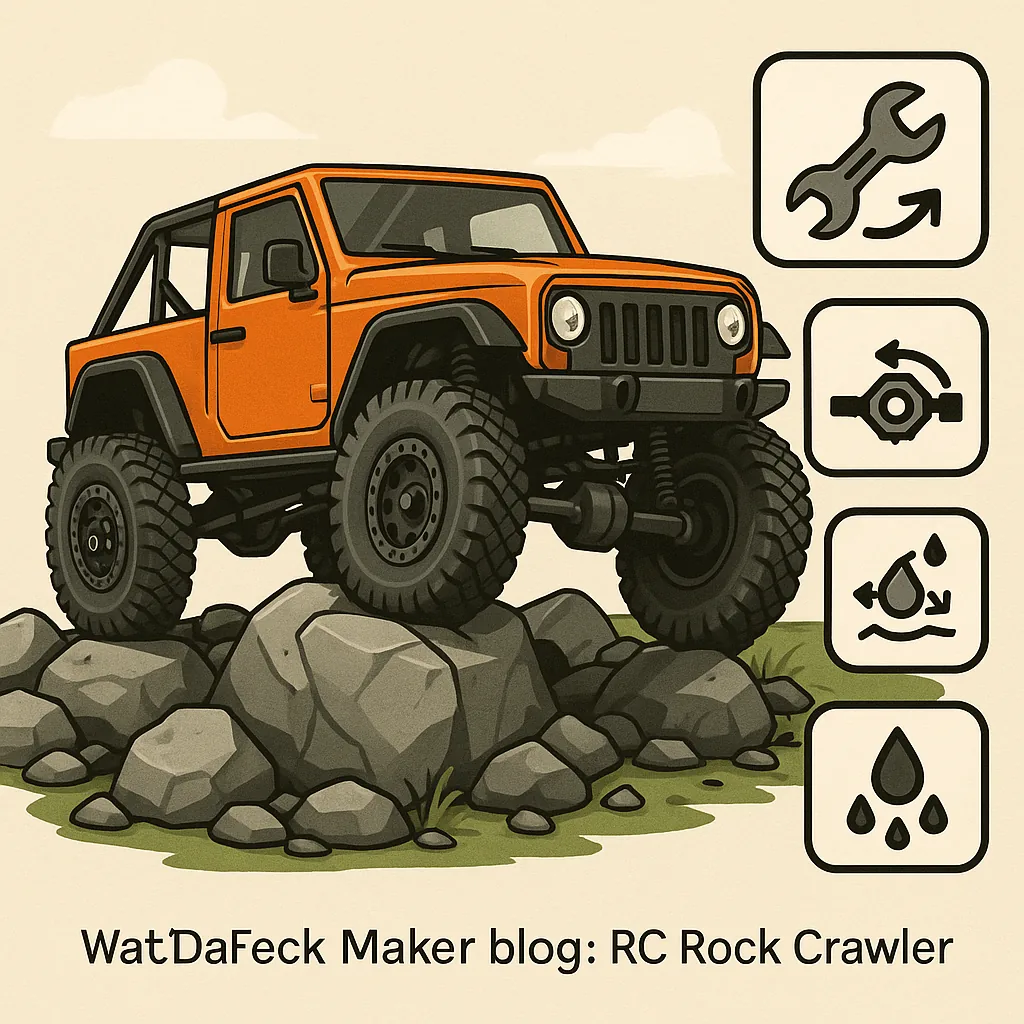
RC Rock Crawler Troubleshooting: Portals, Torque, Articulation and Waterproofing.
RC rock crawling is wonderfully forgiving for experimentation, but it also exposes weak points quickly when you push gear to its limits, and this guide focuses on practical troubleshooting for the things that most often let you down during a trail session, namely portal axles, torque setups, articulation and waterproof electronics.
Portal axles are fantastic for increased ground clearance and intrinsic gearing, but they introduce additional gears, seals and bearings that require attention, and common failures include loose diff output splines, oil leaks around the portal housings and poor gear mesh causing whine or stripped teeth, so inspect seals and bearings first, check backlash between crown and pinion, ensure gear oil is the correct weight and replace any pitted gears promptly, and I keep a workshop page with photos and parts lists at https://watdafeck.uk which can help when sourcing portal axle spares.
When setting up torque for a crawler you want smooth low-speed power rather than top speed, and check pinion and spur combinations as well as portal reduction ratios to ensure your motor is not overheating or saturating the ESC, and if you get servo stalling when under load it is usually either insufficient torque from an underspecified servo or binding in the steering geometry rather than an electrical fault, so swap to a higher torque servo temporarily to isolate the problem and use a thermal probe to check motor and ESC temperatures after a climb.
Articulation is what keeps tyres in contact on uneven terrain and poor articulation will show as loss of traction on one side or a tendency to tip, so look for suspension bind caused by misaligned link mounts, collapsed shock reservoirs, or tyres rubbing the chassis, and set up droop and bump stops to prevent over-extension that damages CVs and driveshafts, and always check for drive line binding at full compression and full droop.
- Check link lengths and pivot points for parallelism to avoid binding and roll steer.
- Verify shock mounting positions and spring preload to balance rebound and compression damping.
- Inspect CVs and dogbones under full articulation for wear or rubbing that limits movement.
- Use limiting straps or anti-wrap devices if your chassis shows excessive axle wrap under torque.
Waterproofing electronics is not simply buying a part that says waterproof because connectors, vents and heat sinks create failure paths, and practical steps include using IP-rated servos and ESCs where possible, sealing receiver boxes with foam gaskets and grease on plugs, adding small breathable vents for pressure equalisation, potting or conformal coating PCBs if you are confident doing so and carrying spare sealed components for wet sections, and after a wet run flush bearings with clean water to remove grit then dry and re-lubricate all moving parts rather than leaving salt or mud to corrode components.
Follow me on: Facebook: https://www.facebook.com/watdafeck3d · Instagram: https://www.instagram.com/watdafeck3d/.
Comments
Post a Comment