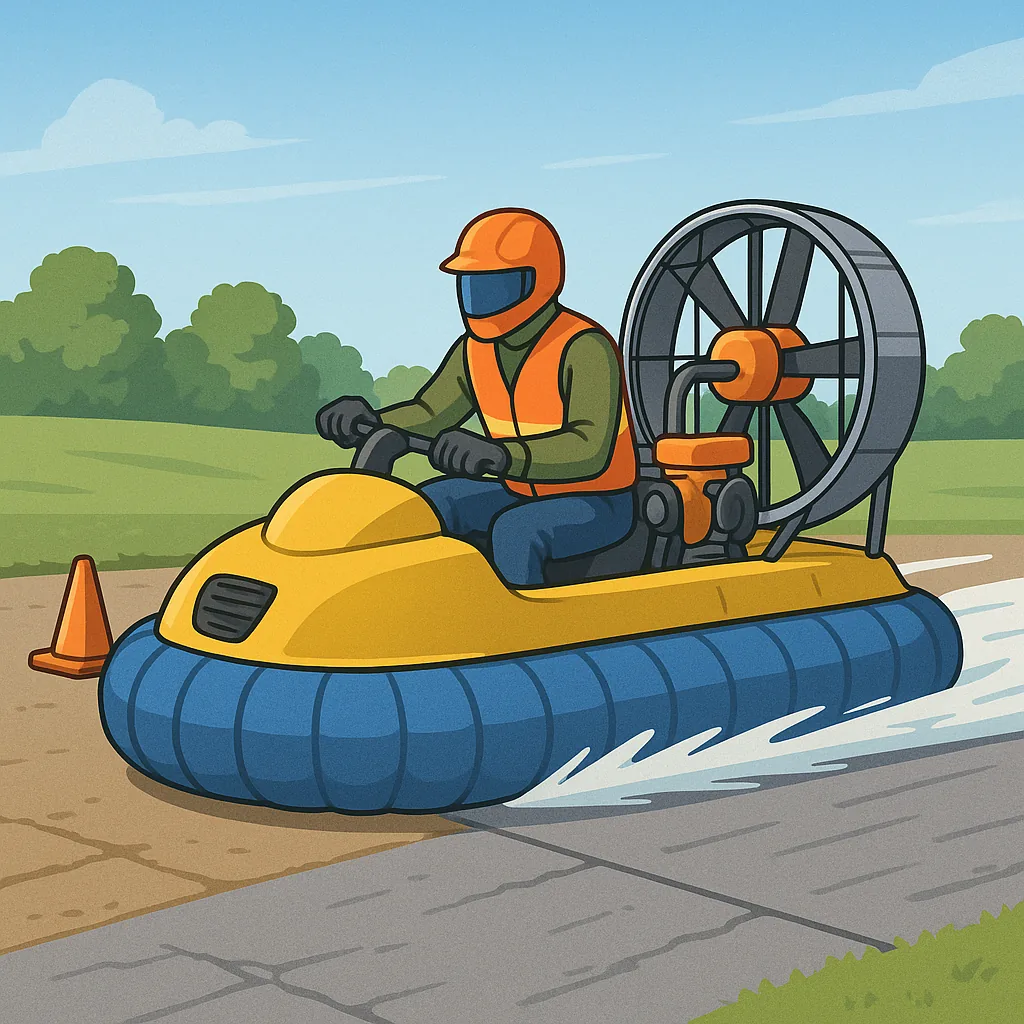
Safety overview for hobbyist land hovercraft projects
Land hovercraft are deceptively simple to build and rewarding to test, but their low-friction behaviour and high thrust can make them hazardous if safety is not prioritised during design and trials. This overview concentrates on three areas where most avoidable incidents occur: low-friction skids, blower tuning and surface transition testing, and it is written for hobbyists who want practical guidance rather than theoretical detail.
Low-friction skids determine how the craft interacts with the ground and are the first line of defence against loss of control. Use materials with low wear rates such as UHMW polyethylene, PTFE tape or hard-wearing HDPE for sacrificial runners, and fit them as replaceable blocks so you can change them after abrasion. Ensure skids are securely fastened with countersunk fasteners or captive nuts to avoid snagging, and bevel the leading edges to reduce catching on bumps or kerbs. Provide adjustability so you can tune ride height and trim without fabricating new parts, and keep a simple inspection checklist to spot cracking, delamination or embedded debris before every run.
Blower tuning is about balancing cushion pressure, flow and stability rather than just fitting the biggest fan you can find. Measure static pressure in the plenum and tune the inlet and outlet areas so the system produces a stable cushion at your intended payload rather than short, violent surges of lift. Consider a variable speed controller or bypass valve to allow gradual power increase during shakedown tests, and monitor motor and inverter temperatures to prevent thermal damage. Fit adequate intake filtration and guard exposed belts or impellers, and keep noise and exhaust flow directions in mind when positioning operator and observers.
Surface transition testing is the stage where most hovercraft surprises occur, because crossing from tarmac to grass, gravel or slopes changes drag, lift loss and steering behaviour. Conduct transitions at low speed and simulate the worst expected surface in a controlled environment before attempting full runs. Use ramps or plates to reproduce edges at the same height as local curbs and practice approach angles that reduce the chance of the skirt catching; shallow angles and reduced speed are safer. Test the skirt and seal behaviour by intentionally creating small step changes and observe whether the craft recovers or the cushion vents; make incremental adjustments to skirt length and baffling to improve recovery characteristics.
Establish a methodical test protocol that prioritises stopping and containment before speed and distance. Always have a clearly marked test area, at least one trained spotter and a functioning remote kill switch or failsafe that can remove power quickly from the blower and propulsion systems. Wear hearing protection close to large blowers and eye protection when working near fast-spinning parts, and keep a fire extinguisher and a basic first-aid kit on site. For electric projects, use proper charge and discharge procedures, secure battery mounting and anti-short housings, and practise electronic failsafes such as throttle-neutral on signal loss and redundant stop circuits.
Record each trial in a log with conditions, payload, blower settings and any anomalies so you can identify trends and recurring faults, and perform maintenance at regular intervals rather than on an ad hoc basis. Share lessons and photos with other builders so common problems are widely understood, and consult build notes and checklists from experienced makers when in doubt, for example by visiting https://watdafeck.uk for practical examples and component recommendations.
Follow me on: Facebook: https://www.facebook.com/watdafeck3d · Instagram: https://www.instagram.com/watdafeck3d/.
Comments
Post a Comment