Workshop Upgrade Build Log: Practical Steps for Better Storage, Jigs and Tools
This build log describes the incremental workshop improvements I made over a fortnight to bring more organisation and repeatability to my hobby space, with a focus on storage, jigs and sensible tool upgrades. The aim was to create dedicated zones for electronics, woodwork and finishing so projects flow from start to finish without wasted time. I started with a clear brief, a rough sketch of the layout and a small budget to guide decisions.
Day one was a full clear-out and survey of the space, noting stud positions, power points and dust extraction routes before any permanent fixings went up. I measured bench heights and sketched a simple grid to locate pegboards, cabinets and a charging station for batteries, then recycled or donated tools I no longer used to free up space. I uploaded the step-by-step photos and plans to my site WatDaFeck for anyone who wants to follow along and see the final layout in detail.
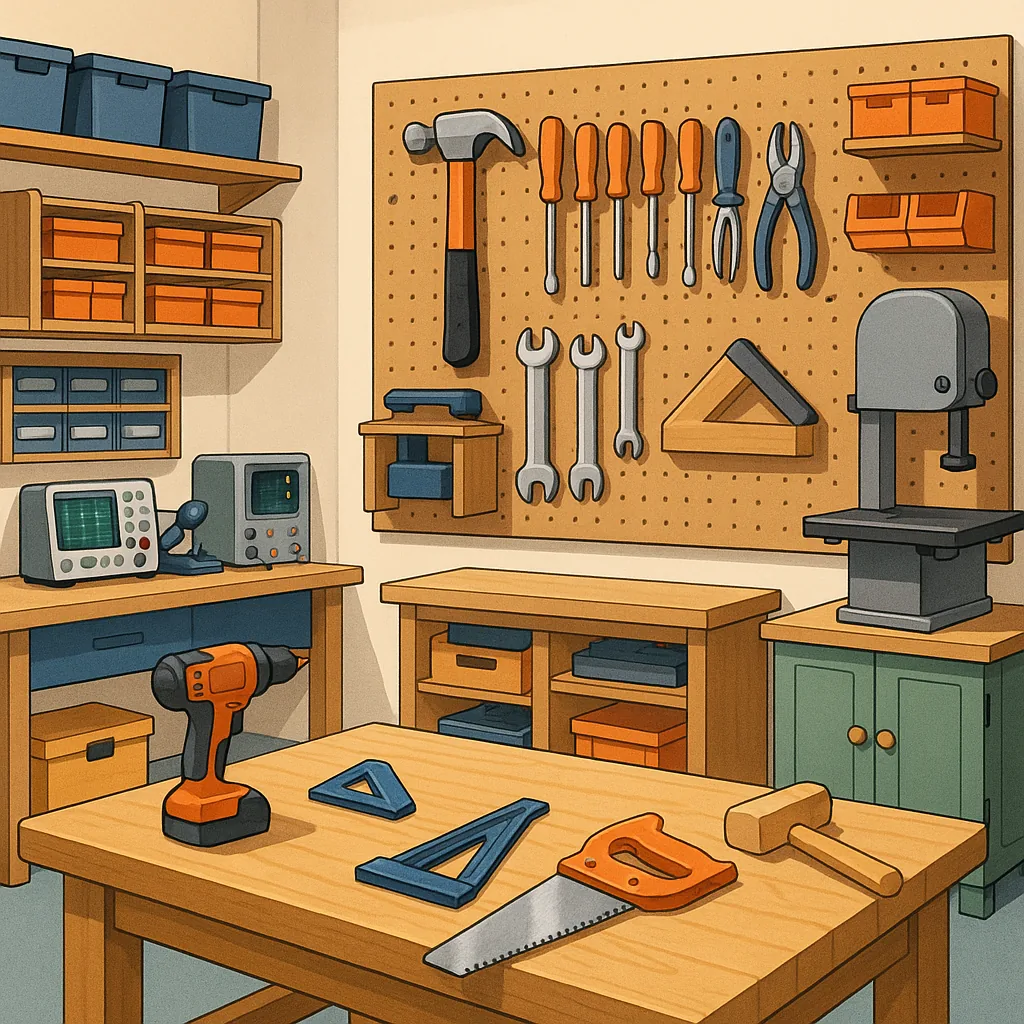
On day two I built the main storage runs, starting with a wall-mounted pegboard above the primary bench and a row of shallow drawers beneath the worktop for hand tools. I used 12mm plywood for the drawer units and fixed them to the bench frame with coach bolts and glue for rigidity, and added anti-tip brackets to the wall-mounted units for safety. Small parts were sorted into clear, labelled bins and magnetic strips were installed for commonly used screwdrivers and spanners so they are visible at a glance.
Day three was devoted to jigs and repeatability, which immediately improved accuracy for small batches of parts. I made a simple fence jig for my circular saw from MDF, a stop-block system for the drill press using a turned hardwood block and micro-adjuster, and a set of 3D printed spacer blocks for clamping irregular shapes. The following list shows the key jigs I built and why they matter:
- Cutting fence jig for straight repeat cuts.
- Drill press stop block for consistent hole depth.
- Sanding jig with a clamping cradle for rounded parts.
Tool upgrades came next and were prioritised by impact on workflow rather than cost. I replaced blunt router bits and drill bits with quality carbide-tipped sets, fitted quick-change chucks to the bench drill and added an LED strip under the shelving for task lighting. A small cyclone pre-separator for my vacuum dramatically reduced bag changes and kept filters lasting longer, and a bench-mounted power strip with labelled switches helped prevent accidental tool power-ups.
The finishing touches were organisation systems and a short maintenance routine to keep everything working well over time. I added towel rails for tapes and cables, vinyl labels for drawers and a simple Kanban-style board for active projects pinned to the wall. After assembling a small test project I tweaked jig clearances and repositioned a shelf for better tool reach, and I wrote a one-page maintenance checklist to run monthly so the improvements stick and evolve with my needs.
Follow me on: Facebook: https://www.facebook.com/watdafeck3d · Instagram: https://www.instagram.com/watdafeck3d/.
Comments
Post a Comment