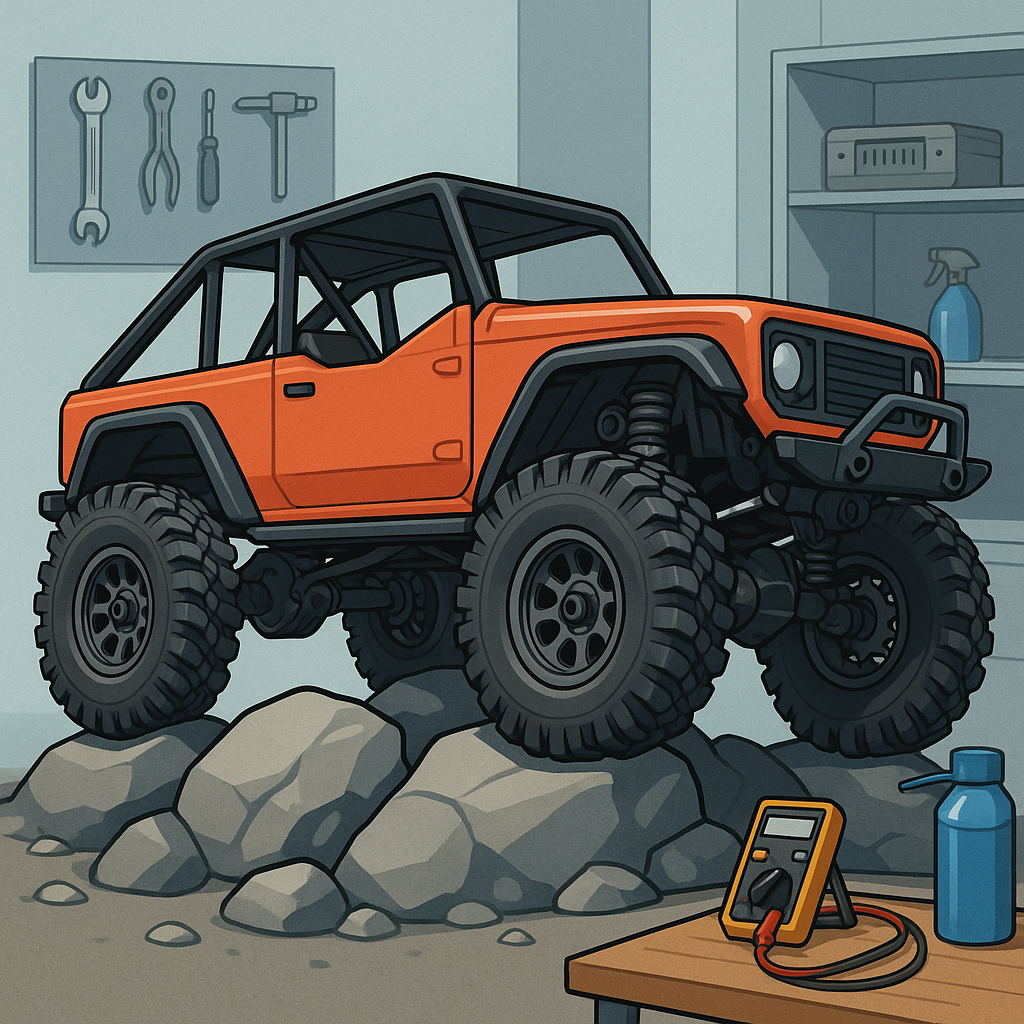
RC Rock Crawler Troubleshooting: Portal Axles, Torque, Articulation and Waterproofing.
When your RC rock crawler refuses to perform the gentle, controlled climbs you expect, systematic troubleshooting saves time and parts. This guide walks through the most common mechanical and electronic failure modes hobbyists encounter, with practical checks you can do trackside and in the workshop. The focus is on portal axles, torque and gearing setups, articulation tuning and keeping electronics safe from water and mud.
Portal axles are brilliant for increased ground clearance but introduce a few extra failure points compared with straight axles. Listen for grinding or whining under load to indicate worn planetary gears or poor bearing support, and check for lateral play at the hub that can mean worn bushes or a cracked housing. Remove the portal cover and inspect gear mesh and shims for correct backlash, and verify seals and grease have not been contaminated by water or grit. If you want build photos and a parts list that matches many portal setups, see my site at WatDaFeck for reference images and notes.
Getting the torque setup right is essential for crawl speed and drivetrain longevity, and the two common mistakes are too much power with aggressive pinion gearing, or too little torque causing stalls and overheating. For slow, controlled crawling choose a lower pinion tooth count and a motor with a higher turn rating or a crawler-specific torque motor, and dial ESC punch and throttle curves to give smooth, proportional power. If you use a slipper clutch, set it to slip under sudden shock loads but not under steady incline torque, and watch motor and ESC temperatures during a long session as excessive heat is a sign of gearing mismatch or binding in the driveline.
Articulation is about keeping tyres in contact with uneven terrain and distributing weight through the suspension, and diagnosing poor articulation usually starts with mounts and link geometry. Check shock length and mounting positions first because changing the upper or lower link mounts by even a few millimetres can dramatically alter droop and compression behaviour, and consider progressive springs or softer shock oil to prevent harsh bottoming. If one wheel lifts repeatedly, examine anti-roll bars, sway bar links and chassis stiffeners, and try removing or disconnecting a roll bar temporarily to assess potential gains in flex.
- Quick checklist: inspect portals and bearings, verify gear mesh and backlash, test throttle curves and gearing under load, check shock oil and travel, and confirm all connectors and seals are intact.
- Carry spares: portal gear sets, shock seals, a small tube of marine grease and a basic soldering kit for emergency repairs.
Waterproof electronics are more than a selling point, they are a reliability measure that prevents intermittent faults and expensive component failure, and common failure points are unsealed servo input caps, receiver bind plugs and ESC cooling vents. Use purpose-built waterproof servos if you run in wet conditions, apply a light smear of dielectric grease to input splines and use heat-shrink or silicone over exposed solder joints, and consider conformal coating on small receiver boards if you have the tools. Remember that waterproofing can trap heat, so monitor regulators and ESCs after resealing to avoid thermal cutouts, and where possible choose enclosures that shed water but allow airflow in a controlled way.
When troubleshooting, take an iterative approach and change one variable at a time so you know which adjustment fixed the issue, and log symptoms such as noise, heat, or loss of contact to help pinpoint the cause. Start with the simplest checks like tyre pressure, wheel nuts and link bolts, then move to portals, different gearing and finally to electronic diagnosis with a bench power supply and servo tester. Regular maintenance, a small spares kit and methodical testing are the best ways to keep a crawler mobile and avoid repeated field repairs.
Follow me on: Facebook: https://www.facebook.com/watdafeck3d · Instagram: https://www.instagram.com/watdafeck3d/.
Comments
Post a Comment