Safety First: RC Gliders and DLG — Thermalling, Light Builds, Wing Stiffness and Launch Technique
Flying radio‑controlled gliders and discus launch gliders (DLGs) is an immensely rewarding hobby that mixes skilful piloting with an understanding of aerodynamics and weather. Safety must come before flair, because many accidents can be prevented with the right preparation and mindset. This article gives a practical safety overview focused on thermalling, the compromises of light builds, why wing stiffness matters, and safe discus launch technique.
Thermalling is how most sailplane pilots extend flight time, but it brings specific risks that require constant situational awareness. Always scan the sky and maintain a mental picture of other aircraft, paragliders and full‑size traffic, and obey any local flying site rules or airspace restrictions. When centring a thermal, avoid tight circles at low altitude and be ready to reduce bank angle if another model or person enters your airspace. If visibility or cloud base is poor, or wind shear is apparent, break off the thermal early and return to a safe landing area rather than pushing for height. Carrying a spotter and using a second radio observer can add a vital pair of eyes when thermalling in busy conditions.
Lightweight builds are the hallmark of competitive DLGs and many hand‑launched gliders, but they change flight behaviour and safety margins. Lighter models climb quickly in lift but are more vulnerable to turbulence, rain and hard landings, and they can be harder to see at a distance. When designing or buying a light model, prioritise robust, well bonded joints and secure linkages rather than chasing every last gram. If you want detailed notes on material choices, construction technique and weight targets, you can find build articles on my site at WatDaFeck that explain the trade‑offs in a practical way. Always test a light model gently before attempting aggressive launches or thermalling sessions.
Wing stiffness may seem technical but it has a direct bearing on control and safety during both launch and thermal flight. A wing that twists or flexes under load can change the effective angle of attack and lead to unpredictable behaviour in tight turns or gusty lift. Ensure your wing retains sufficient torsional stiffness for the span and loading you expect to fly, and check for play at the root, spars and joiners before each session. Correct rigging — secure dihedral, proper incidence and symmetric control throws — makes a flexible wing behave more predictably, but do not use rigging to mask a structurally weak assembly. If you suspect delamination or damage, ground the model and repair it fully before flying again.
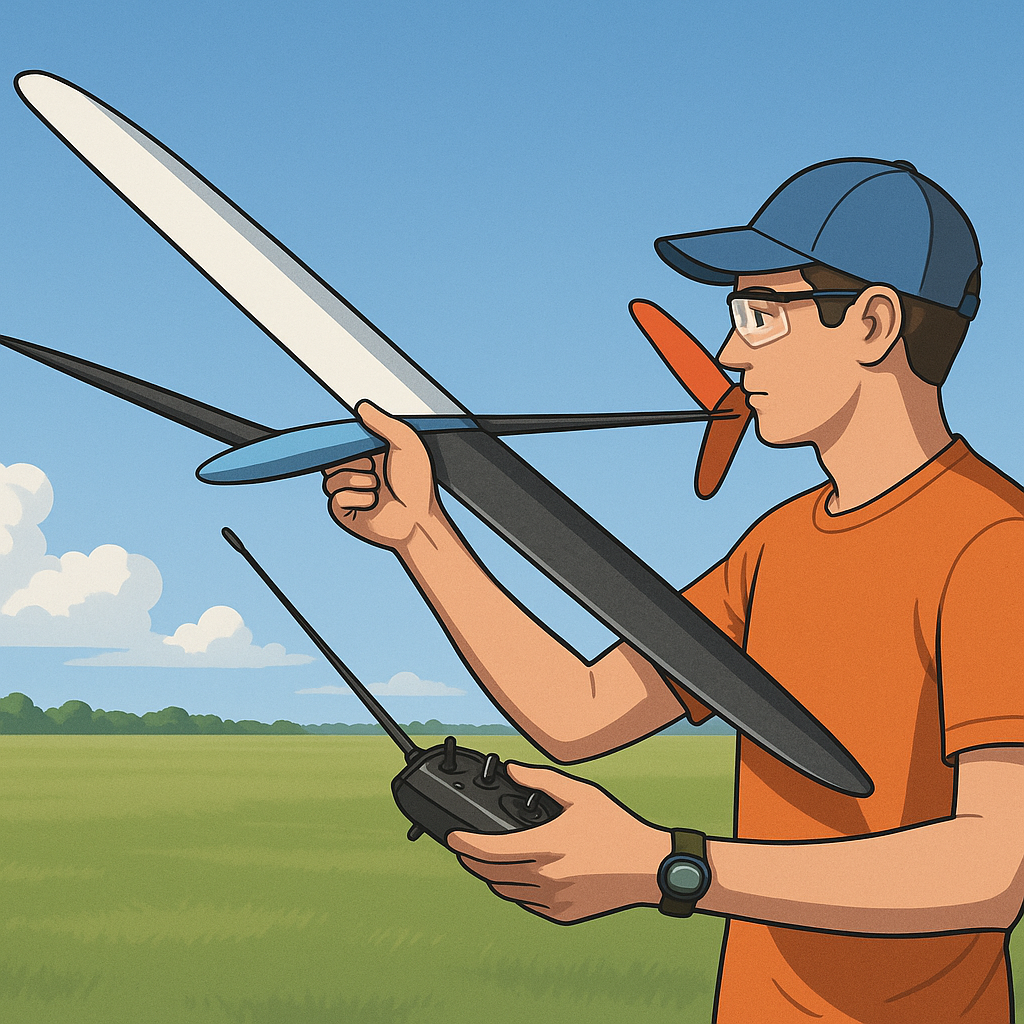
The discus launch is a skilful technique that delivers high launch height with minimal hardware, but it concentrates energy in a short, dynamic movement so safety is paramount. Practice the motion on grass with a training stick or an unloaded replica to build coordination before attempting a full DLG throw. Always choose a clear launch sector well away from people, vehicles and property, and announce your intention to launch so bystanders are aware of the moving glider. During the throw, maintain a firm grip on the fuselage and ensure your wrist release is predictable; if the model does not release cleanly, drop it into the grass rather than forcing the motion. After launch, look up immediately, trim in quickly and be prepared to lower the nose briefly to gain airspeed if you feel a tip stall developing.
Pre‑flight checks, field etiquette and contingency planning round out safe DLG and glider flying. Walk around the model and verify linkages, battery voltage and the security of wings and launch fittings before every flight. Observe local launch and landing patterns, avoid flying over livestock or crowds, and be ready with a plan for retrieval if your model drifts into a hedge or water. Instructors and experienced pilots recommend controlled practice, incremental skill progression and carrying small repair kits to the field for quick fixes, because many incidents are avoidable with simple foresight and good maintenance habits.
Follow me on: Facebook: https://www.facebook.com/watdafeck3d · Instagram: https://www.instagram.com/watdafeck3d/.
Comments
Post a Comment