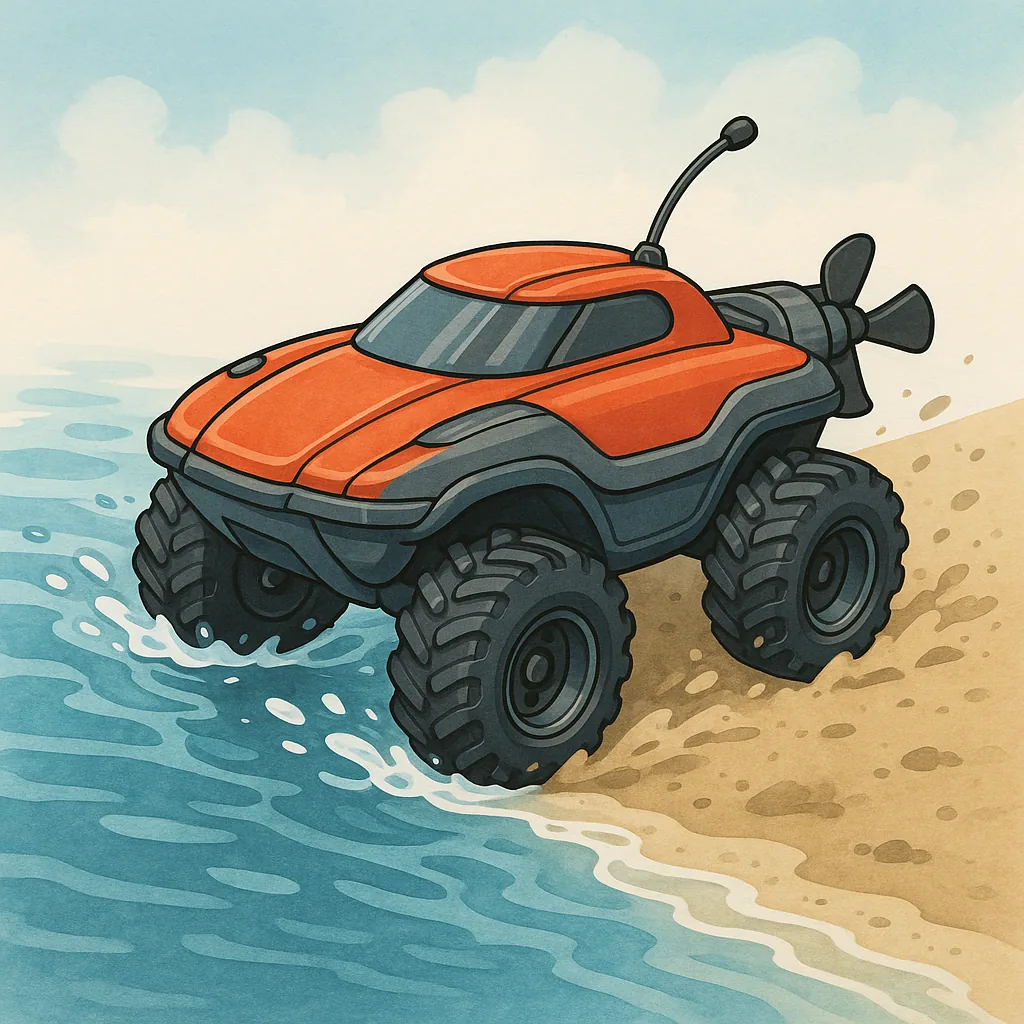
Troubleshooting Amphibious RC Craft: Water-to-Land Transitions, Buoyancy and Seals.
Amphibious RC craft are brilliant fun but they combine the worst of both worlds when it comes to failures, and that means a focused troubleshooting approach is essential for every hobbyist.
Start with the water-to-land transition because it is the most common point of failure, and typical symptoms to look for are stalling when the craft exits the water, sudden nose-diving, sluggish wheel drive and water ingress into drive units.
- Test propulsion separately on land and in water to isolate whether the motor, drive train or control linkages are at fault.
- Check for propeller or wheel drag caused by fouling, bent shafts or debris and trim or replace parts as necessary.
- Verify gearing and torque; many amphibious designs need lower gearing for land to overcome wheel slip while retaining higher RPM for water thrust.
- Inspect hull attitude and trim when exiting the water; small weight shifts or worn suspension often change the angle and prevent clean beaching.
- Run a dry ingress test on seals and servo boots to locate leaks before they reach electronics.
For practical follow-ups, do a staged testing routine: run the boat in water, bring it slowly onto a ramp or shallow shore, then drive on flat ground while observing motor temperature, battery sag and steering responsiveness because these steps will reveal whether you have a mechanical, electrical or hydrodynamic issue.
Buoyancy problems can be subtle because even a craft that floats can be dangerously close to sinking if water is allowed into recesses, so check internal foam blocks, sealed compartments and the position of ballast to maintain a positive reserve buoyancy of at least 10 percent of the craft's displacement.
When assessing buoyancy, look at the centre of gravity and centre of buoyancy relationship, trim fore and aft with small adjusters or removable weights, and add sealed air chambers or closed-cell foam to local low points rather than increasing overall weight because every extra kilogram affects land performance.
Seals are the guardian of your electronics and drive train, and common mistakes include using the wrong O-ring size, reusing damaged shaft seals and failing to allow for thermal expansion in battery boxes, so replace seals regularly and apply thin layers of silicone grease to improve seating.
Waterproofing the electrics can be achieved by using conformal coating on boards, potting messy joints, and employing bulkhead connectors for removable components, and remember to fit a breather or pressure-equalising vent on sealed battery boxes to avoid vacuum lock or pressure-driven leaks.
Mixed-terrain driving needs compromises: tyres with an aggressive but not overly soft tread help on mud and grass while low-rolling-resistance compounds reduce drag in water, and adjustable ride height or removable wheel guards allow you to tune clearance for ramps and shoreline obstacles.
Control programming and user technique are also part of reliability because soft throttle curves reduce wheel spin during transitions, a two-stage kill switch prevents accidental high-power water push into land drive trains, and practising gradual beaching builds operator skill and preserves hardware life.
If you want parts lists, build logs and real-world fixes from my workshops, check my project pages at https://watdafeck.uk for examples and measurements that you can adapt to your own craft.
Follow me on: Facebook: https://www.facebook.com/watdafeck3d · Instagram: https://www.instagram.com/watdafeck3d/.
Comments
Post a Comment