EDF Jet Project Ideas for Hobbyists: Ducted Fans, Power-to-Weight, Foam Reinforcement and Safe Launching
EDF Jet Project Ideas for Hobbyists: Ducted Fans, Power-to-Weight, Foam Reinforcement and Safe Launching
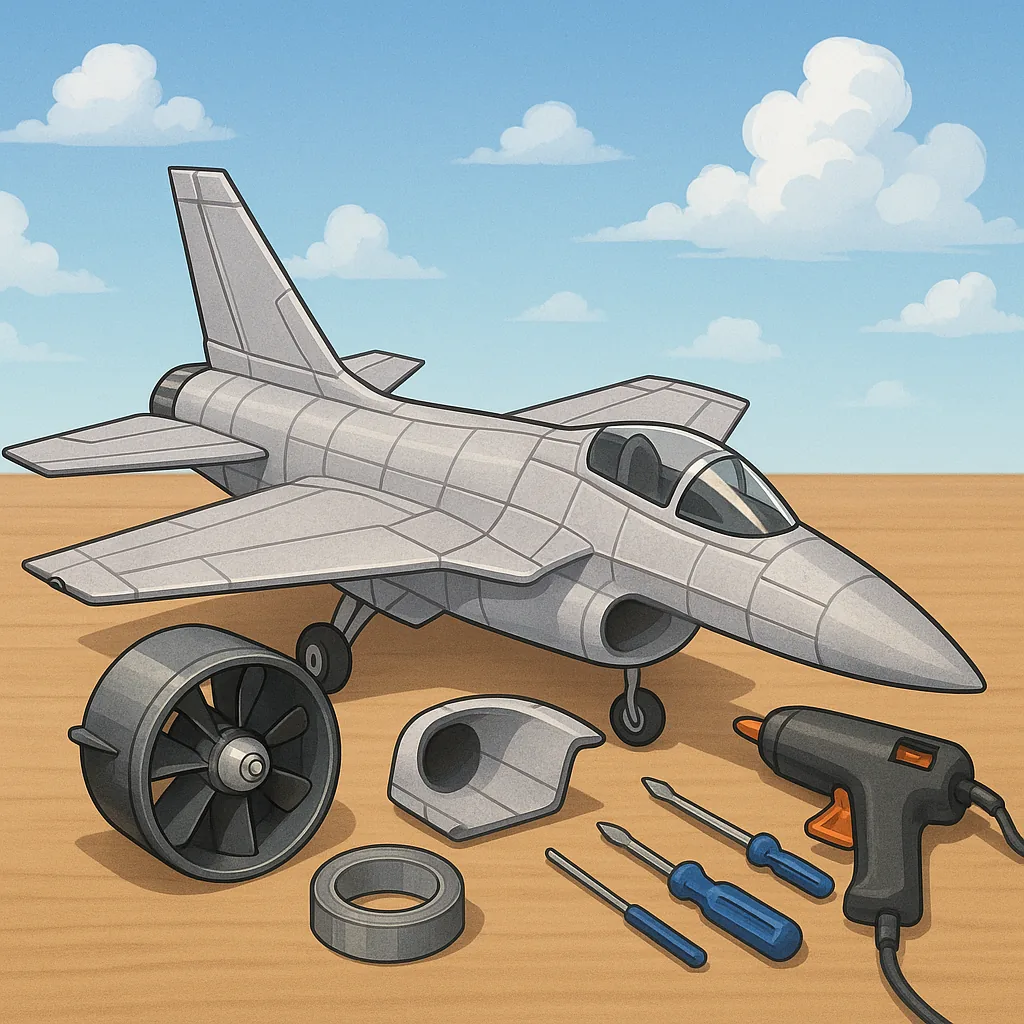
Electric ducted fan jets are one of the most satisfying projects for a maker with a taste for aerodynamics and sound, and they work well whether you favour scale realism or pure performance. This article rounds up compact project ideas and practical tips so you can tackle your next EDF build with confidence and focus. The emphasis is on choosing the right ducted fan, managing power-to-weight, reinforcing foam structures, and launching safely.
Choosing the right ducted fan and motor combination is the foundation of any successful EDF project, and that choice depends on fan diameter, blade count, stator design and the motor's RPM and torque characteristics. Smaller fans spin faster and need high KV motors and high discharge batteries, while larger fans move more air at lower RPM for a smoother, scale-like sound and efficiency. Aim for a thrust-to-weight ratio that suits the model's role, with around one-to-one being a sensible baseline for scale jets and values above one-and-a-half-to-one for aerobatic or fast sport models, and always match ESC and battery C-ratings to the motor's amperage demands to avoid overheating.
Foam airframes are light and easy to shape but need careful reinforcement where loads concentrate, such as motor mounts, wing roots and the fan duct attachment. Popular methods include glass cloth with thin epoxy or polyester resin across stressed areas, carbon-fibre spars embedded in foam cores, and 3D-printed mounting bulkheads bonded with foam-safe adhesive. For EPP or EPO foams that resist epoxy, use small plywood or hardwood inserts for screw points and secure them with slow foam-safe CA or epoxy fillets. Sealing the foam with packing tape or a heat-shrink film before finishing can reduce tears and improve paint adhesion.
Safe launching and ground handling are crucial because EDF units can deliver a lot of thrust in a compact space, and a spinning fan can injure fingers or damage airframes during an accidental contact. Avoid hand-launching heavy EDFs because a misjudged toss can put your hand near the intake or destabilise the model at first throttle. Instead use a lightweight dolly or wheeled trolley for a runway launch, a bungee or high-start for catapult-assisted launches on rough fields, or a simple rail launcher for scale jets that need a straight rollout. Always set an arming sequence or throttle hold on the transmitter, programme a failsafe to cut throttle, and carry out a static thrust and ESC temperature check before the first flight of the day.
Here are some compact project ideas to spark your next EDF build.
- Scale jet conversion: Convert a foam trainer or parkflyer to an inboard EDF with a shallow fan duct and reinforced wing roots for believable scale handling.
- Sport racer: Build a small, high-thrust 64–70 mm EDF racer with a carbon fuselage spine and foam wings for lightweight speed and snap rolls.
- VTOL experiment: Try a twin ducted-fan tilt setup on a simple foam fuselage to learn control mixing and thrust vectoring on a modest scale.
- Glider-to-jet conversion: Replace a tow-hook and motor with an EDF unit and short nose gear to turn a vintage glider into an electric self-launching jet.
- Indoor micro EDF: Construct a micro jet from foamboard or depron with a small 30–40 mm fan and an emphasis on slow, smooth handling and low noise.
Testing and trimming are where many EDF builds come together, so balance the model laterally and fore-aft before power runs, and use vibration-damping motor mounts or soft-mounting pads to protect ESCs and battery connections. Log first flights on a simple notepad or with telemetry for RPM, current and battery voltage so you can assess motor load and flight efficiency. For further build logs, detailed parts lists and downloadable templates check my central project page at WatDaFeck for more inspiration and reference material.
Follow me on: Facebook: https://www.facebook.com/watdafeck3d · Instagram: https://www.instagram.com/watdafeck3d/.
Comments
Post a Comment