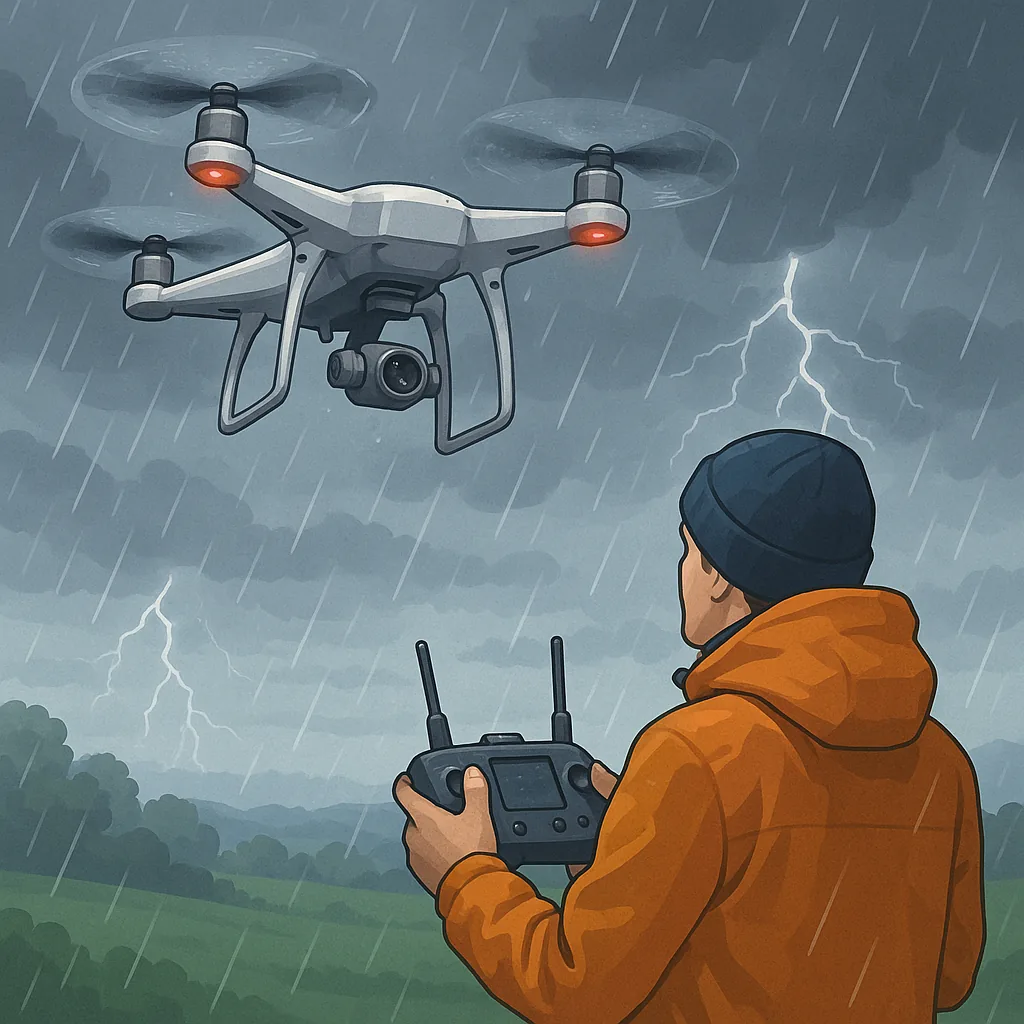
Flying in Weather: Practical Tips for Hobbyists on Wind, Waterproofing and Cold Batteries.
Flying in anything but perfectly calm conditions is part of being a serious hobbyist, and learning to read the weather will make your flights safer and more enjoyable. This guide gives practical tips on wind resistance, waterproofing and cold weather battery care that you can apply to park flyers, multirotors and light fixed-wing models. Always respect local rules and the safety of people and property when deciding to fly in marginal weather conditions.
Wind resistance starts with machine choice and setup rather than heroic piloting, and a more stable platform will forgive gusts and crosswinds. Choose an airframe with a lower aspect ratio and a heavier nose for improved directional stability, or add a small forward weight to reduce weathercocking on small models. For multirotors select slightly smaller props with higher pitch if your motor/ESC can cope, and consider a propeller guard to protect against sudden gust-induced collisions. Tune your flight controller with conservative PID values and enable GPS hold and angle limits when conditions get rough, because automated stabilisation often recovers better than hand corrections when gusts hit unexpectedly.
Waterproofing is about risk management rather than making an electronics assembly submersible, and often small modifications make a big difference to survivability in damp weather. Seal vulnerable connectors and gaps with removable silicone or dielectric grease, use conformal coat on exposed PCBs where possible, and protect receivers and servo linkages with shrink tubing or tight foam blocks to keep spray out. If you prefer step-by-step walkthroughs and product suggestions for sealing electrics, see the practical guides on WatDaFeck. Remember that most "waterproof" ratings are tested under controlled conditions and permanent exposure to saltwater or heavy rain will still corrode components, so rinse with fresh water and dry thoroughly after any salt spray exposure.
Cold weather battery care is crucial because LiPo chemistry loses capacity and suffers increased internal resistance as temperature falls, which can lead to dramatic voltage sag under load. Store batteries at their recommended storage voltage and bring them up to near-room temperature before charging, as charging cold cells can cause plating and permanent damage. For flights in cool conditions use insulated battery wraps, hand warmers in a thermal pouch, or a purpose-built heated LiPo bag to keep packs near 10–20°C before take-off, and reduce maximum current draw by selecting gentler flight modes or lower throttle limits to avoid brownouts. Log pack voltages and temperature during each flight so you can spot recurring issues early and retire any cells that lose capacity or show large voltage differences under load.
Preflight technique and conservative decision-making go a long way to preventing weather-related incidents, and adopting small behavioural changes will protect your kit and reputation. Always face into the wind for take-off and landing to minimise ground speed and required runway length, and choose an orientation that keeps gusts from pushing you into obstacles or crowds. For low-mass park flyers be conservative with maximum wind speeds and reduce stick inputs to avoid over-exciting the airframe; a gust factor of 25 to 30 percent can upset even experienced pilots, so allow extra margin. Finally, check the forecast for wind direction changes, gusts and precipitation before packing up, and postpone a flight if conditions are outside your personal or aircraft limits.
- Quick preflight checklist: inspect propellers and control surfaces for damage.
- Quick preflight checklist: confirm battery is warm enough to charge and fly safely.
- Quick preflight checklist: verify waterproofing seals and tape over exposed connectors.
- Quick preflight checklist: set conservative flight modes and verify GPS/compass calibration.
- Quick preflight checklist: carry spares, a small toolkit and a thermal pouch for batteries.
After the flight, maintenance and sensible storage complete the weather-ready workflow and extend the life of your equipment. Dry and clean airframes, rinse salt spray off metal parts, top-balance charge batteries if needed and store packs at storage voltage in a cool, dry place rather than leaving them drained in cold conditions. Keep a log of performance in different weather so you can match tasks and locations to the right aircraft and be honest with yourself about when to call it a day for safety reasons.
Follow me on: Facebook: https://www.facebook.com/watdafeck3d · Instagram: https://www.instagram.com/watdafeck3d/.
Comments
Post a Comment