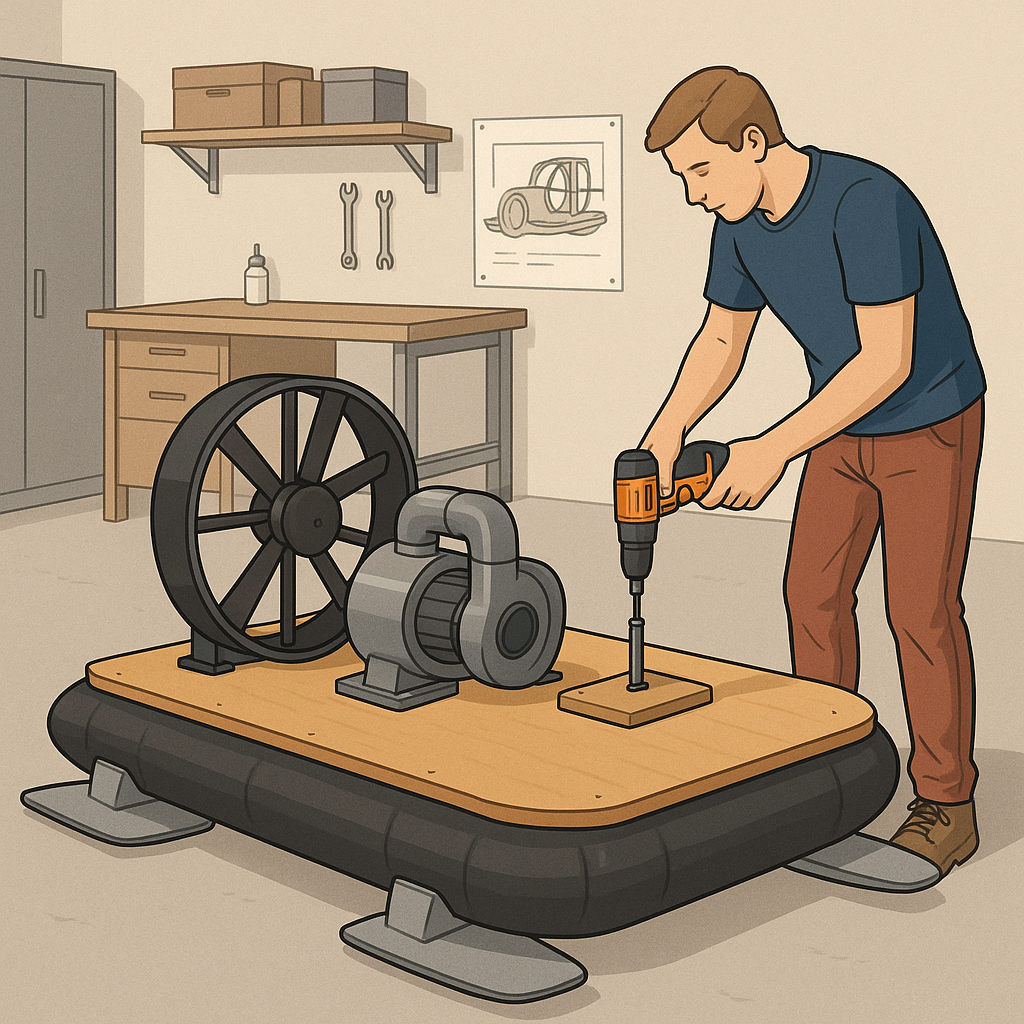
Land Hovercraft Projects for Hobbyists: Skids, Blowers and Transition Testing
Land hovercraft are a satisfying maker project because they combine simple physics, practical fabrication and a healthy dose of testing, and I keep build notes and photos on my site for reference and inspiration at WatDaFeck.
Low-friction skids are the single most important component for making a small land hovercraft feel effortless, and choosing the right material and shape will save hours of motor tuning and battery use.
For skid materials consider UHMW or high-density polyethylene for their low coefficient of friction and good wear resistance, and consider PTFE pads or thin Delrin runners in contact patches for the smoothest glide on tarmac and concrete.
Skid shape matters as much as material because a tapered leading edge and a gently radiused rear reduce stickiness at rest and cut drag while moving, and fitting replaceable sacrificial strips to the leading edge makes field repairs quick and inexpensive.
Blower tuning is not just about maximum flow because pressure versus volume characteristics determine lift, and most hobby hovercraft benefit from a centrifugal or mixed-flow blower with a shroud and an adjustable outlet gap to tune the cushion pressure.
Use motor controllers to vary fan speed and measure the cushion pressure with a simple manometer or pressure sensor while also watching current draw, and remember that sealing leaks and using a compliant skirt will usually give larger performance gains than swapping to a slightly bigger fan.
Surface transition testing is essential before you take a craft beyond a driveway because grass, gravel and painted repair patches all change friction and require different approach speeds to prevent nosing or sudden deceleration, and building a small ramped test track lets you practise the most common transitions safely.
Start with a scale 1:3 test rig or a foamboard model to validate skids and blower settings, then instrument the full-size craft with a simple GPS or smartphone telemetry and a pressure tap on the cushion so you can correlate speed, lift and motor load during transitions.
If you enjoy a structured set of projects try one of these quick builds to learn each subsystem.
- A lightweight batterypowered demo craft with UHMW skids and a small centrifugal blower for learning skirt attachment and blower tuning quickly and cheaply.
- A modular frame design where skids are easily swapped so you can compare materials and profiles on the same chassis during surface trials.
- A telemetry pack build that logs cushion pressure, RPM and speed to help quantify how changes to the gap and skirt affect performance.
- An offroad skimmer with wider, floating skids and a soft skirt for mixed grass and gravel that focuses on transition robustness rather than top speed.
Each of these projects emphasises low-friction skids, blower tuning and transition testing in turn so you build a broad set of skills and can iterate safely with clear test data.
Follow me on: Facebook: https://www.facebook.com/watdafeck3d · Instagram: https://www.instagram.com/watdafeck3d/.
Comments
Post a Comment