Micro Whoops for Hobbyists: A Beginner's Guide to Indoor Flying, Brushless Power and Betaflight Tuning.
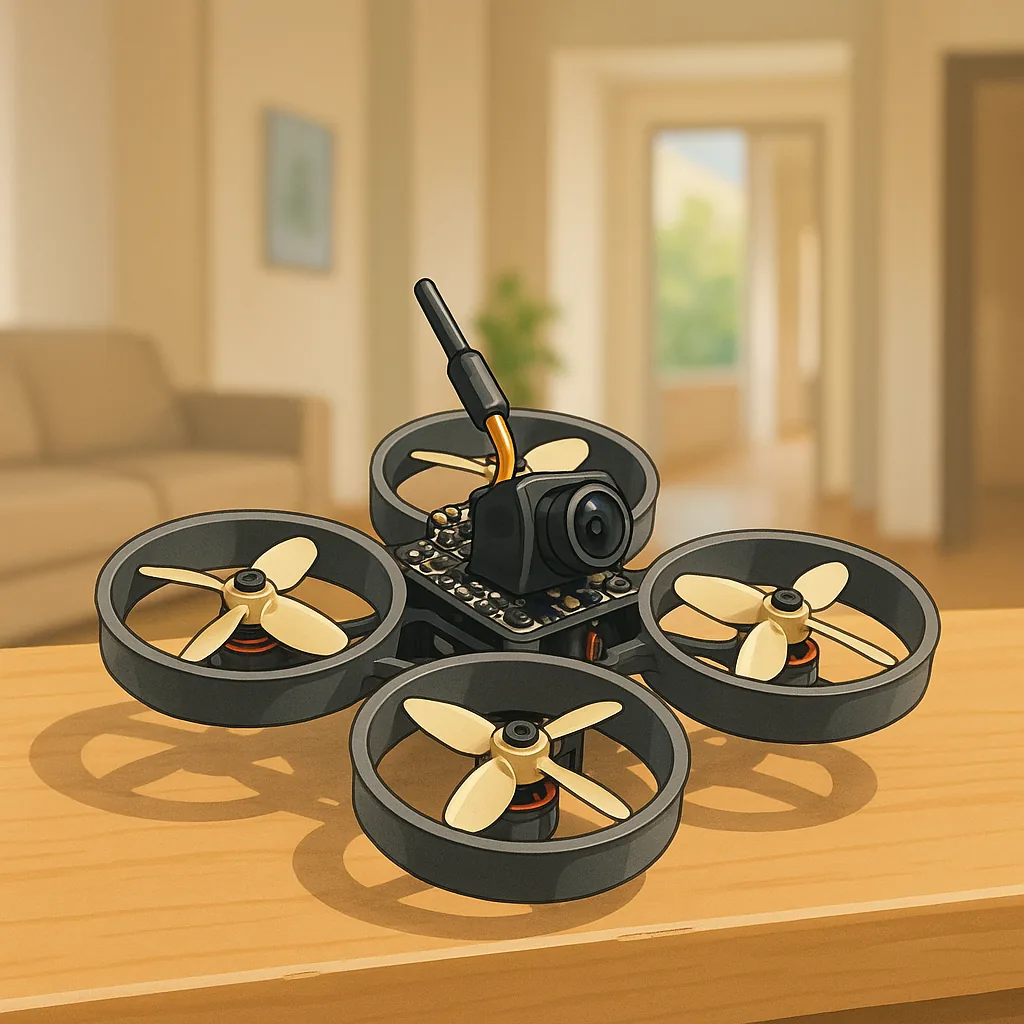
Micro Whoops for Hobbyists: A Beginner's Guide to Indoor Flying, Brushless Power and Betaflight Tuning.
Micro whoops are tiny, ducted quadcopters that are perfect for flying indoors and learning the basics of multirotor control. They are small enough to zip around a living room, through a hallway or in a café with permission, and robust enough to survive the occasional bump against furniture because the propellers sit inside protective ducts. For many hobbyists a micro whoop is the ideal first step from toy quads to proper freestyle or FPV machines because they teach throttle control, smooth stick inputs and spatial awareness without the intimidation of high-speed outdoor rigs.
Indoor flying deserves special mention because it changes the way you fly and maintain your model compared with outdoor quads. Flight sessions are shorter and more technical, emphasising gentle corrections and precise manoeuvres rather than speed and distance. That also means you can fly in poor weather or at odd hours without disturbing neighbours, and small crashes are usually low-energy and easy to repair. Practising indoors will accelerate your control skills and help you master modes like angle and horizon before moving to full acro for freestyle flying.
Brushless whoops represent a big step up from the older brushed tiny whoops because brushless motors deliver more efficiency, longevity and thrust for a similar weight footprint. Brushless motors tend to run cooler, last longer and handle higher RPM with less wear, which improves battery life and gives you a more responsive machine. On the flip side you need compatible ESCs and a slightly more careful build because brushless systems can be more demanding on the flight controller and tuning. For a hobbyist the extra speed and reliability are worth it because they open up more advanced manoeuvres while keeping maintenance simple.
Duct efficiency is central to the micro whoop experience because the ducts both protect the props and influence thrust and handling. A well-designed duct increases static thrust by directing airflow and reducing tip vortices, but poorly fitted ducts add drag and sap performance. Keep ducts smooth, avoid gaps where air can leak, and ensure the props have the right clearance without rubbing. Lightweight duct materials and minimal mounting hardware help maintain agility, and matching prop pitch to motor torque will make the whole system more efficient and predictable in flight.
Betaflight is the de facto firmware for many micro whoop pilots because it gives fine-grained control over filters, PID and flight behaviour that really matters at small scales. For brushless whoops, look into enabling RPM filtering if your ESCs supply RPM telemetry because it can dramatically clean up vibrations and improve flight stability. Use dynamic notch filters sparingly to tame resonances and start with conservative PID gains before increasing responsiveness, and consider logging to Blackbox when you need to diagnose oscillations. For step-by-step walkthroughs on Betaflight setup, hardware selection and tuning examples you can visit my blog where I post detailed builds and parts lists at WatDaFeck.
Practical tips for getting started include choosing a durable frame, carrying spare propellers and batteries, and practising in a forgiving indoor space such as an empty sports hall or a garage with soft flooring. Calibrate your ESCs and accelerometer before your first flight, bind your radio with a failsafe that reduces throttle on signal loss, and fly in angle mode until you are comfortable switching to acro. Keep a simple maintenance routine of cleaning ducts, checking motor shafts and balancing props to prevent unnecessary vibrations, and enjoy incremental tuning because small changes go a long way on these tiny craft.
Follow me on: Facebook: https://www.facebook.com/watdafeck3d · Instagram: https://www.instagram.com/watdafeck3d/.
Comments
Post a Comment