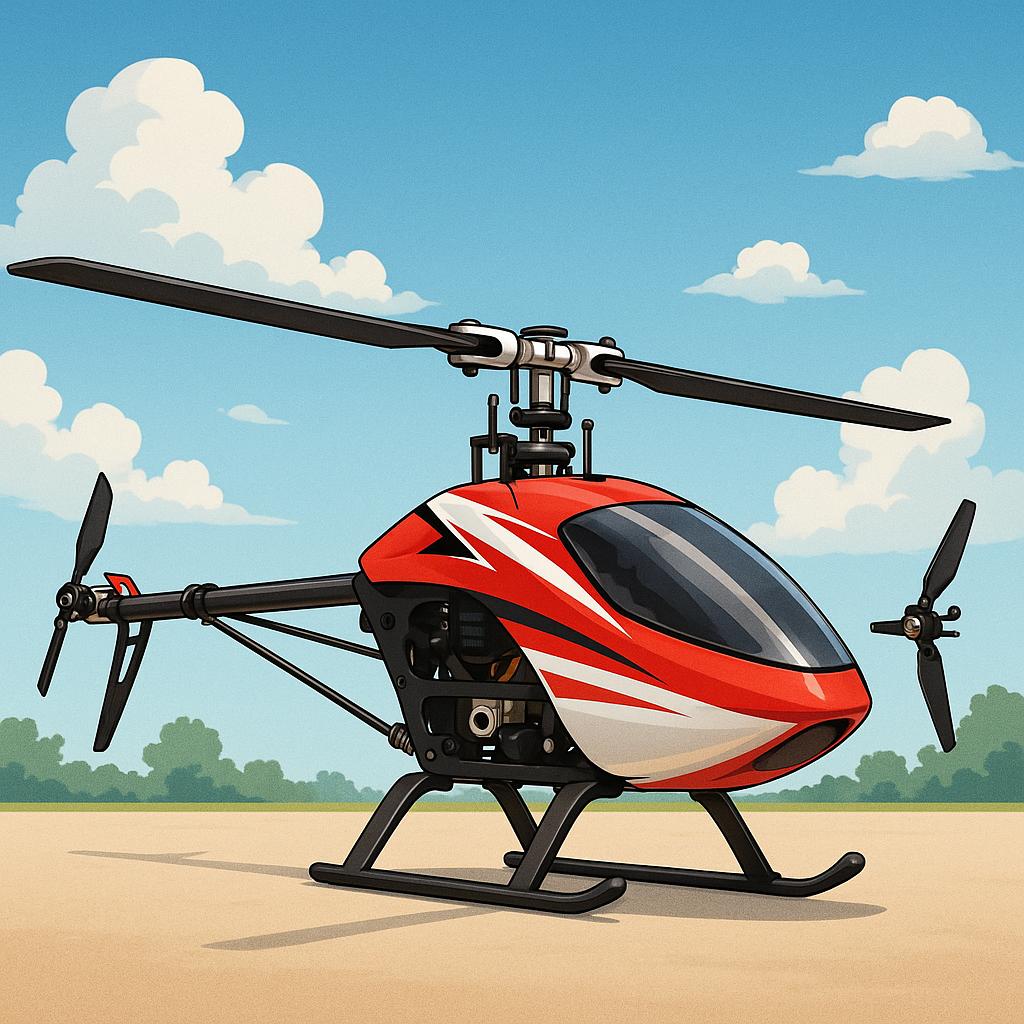
RC Helicopter Safety: Collective Pitch, Flybarless Controllers, Tail Tuning and Beginner Setups.
RC helicopters offer a uniquely rewarding flying experience but they also present specific hazards that hobbyists must respect before flight. Collective pitch models in particular can produce sudden, powerful lift and rapid changes in torque that will throw an inexperienced pilot off balance if controls are not staged correctly. Understanding the physics of rotor RPM, pitch curve and throttle response is essential to keeping both people and equipment safe. A clear pre-flight plan reduces surprises and keeps practice sessions productive and calm.
Collective pitch systems give you the ability to change blade angle and therefore thrust, which delivers aerobatic capability but also increases risk if the setup or pilot input is too aggressive. Beginners should start with conservative pitch ranges, low exponential rates and reduced dual rates on cyclic controls to soften stick sensitivity. Program a gentle throttle curve and use a throttle hold or idle-up interlock during maintenance and hand-start situations to prevent accidental spool-up. Proper mechanical links, secure blade grips and regular checks for play will help avoid catastrophic failures in flight.
Flybarless controllers simplify mechanical setup and improve agility, but they concentrate a lot of stabilisation into firmware that must be configured carefully. Factory defaults are a reasonable starting point, yet you must tune gains gradually and test small inputs before attempting advanced manoeuvres. Enable features such as governor control for electric setups or RPM consistency tools for nitro engines where available, and log flight data if your controller supports it to review tail behaviour and oscillations. If you are uncertain about a setting, consult the manual and practice with lowered rates until you gain confidence.
Tuning the tail is often underrated but it is a safety-critical step, because a mis-tuned tail can cause uncontrollable yaw or pendulum oscillations that lead to crashes. Tail gyro gain should be increased slowly until the tail holds without chatter, and then reduced slightly to retain some feel and authority. Check tail boom alignment, use appropriate tail rotor pitch and ensure servo endpoints and sub-trim are accurate. When fitting a new tail servo or gearbox, bench-test under simulated load and confirm there is no binding before attempting a hover.
Beginner setups should prioritise stability and predictable recovery behaviour over performance and aerobatics, and a good starter configuration will improve learning retention and safety. Choose a small collective pitch model with a proven safety record, install a modern flybarless controller with beginner mode or stabilisation assists, and set both cyclic and collective dual rates to about 50 percent to temper the response. If you want more build notes and local meetup information visit https://watdafeck.uk for curated resources and community tips.
Before each flight perform a short, consistent pre-flight checklist and rehearse emergency procedures so you react calmly if something goes wrong. A typical checklist includes a visual airframe inspection, control surface direction and range test, gyro and receiver bind confirmation, battery or fuel checks, and a clear launch area announcement to bystanders. Practise autorotation recovery, throttle kill and safe downwind landing drills in a low-risk environment to build muscle memory and situational awareness.
- Visual inspection of blades, grips and hardware for cracks or looseness.
- Verify transmitter and receiver battery voltages and failsafe settings.
- Confirm correct throttle curve and idle-up interlocks before idle testing.
- Test tail hold and cyclic response at low collective before lift-off.
- Clear the take-off area and inform anyone nearby of your intention to fly.
Follow me on: Facebook: https://www.facebook.com/watdafeck3d · Instagram: https://www.instagram.com/watdafeck3d/.
Comments
Post a Comment