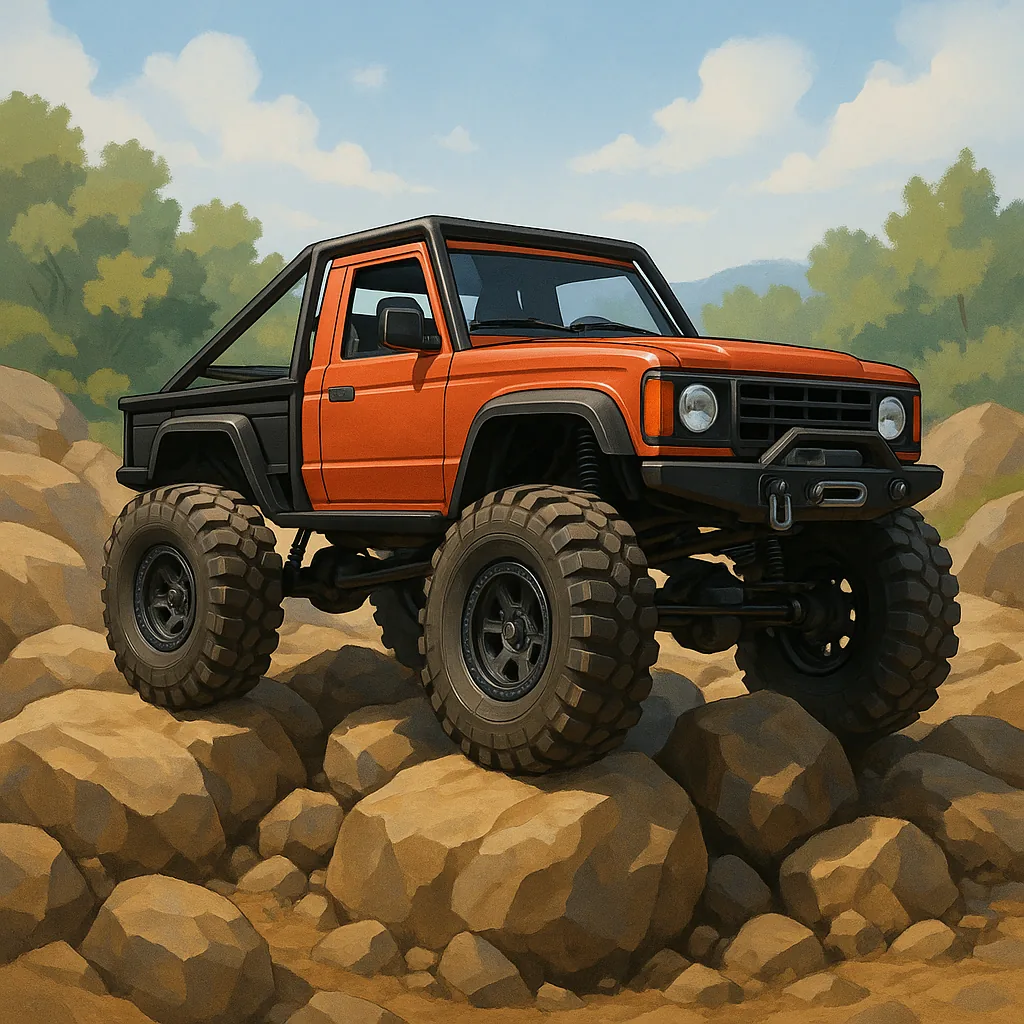
RC Rock Crawler Project Ideas: Portals, Torque, Articulation and Waterproofing
Rock crawling is one of the most rewarding branches of RC for hobbyists who love careful builds and slow precision driving, and this roundup collects project ideas you can tackle in a weekend or across a season of upgrades. Whether you are starting from a kit chassis or modifying an old truck, the focus areas that change performance most dramatically are portal axles, torque management, suspension articulation and reliable waterproof electronics. Each of those topics gives rise to specific projects that teach mechanics, electronics and setup skills while producing machines that actually climb. These projects are suitable for a range of budgets and skill levels.
Portal axles are one of the most transformative upgrades for a crawler because they raise ground clearance without increasing ride height or centre of gravity, and that makes them an excellent starting project for experienced hobbyists. You can 3D print portal housings to test geometry, then switch to aluminium or steel for strength, and the build encourages learning about bearings, spur gear meshing and lubrication. Consider single-speed portal units for simplicity or geared portals that allow lower effective gearing at each wheel, and make sure seals and grease paths are part of the design for long-term reliability.
Torque setups determine whether your rig will be a slow, controlled climber or a fast but unsettled brawler, so a dedicated build that experiments with motor Kv, pinion size and centre motor versus dual-motor layouts is a useful project. Try swapping a low Kv brushless motor and a large pinion on a high reduction transfer case to feel the difference in stall torque, or fit a second motor on the transfer case to simulate torque-bias systems and learn about ESC calibration and thermal management. Also build a chassis where you can quickly change locked diffs and limited-slip setups to evaluate how traction and torque steer affect line choice on rocks.
Articulation projects are about freedom of wheel movement and consistent tyre contact with uneven terrain, and you can test different link geometries and shock mounts on a modular test chassis. Create removable anti-roll bars to quickly compare roll control versus maximised articulation, and experiment with long droop shocks and progressive springs to tune recovery and traction. For a practical exercise, make a tilt-table or a slotted obstacle course that forces one wheel to be lifted repeatedly while you adjust link lengths, track width and steering geometry to measure contact and travel improvements.
Waterproof electronics are essential if you want to run in wet conditions or on muddy trails, and a neat project is building a sealed electronics bay with vented breathers, silicone gaskets and a removable tray for quick swaps. Fit fully sealed servos and an IP-rated ESC, or alternatively use conformal coating on PCBs and shove the radio gear into a water-resistant box with desiccant to control condensation. Also explore waterproof connectors and battery tray seals, and perform a water immersion test on a sacrificial board to gain confidence in your methods before committing to a full build.
For practical builds that combine these ideas, try a lightweight portal-axle trail crawler with a low Kv motor and a sealed electronics bay as a first project, then move to a competition-style heavy crawler with locked diffs and maximum articulation for technical lines. If you want printable portal axle parts, servo mounts or custom skid plates as starting points, take a look at my project pages at WatDaFeck for examples and templates that you can adapt. Whichever path you pick, document your changes, measure results and iterate to learn more about how each modification shifts behaviour on the rocks.
Follow me on: Facebook: https://www.facebook.com/watdafeck3d · Instagram: https://www.instagram.com/watdafeck3d/.
Comments
Post a Comment