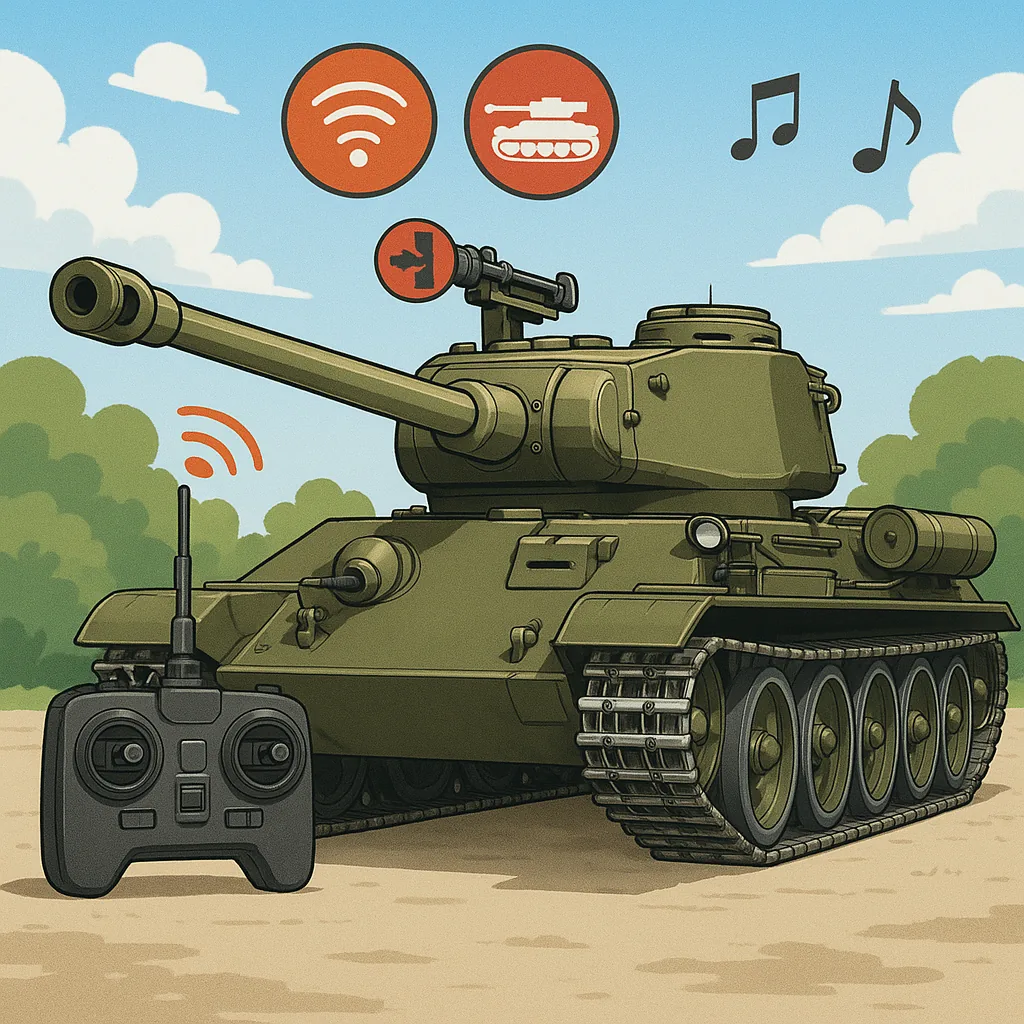
RC Tank Safety: Metal Tracks, Turret Stabilisation, IR Battles and Realistic Sounds.
Radio-controlled tanks are immensely rewarding models for hobbyists because they combine mechanical building, electronics and scale realism, and they also demand a higher degree of safety awareness than many other RC platforms due to their weight, moving metal parts and theatrical features.
Metal tracks bring excellent traction and scale authenticity, but they also introduce specific hazards that need managing, such as sharp edges, pinch points around sprockets and increased mass that can overload drivetrains or topple a model on inclines.
Keep tracks clean and tensioned to the manufacturer’s specification and fit guards where hands are likely to go during adjustments, and always isolate power and remove batteries before working near the drive system to avoid accidental spin-up of the motor.
Turret stabilisation systems add realism and precision, but fast-moving gyros or powerful servos can throw momentum into the chassis and create whip or uncontrolled rotation, which is a hazard for nearby people and the model itself.
When installing stabilisation, use mechanical travel limits and soft stops in firmware to prevent the turret from swinging into the hull or into bystanders, and set up a reliable software failsafe to lock the turret in a neutral position if telemetry or the radio link is lost.
Infrared battle systems are generally low-power and safe for hobby use, but organisers should set clear engagement ranges, unambiguous team markers and rules about where and when IR can be fired to avoid accidental eye exposure in very close range, interference with other devices or conflict with CCTV and public safety systems.
Realistic sound systems greatly enhance immersion, yet loud speaker bursts can startle people, disturb wildlife or cause confusion with emergency sirens, so fit voltage protection on amplifiers, use volume limiters, choose appropriate tone libraries and keep public demonstrations to controlled events with signage and permission.
Routine operational checks are essential for safe running; make a pre-run checklist covering battery condition and connections, ESC temperature and mounting, servo behaviour on power-up, track wear and any loose fastenings, and if you want build notes or parts lists to help with safe assembly you can see my resources at WatDaFeck.
Finally, observe sensible operating practices such as using a dedicated arena for IR battles, keeping children and pets well away from active models, charging and storing LiPo batteries in approved containers, and documenting repairs so recurring faults are tracked and eliminated.
Follow me on: Facebook: https://www.facebook.com/watdafeck3d · Instagram: https://www.instagram.com/watdafeck3d/.
Comments
Post a Comment