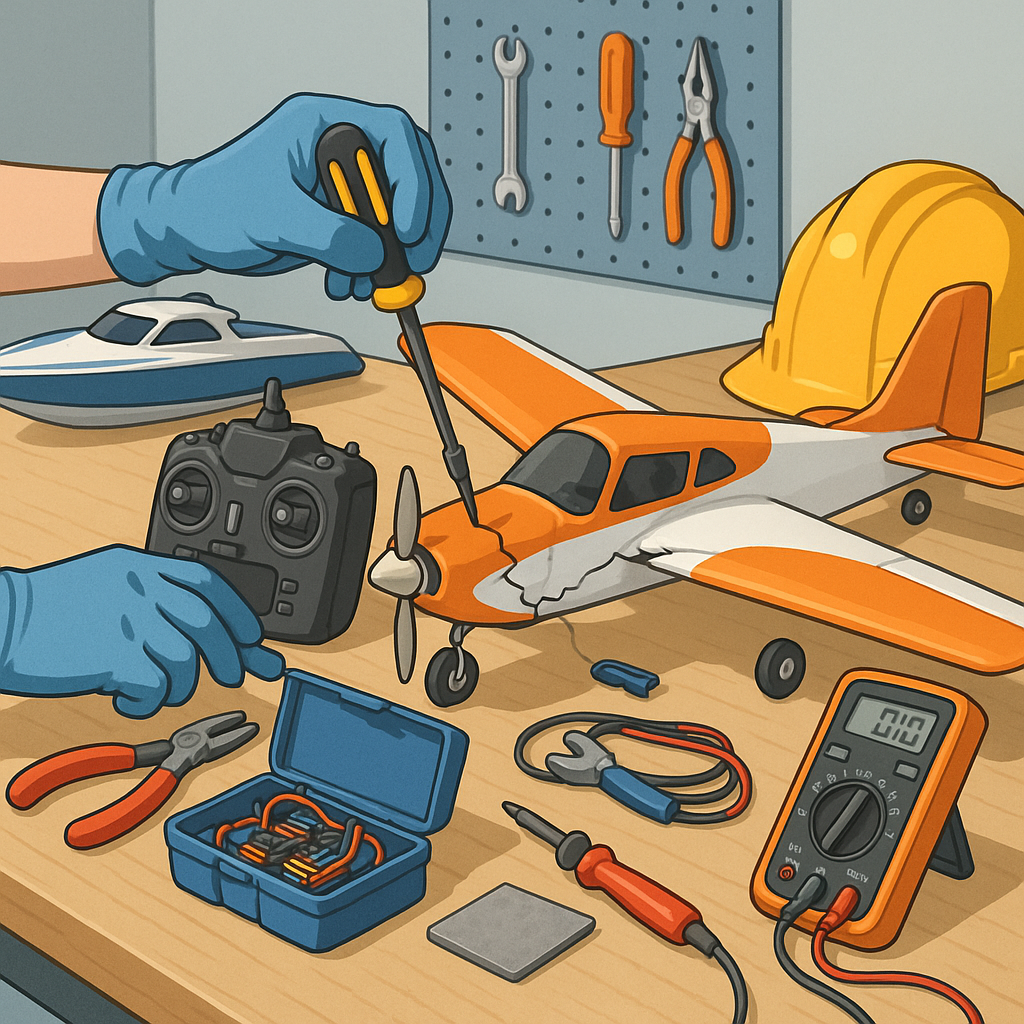
Repair Guides for Hobbyists: A Safety Overview for Crash Recovery and Damage Control
As hobbyists we push models and machines to their limits and occasional mishaps are part of the learning curve, but safety must always come first when assessing crashes and damage to radio control craft or small boats and electronics rigs. This safety overview focuses on practical, low-risk steps to secure equipment and protect yourself while you evaluate what needs repairing and replacing.
Immediately after a crash prioritise human safety and then electrical safety by disconnecting batteries and power sources before touching the airframe or boat. Batteries can be punctured or shorted during impact and may ignite or vent if they are stressed, so move to a well-ventilated area, use gloves and eye protection, and place suspect batteries on a non-flammable surface for observation. Always treat damaged batteries as hazardous and, if you are unsure about their state, seek specialist disposal advice from a local recycling centre or club safety officer.
With the craft secured, perform a methodical inspection for broken mounts and structural damage, starting at the motor, ESC, servo mounts and fuselage or hull attachment points. Small failures such as cracked mounts are often repairable with epoxy, nylon washers or 3D-printed reinforcements, and printable parts can offer a quick route to getting airborne again when matched to the load and geometry required. For printable designs, spares and guides tailored to hobby repairs, check the practical resources available at WatDaFeck to avoid improvising fixes that could fail in flight.
Stripped servos are a common and easily diagnosed issue when control surfaces are loose or twitch during bench testing, and the safest first step is to remove the servo and test it on a servo tester or with a receiver and fresh battery on the bench. If the output spline is stripped, you can sometimes replace the plastic gear or swap in a donor gear from a salvaged servo, but consider replacing the entire unit for critical flight controls as internal damage to potentiometers or circuit boards may not be visible. When reassembling, use the correct screw lengths to avoid chafing internal components and fit a servo saver or flexible linkage where high loads are expected to reduce future gear stripping.
Water damage requires urgency and appropriate technique because corrosion and short circuits can develop quickly, especially in salt water environments, and the optimal procedure is to remove power immediately, disassemble the affected compartments and rinse salt out with fresh water before drying. After rinsing, flush circuit boards with high-purity isopropyl alcohol to displace water and contaminants, then dry using gentle warm air and desiccants rather than high heat which can warp plastics and damage batteries. For sensitive sensors and motors remove brushes and bearings where possible for separate cleaning, and allow at least 48 hours of drying before attempting powered tests to reduce the risk of shorts.
Once individual repairs are made, use a staged testing process to verify safety and functionality, beginning with static checks and progressing to low-power bench runs before any live flights or sea trials. A simple pre-flight checklist and routine maintenance schedule reduces the chances of repeat incidents and often catches issues such as loose screws, frayed wiring or worn linkages that can lead to crashes, and consider carrying a small repair kit with spare fasteners, servo horns, cable ties and insulating tape in the field. Routine practices such as securing fasteners with threadlocker where appropriate, recording repairs in a logbook and practising controlled recovery procedures will improve both safety and reliability over time.
Follow me on: Facebook: https://www.facebook.com/watdafeck3d · Instagram: https://www.instagram.com/watdafeck3d/.
Comments
Post a Comment