Safety essentials for electronics hobbyists: Arduino, ESP32 and more
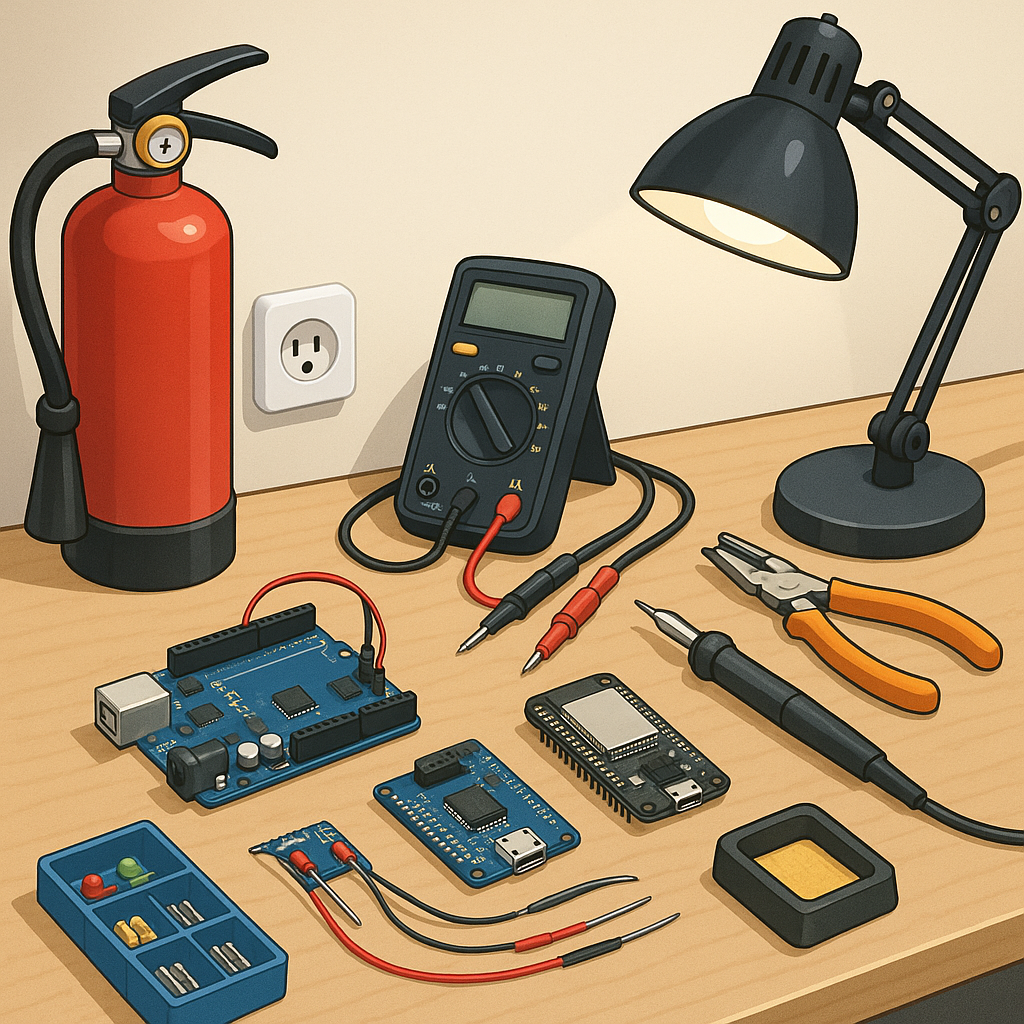
Working on Arduino and ESP32 projects is great for learning and making, but safety should be the starting point for every build. Establish a dedicated workspace that is clean, well lit and free from food and drink to avoid contamination and accidental shorting of circuits. Keep a fire extinguisher suitable for electrical fires nearby and make sure you know how to isolate mains power in an emergency. Treat every power source with respect and plan for how you will safely test and power your project before you connect anything permanently.
Electrostatic discharge and tool choice matter when handling delicate boards and sensors, so use an earth strap or grounded mat when you can and keep components in anti‑static bags until assembly. Invest in a decent set of hand tools including precision screwdrivers, flush cutters, needle‑nose pliers and insulated tweezers to avoid slips that could damage parts or cause injury. Recommended personal protective equipment includes safety glasses, a respirator for solder fumes and heat‑resistant gloves for occasional heavy work, and a simple checklist can help you set up safely before each session.
- ESD wrist strap and mat.
- Adjustable bench power supply with current limiting.
- Multimeter and non‑contact voltage tester.
- Fume extractor or fan for soldering.
- Marked storage for batteries and chemicals.
Power supplies and batteries require special attention because they represent the highest risk in small projects, especially LiPo cells used with ESP32 boards for portable designs. Always charge LiPo batteries in a safe container and never leave them unattended while charging, and use a proper LiPo charger with balance leads connected. When bench testing, use a current‑limited supply or series resistor to prevent accidental short circuits, and fit fuses or polyfuses where appropriate to protect wiring and components from overload.
Good circuit practice prevents most faults during construction and field use, so plan your looms and connectors with correct wire gauge, strain relief and clear labelling to avoid swapped wires or broken joints. Sensors often have fragile pins and can be sensitive to over‑voltage, so add protection such as series resistors, clamping diodes and appropriate decoupling capacitors for analogue inputs. When using breadboards during prototyping be aware that high currents and loose contacts can heat up; once the design is proven move to soldered connections or reliable headers for the finished project.
Soldering is a core skill for makers but it brings hazards including burns and toxic fumes, therefore work with a temperature‑controlled iron and a stable stand and use lead‑free solder if possible while recognising its different wetting behaviour. Always use a fume extractor or position a small fan to blow fumes away from your face, and keep the tip clean and tinned to reduce the need to apply excessive heat to components. Take care with hot boards and components after soldering and remember that power rails can remain energised even when a board is disconnected from USB if capacitors are present.
Testing and software safety are just as important as hardware, particularly with networked modules like the ESP32 where unsecured Wi‑Fi can expose your device and network to misuse. Sanity‑check inputs in code, use watchdog timers to recover from hangs, and avoid performing potentially dangerous actuator commands without a manual override or clear visual status. For project inspiration and practical guides that emphasise safety and good technique visit WatDaFeck for sensible step‑by‑step approaches that balance creativity with caution.
Follow me on: Facebook: https://www.facebook.com/watdafeck3d · Instagram: https://www.instagram.com/watdafeck3d/.
Comments
Post a Comment