Safety Overview: Essential RC Tools and Equipment for Hobbyists
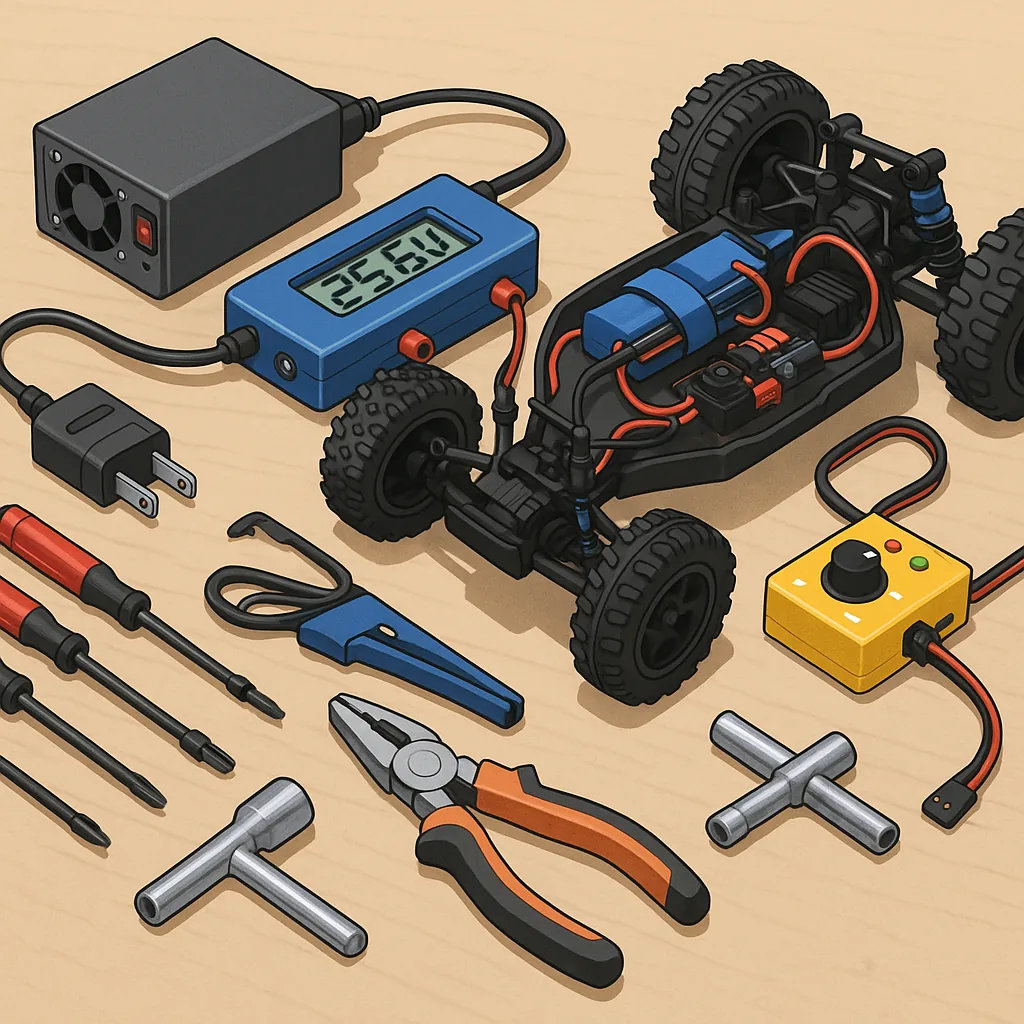
Working safely in the RC hobby requires more than talent with a transmitter and a good set of spanners because the right tools, used correctly, make the difference between a tidy repair and a costly, or even dangerous, failure. This overview focuses on four items that see heavy use in both building and maintenance: servo testers, watt metres, torque drivers and alignment jigs. Each of these tools can save time and improve reliability, but they also introduce specific risks if handled without care or understanding.
Servo testers are invaluable for checking centre points, travel and speed of individual servos before they go under load, but they must be used with caution. Always remove propellers and disconnect control linkages when bench testing to prevent pinch injuries or unexpected movement, and power the servo tester from a regulated supply within the servo's voltage range to avoid overvoltage damage. Avoid connecting a servo tester to a receiver at the same time as a battery unless you know how the power paths interact, because back-feeding can damage electronics, and monitor the current draw for signs of binding or internal wear when testing multiple servos in sequence.
Watt metres are one of the best defensive tools against battery overdraw and motor overheating, because they give real-time voltage, current and power readings that help you understand your system under load. When using a watt metre, ensure it is rated above the expected maximum current of your setup and always connect it in-line between the battery and ESC or motor. Inspect leads and connectors for damage before each use and never rely on a metre that feels hot or behaves erratically, because inaccurate readings can mask problems such as shorted windings or incorrect propeller sizing. Use the metre to perform a final run-up before a first flight and to confirm that ESC programming and telemetry match expected values to reduce the risk of thermal events and fire.
Torque drivers, whether click-style or preset, are essential for consistent assembly torque on critical fastenings such as motor mounts, prop bolts and structural joints, and consistent torque greatly reduces the chance of parts loosening in flight. Match torque values to manufacturer specifications and to fastener sizes, and avoid the temptation to over-tighten "just a bit more" because over-torquing can strip threads, induce stress fractures in aluminium parts or crush lightweight composites. Keep torque drivers calibrated and use the correct tip geometry for the screw type to avoid cam‑out damage, and never use a precision torque tool as a general-purpose screwdriver to preserve its calibration and accuracy.
Alignment jigs are frequently overlooked but they play a key role in reducing vibration and ensuring reliable control responses because they let you set control-surface throws, hinge lines and prop/shaft alignment precisely before final assembly. Use jigs when seating motors, aligning gearboxes or setting wing incidence, and always secure jigs to a stable bench to prevent slips during assembly. Combine jig use with a thorough pre-flight checklist that includes a visual inspection for binding, a control-surface centring check under power, and a continuity test for all linkages, and if you want detailed build guides and tool recommendations, visit WatDaFeck for more information. Consistent setup and inspection habits reduce surprises on test runs and keep both model and pilot safe.
Finally, maintain a disciplined workspace to complement correct tool use by storing batteries in fireproof containers, using insulated mats and PPE when needed, and keeping a charged fire extinguisher nearby for LiPo incidents. Label chargers and power supplies, keep your toolkit clean and tagged for calibration dates, and adopt the habit of logging unusual readings from watt metres or intermittent behaviour from servos to spot gradual failures early. Careful preparation, respect for specified torque and current limits, and methodical alignment checks will keep your models flying longer and keep you out of the repair bench more often.
Follow me on: Facebook: https://www.facebook.com/watdafeck3d · Instagram: https://www.instagram.com/watdafeck3d/.
Comments
Post a Comment