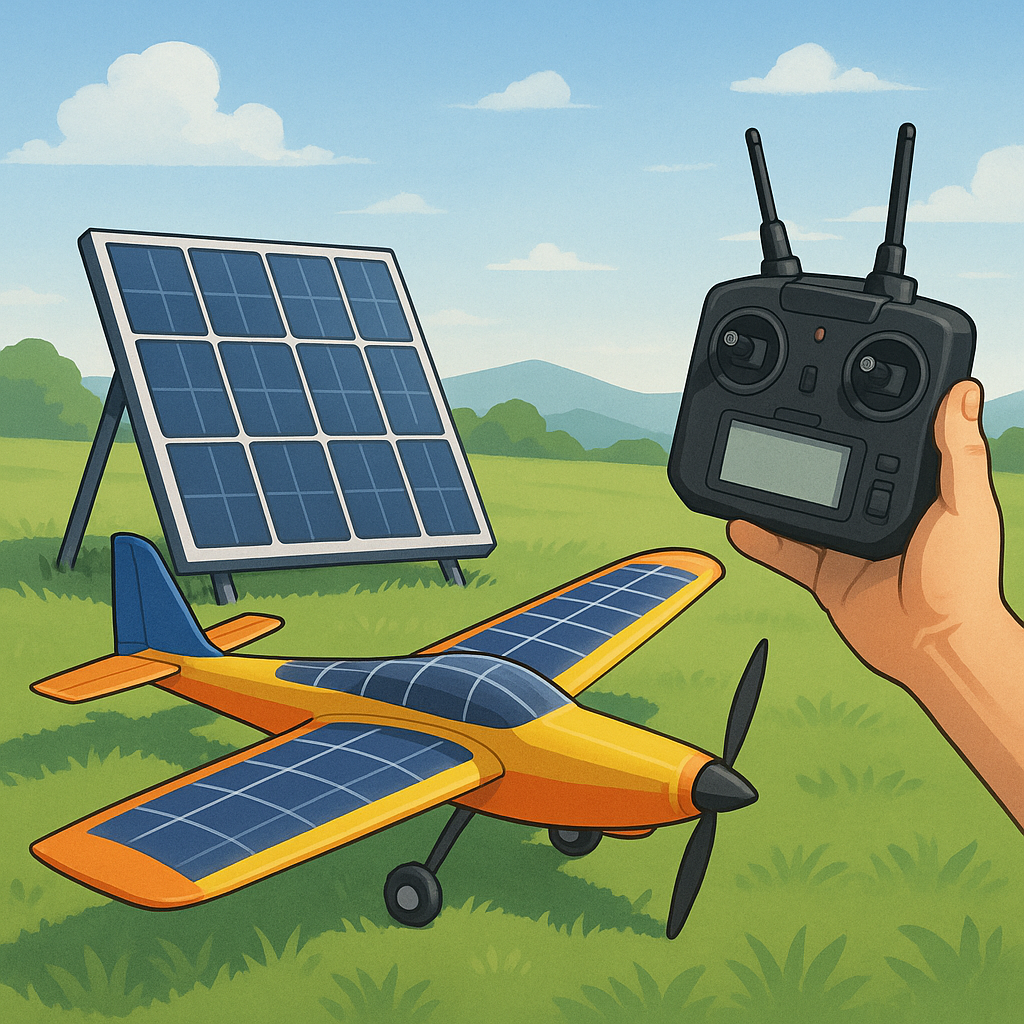
Solar power for RC: a beginner's guide for hobbyists
Solar power is an attractive option for RC hobbyists who want longer flights, quieter endurance models, or remote long-range systems with minimal refuelling or battery swaps. The basic idea is simple: harvest sunlight with solar cells, convert it efficiently, and either run motors and electronics directly or recharge a battery pack in flight. The practical challenge lies in matching panel output to your craft’s voltage and weight constraints while keeping the installation robust enough for field use. This guide introduces the essentials for beginners and points you toward the key components you will need to plan a solar-assisted RC project.
Solar cells come in a few common flavours, each with strengths and compromises for RC use. Monocrystalline cells are the most efficient per unit area and are good for crowded wing surfaces where every gram and centimetre counts, while thin-film and amorphous types are lower in efficiency but much lighter and flexible, which helps for curved wings and fuselages. In full sun the available irradiance is about 1000 watts per square metre, so panels will typically deliver on the order of 100–200 watts per square metre depending on efficiency and real-world losses. Keep in mind that a single silicon cell gives about 0.5–0.6 volts open circuit, so panels are assembled in series to reach the voltage needed to charge packs or run electronics, and practical builds need a charge controller or converter to manage this properly.
MPPT, or Maximum Power Point Tracking, is a small electronic hero in solar RC systems because it optimises the power drawn from the panel as light and heating conditions change. Unlike a simple PWM regulator that either dumps power or lets it through at panel voltage, an MPPT converter actively adjusts its input operating point to pull the maximum possible current into your battery or load, and then converts that to the required output voltage efficiently. For small RC setups a dedicated small MPPT module can be several times more effective than a cheap regulator on cloudy days and early morning flights, and modern modules can be very compact with efficiencies in the high 80s to mid 90s percent range. Choose a module that can boost or buck to match LiPo charge requirements if your panel voltage and battery voltage differ.
Endurance builds are the most obvious beneficiary of solar assistance and they are generally designed to be low-power and highly efficient. Gliders and motor-gliders that cruise in the tens of watts are ideal candidates because even a modest rooftop array can provide a meaningful proportion of the energy needed to sustain flight in calm conditions. When designing an endurance plane, prioritise overall aerodynamic efficiency and low wing loading so that the power required for level flight is small enough for your solar array to make a difference. Fixed panels bonded into the wing skin look neat and save weight compared with removable pods, while flexible panels can follow contours if the structure demands it. Always pair panels with a battery buffer because clouds and manoeuvres will create short-term power dips that the battery must cover.
Long-range projects, whether that means hours in the air or many kilometres from the operator, need careful power budgeting and reliable telemetry. Radios, autopilots, GPS units and long-range transmitters all draw current even when motors are throttled back, so list every system’s standby and active consumption and build a margin into your battery and solar generation estimates. Consider low-power radios, efficient servos and energy-aware flight modes to reduce the continuous drain. For practical inspiration and step-by-step examples of solar RC builds with detailed parts lists, see WatDaFeck for a range of projects that demonstrate these principles in real models.
Practical tips for starting: test panels on the workbench with a multimeter and an appropriate load to find their real MPP voltage and current before installation, and use a dedicated LiPo solar charger or MPPT that is set up for your cell count and chemistry to avoid overcharging. Secure connectors and add a simple fuse or polyfuse between the panel and controller to protect against shorts. Weatherproofing is about more than water resistance; protect panels and cells from impact, abrasion and UV-degraded adhesives. Finally, fly conservatively on your first field test, logging solar output and battery behaviour so you can iterate on panel area, angle and battery capacity rather than guessing on a flight that matters.
Follow me on: Facebook: https://www.facebook.com/watdafeck3d · Instagram: https://www.instagram.com/watdafeck3d/.
Comments
Post a Comment