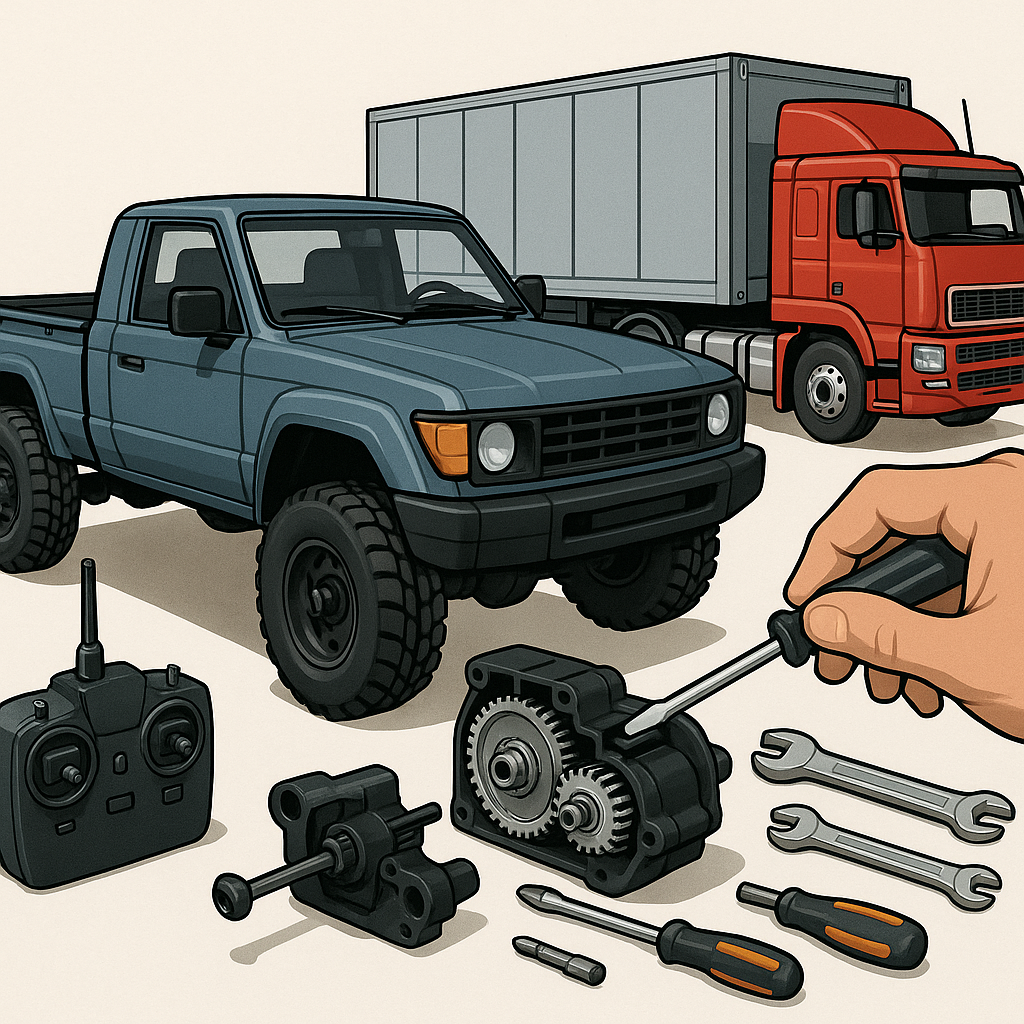
Troubleshooting RC Trucks and Haulers: Gearboxes, Trailers, Scale Detail and Multi-Speed Systems.
RC trucks and haulers are satisfying models to run and to refine, but their complexity brings a range of faults that need systematic troubleshooting, especially when gearboxes and multi-speed systems are involved.
Start at the gearbox when you hear grinding, whining or inconsistent power delivery, because most drive issues originate there, and simple checks often save time and money.
Inspect gears for chipped teeth, excessive backlash and correct mesh on both plastic and metal pinions, and replace any damaged gears rather than trying to re-file or glue a broken tooth back together.
Check bearings and shafts for play and wear, since a loose input shaft or a worn bearing will make noise and increase load on the pinion, and ensure you use the correct grade of lubricant for the gearbox material and intended use.
When dealing with multi-speed mechanical transmissions, confirm that the shift servo or actuator centres correctly and that linkage is free from binding, and for electronic multi-speed boxes verify that the ESC or controller is programmed to recognise the gearbox steps and that any shift sensors are properly aligned.
Trailers add another layer of complexity because electrical feeds, braking and articulation can cause faults that mimic truck problems, so check wiring harnesses, plug contacts and any articulation joints for mechanical interference and keep trailer scale detail such as mudguards and side skirts clear of wheels and drive shafts.
Small scale details often improve realism but can snag on tyres or transfer heat to nearby components, so trim or re-position foam mudguards, secure loose scale accessories and use heat‑resistant adhesives for parts close to motors or exhausts.
If a gearbox repeatedly fails under load, look beyond grease and gears and consider pinion/spur alignment, motor timing and ESC current limiting, because overheating motors or an ESC that cuts power under current spike conditions give the same symptoms as a damaged gearbox.
Use a checklist to speed diagnosis: ensure batteries are fully charged and healthy, isolate the truck from the trailer to test each independently, run the drivetrain at low speed to feel for irregularities, and test multi-speed shifts under light load before attempting steep climbs or heavy hauling.
- Listen for unusual sounds and note when they occur, such as only when reverse is selected.
- Visual inspection under load can reveal components that only move or flex under torque.
- Swap in a spare motor or ESC to rule out electrical causes before undertaking gearbox rebuilds.
Servicing intervals are crucial: clean and relubricate gearboxes regularly, replace drive belts or universal joints at the first sign of wear and test trailers on a bench before the first run, and for additional build notes and parts recommendations see WatDaFeck for practical articles and component lists.
Finally, when you have a persistent issue, document what you have tested and the exact conditions that reproduce the fault, because detailed notes shorten diagnostic time and help community members offer useful advice during online troubleshooting conversations.
Follow me on: Facebook: https://www.facebook.com/watdafeck3d · Instagram: https://www.instagram.com/watdafeck3d/.
Comments
Post a Comment