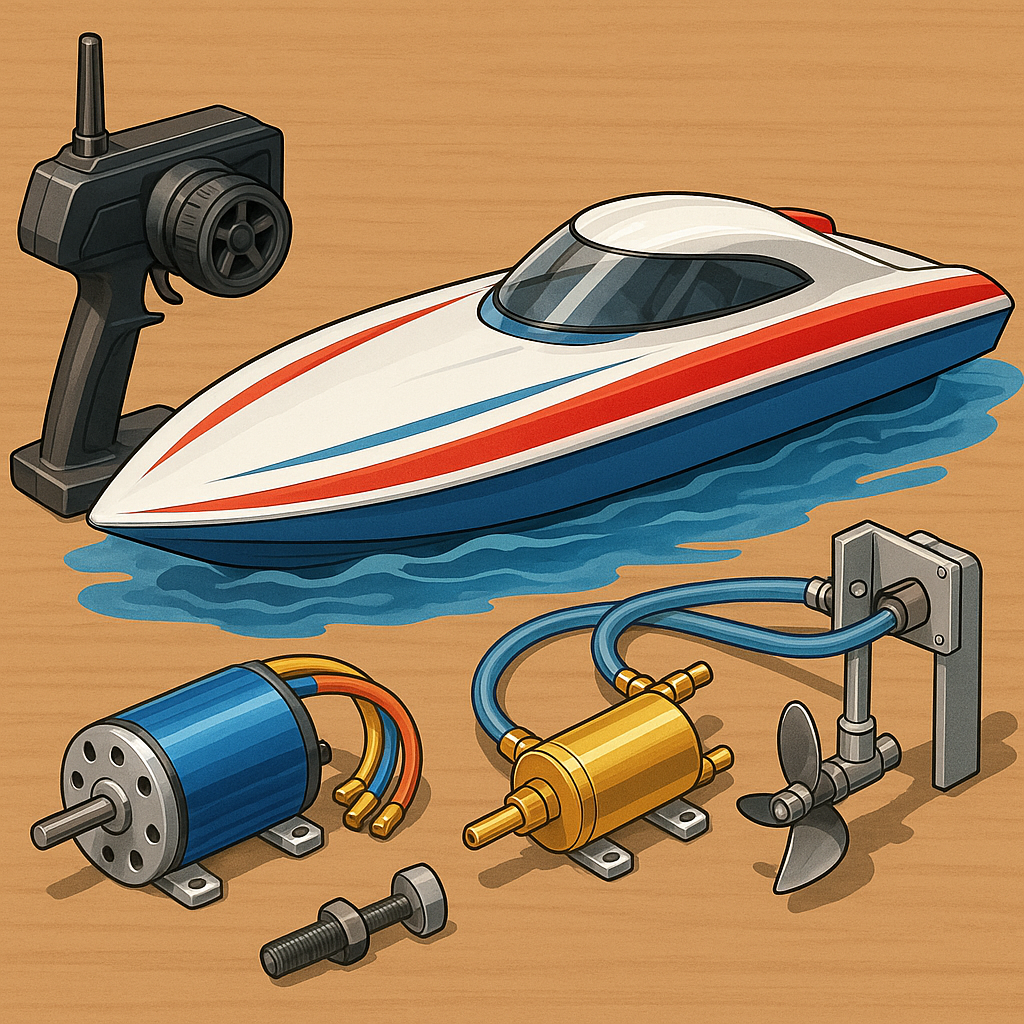
Beginner's Guide to RC Boats: Hulls, Motors and Cooling.
Getting into RC boats is a rewarding hobby that combines modelling, engineering and a bit of piloting skill, and this guide will help you make sensible choices as a beginner.
One of the first decisions you must make is hull shape, because the hull determines handling, speed and the kind of water you can safely run on.
- Displacement hulls are stable and efficient at low speed, making them ideal for scale models and calm water cruising.
- Planing hulls lift onto the surface at speed and are the best choice for fast electric and nitro racers.
- Catamarans offer excellent stability and often higher top speed for a given power because of reduced wetted surface.
- Tunnel hulls and deep-V designs each have trade-offs between handling in rough water and straight-line speed.
Waterproof ESCs are a must for many beginners because moisture is the most common cause of electronics failure in boats, and they come in sealed and water-resistant flavours so you can choose according to budget and intended use.
When shopping for an ESC look for sensible features such as a reliable Electronic Speed Controller with a reputation for waterproofing, a properly rated current capacity for your motor and battery, a programmable BEC or separate power for servos, and clear instructions on mounting and cooling requirements.
The motor choice often comes down to outrunners versus inrunners, and knowing the difference will save you frustration when selecting propellers and gearing options.
Outrunners have the magnet assembly on the outside and produce higher torque at lower RPM, which can be useful for direct-drive props and larger blades, whereas inrunners spin faster for a given size and are often paired with water-cooled jackets or gearboxes for high-speed boats, so match motor type to your hull and propeller strategy.
Cooling is critical for both motors and ESCs because watercraft cannot rely on air flow as much as cars or planes, and most serious builders use water-cooling systems, heat sinks and careful mounting to keep temperatures in check.
Common cooling methods include motor water jackets, through-hull water pickups for closed-loop cooling of ESCs and motors, generous heat-sinking, and monitoring with a simple infrared thermometer to avoid melting wires or damaging bearings, and if you want more guides and boat projects visit WatDaFeck for additional resources.
Finally, practical setup and maintenance matter more than chasing top speed, so use a good shaft seal, check couplings and bearings regularly, protect exposed electronics with conformal coating or sealed boxes, choose a battery and prop combination that does not overload your ESC, and learn to trim and launch safely for the best long-term enjoyment of the hobby.
Follow me on: Facebook: https://www.facebook.com/watdafeck3d · Instagram: https://www.instagram.com/watdafeck3d/.
Comments
Post a Comment