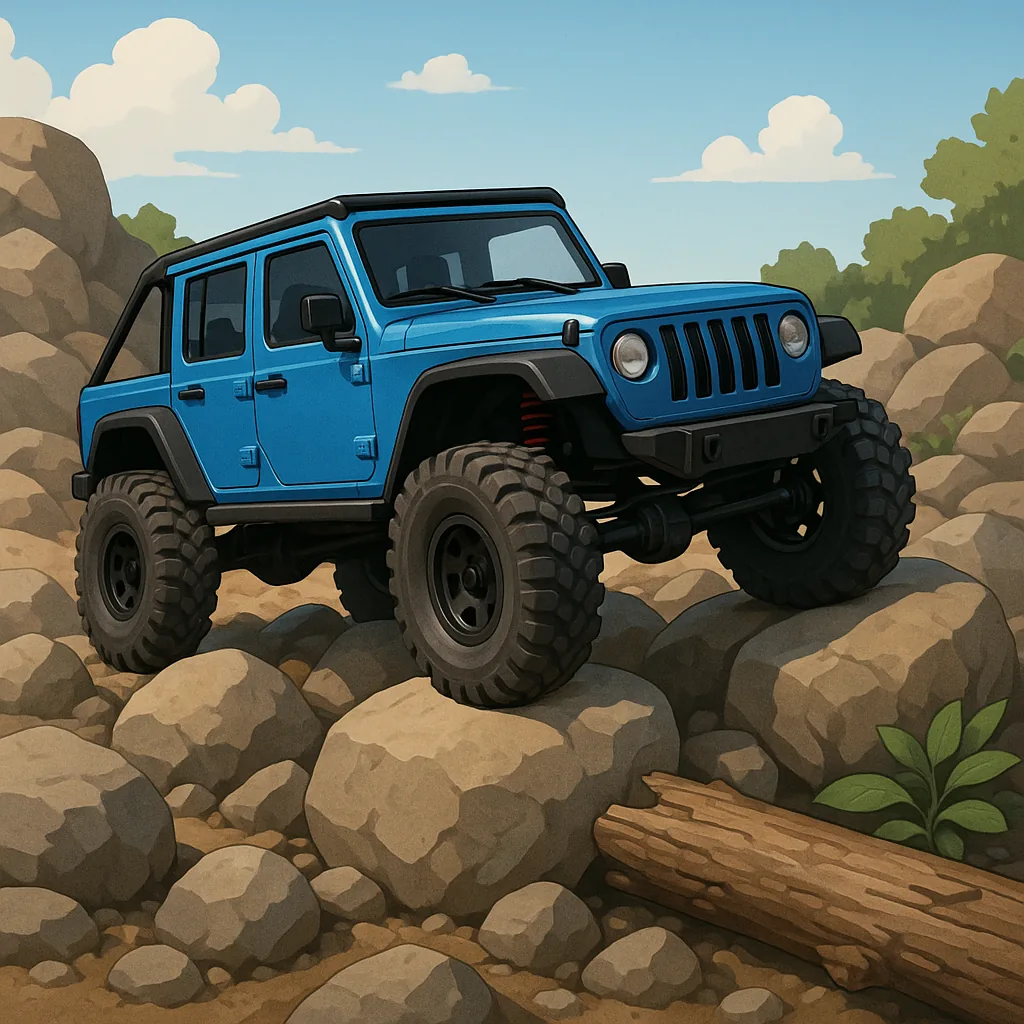
Beginner's Guide to RC Rock Crawlers: Portal Axles, Torque, Articulation and Waterproofing
RC rock crawling is a slow, technical discipline in the hobby that rewards patience, setup and creativity, and it is the perfect place to learn vehicle dynamics without needing high speed skills. Unlike racing, crawling is about conquering obstacles such as boulders, ruts and logs by selecting the right line and keeping the wheels hooked up to the terrain. As a beginner you will get more enjoyment from a carefully set up crawler than from raw power, because crawling emphasises traction, torque and suspension behaviour rather than outright speed. This guide walks through four core topics to get you started with smart upgrades and sensible expectations.
Portal axles are a popular upgrade for serious crawlers because they raise the differential and crown wheel above the centre of the wheel, delivering more ground clearance without resorting to massive tyres. The extra clearance means the differential and driveshafts sit higher, reducing the chance of snagging on rocks and improving approach and departure angles on technical climbs. Portal axles also introduce an additional gear reduction at the hubs, which multiplies torque at the wheels and lightens the load on the motor and internal gears, but they add weight and complexity so weight distribution and suspension tuning need to be reconsidered when you fit them.
When planning torque setups for a crawler you should choose low gearing and a motor that produces usable torque at low revolutions rather than a high top speed motor. Most dedicated crawlers use high-pinion or heavy reduction gearboxes combined with robust low KV brushless motors or brushed setups that punch out consistent low-end power. Pair the motor with an ESC that supports precise throttle control and a high-quality servo for steering that has enough torque and metal gears to resist stalling. Battery choice also matters because torque under load depends on available current, so use batteries with good discharge rates and keep wiring short and chunky to reduce voltage drop.
Articulation is the ability of a vehicle to keep its tyres on the ground over uneven terrain and it is often more important than horsepower for successful crawling. Longer links and softer springs increase articulation but compromise stability, so most builders aim for a compromise: maximise wheel travel at low speeds while keeping roll predictable. Consider multi-link or 4-link suspensions with properly located anti-sway bars or removable sway links for adaptable performance, and tune shock valving or use volume spacers to control spring progression and damping. Weight placement is crucial because a low centre of gravity helps prevent tip-overs but some weight over the front axle can improve traction on steep climbs.
Waterproof electronics let you go through muddy puddles and damp trails without worrying about a shorted ESC or fried receiver, and they are essential for outdoor crawling in changeable weather. Check manufacturer ratings for water resistance and look for sealed ESCs, waterproof servos with seals and rubber gaskets, and fully enclosed receivers or waterproof receiver boxes with silicone seals. For extra protection, use dielectric grease on connectors, heatshrink or self-amalgamating tape on exposed joints, and desiccant packs inside radio boxes to manage condensation after a wet run. Remember that "water-resistant" and "waterproof" are different, so choose components that match how wet you expect to get during play.
Putting everything together into a reliable crawler comes down to balance and testing rather than piling on upgrades, so start by refining a stock or lightly modified chassis before adding portal axles or heavy electronics. Swap in tyres with a soft compound and aggressive tread, check gear mesh and diff preload after any change, and practise different throttle and steering techniques on gentle lines before tackling committed climbs. If you want detailed build notes, parts lists and step-by-step guides for common conversions, visit my site at WatDaFeck for projects and tips that help beginners avoid common mistakes.
Follow me on: Facebook: https://www.facebook.com/watdafeck3d · Instagram: https://www.instagram.com/watdafeck3d/.
Comments
Post a Comment