Buying Guide: Amphibious RC Craft for Hobbyists
Amphibious RC craft are a rewarding niche for hobbyists who want to move seamlessly between water and land, and choosing the right model starts with understanding how a craft handles the transition between those surfaces. Look for designs that purposefully bridge the gap rather than being a compromise in both environments, because a well-designed amphibian will deliver predictable handling, reliable buoyancy and straightforward maintenance.
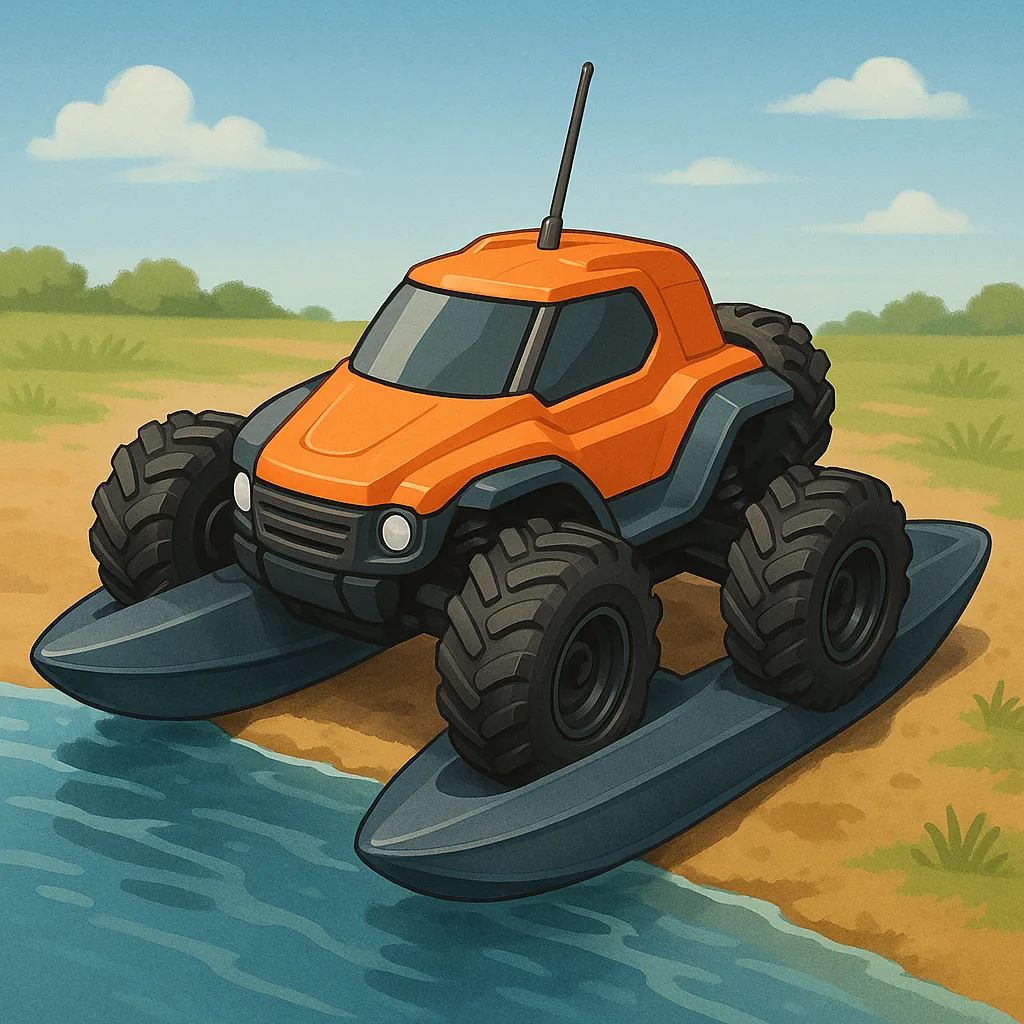
Water-to-land transitions are the defining challenge for these models, and manufacturers use a few common approaches to manage them effectively. Some craft use fixed wheels or tracks set high in the hull so you simply drive out of the water, while others employ retractable wheels or dedicated hull shapes that shed water as the vehicle gains speed on land. Pay attention to how the drive power is transferred when changing medium; chain or shaft drives with sealed couplings are preferable to exposed linkages that can corrode or jam.
Buoyancy and flotation considerations should come next on your checklist because they directly affect safety and recovery after a swim. Look for multi-compartment hulls or integrated foam flotation to ensure the craft remains on the surface even if one section is breached. Consider the craft’s freeboard and waterline when loaded with batteries and gear, and choose an option with slightly more buoyancy margin than you think you need to avoid swamping in chop or when climbing onto a grassy bank.
Seals and waterproofing are critical to protecting electronics, and differing philosophies exist between dry-box designs and compartmentalised wet-tolerant systems. High-quality O-rings, rubber gaskets, and properly clamped hatches are hallmarks of a reliable dry-box approach, while specialised potting or conformal coatings on individual components suit wet-tolerant builds. Note the manufacturer’s guidance on ESCs, servos and receivers; some boats come with marine-rated electronics, but many hobbyist models assume you will fit sealed modules as upgrades.
Drive systems and mixed-terrain manoeuvrability deserve careful comparison because tyres, gearing and suspension determine how well the craft negotiates mud, grass, gravel and water exits. Large, paddle-style tyres or low-pressure ATV-style tyres work well for soft banks, and tracked systems excel on very rough or slippery surfaces but are heavier and often slower on open water. Consider gear ratios and motor cooling, since high-torque, low-RPM gearing helps with land climbs while propellers or water jets need a different power band for efficient water running.
When evaluating specific models, weigh practical features like spare parts availability, repairability, weight distribution and the presence of user serviceable seals or removable foam blocks. For hands-on reviews and build tips that focus on reliability and sensible mods, see my site at WatDaFeck. Choose a craft with a supportive community and clear spare part channels so you can keep it running season after season, and remember that a modest upgrade to sealed ESCs and a better battery pack often yields more real-world improvement than an expensive hull swap.
Follow me on: Facebook: https://www.facebook.com/watdafeck3d · Instagram: https://www.instagram.com/watdafeck3d/.
Comments
Post a Comment