FPV Antenna Buying Guide: Patch vs Omni, Polarisation, Placement and Range Optimisation
Choosing the right FPV antenna is one of the single most effective upgrades for reliability and range on a model, but it is also where many hobbyists get confused by terminology and trade-offs, so this guide will steer you through the essentials for 5.8 GHz gear and common hobby setups.
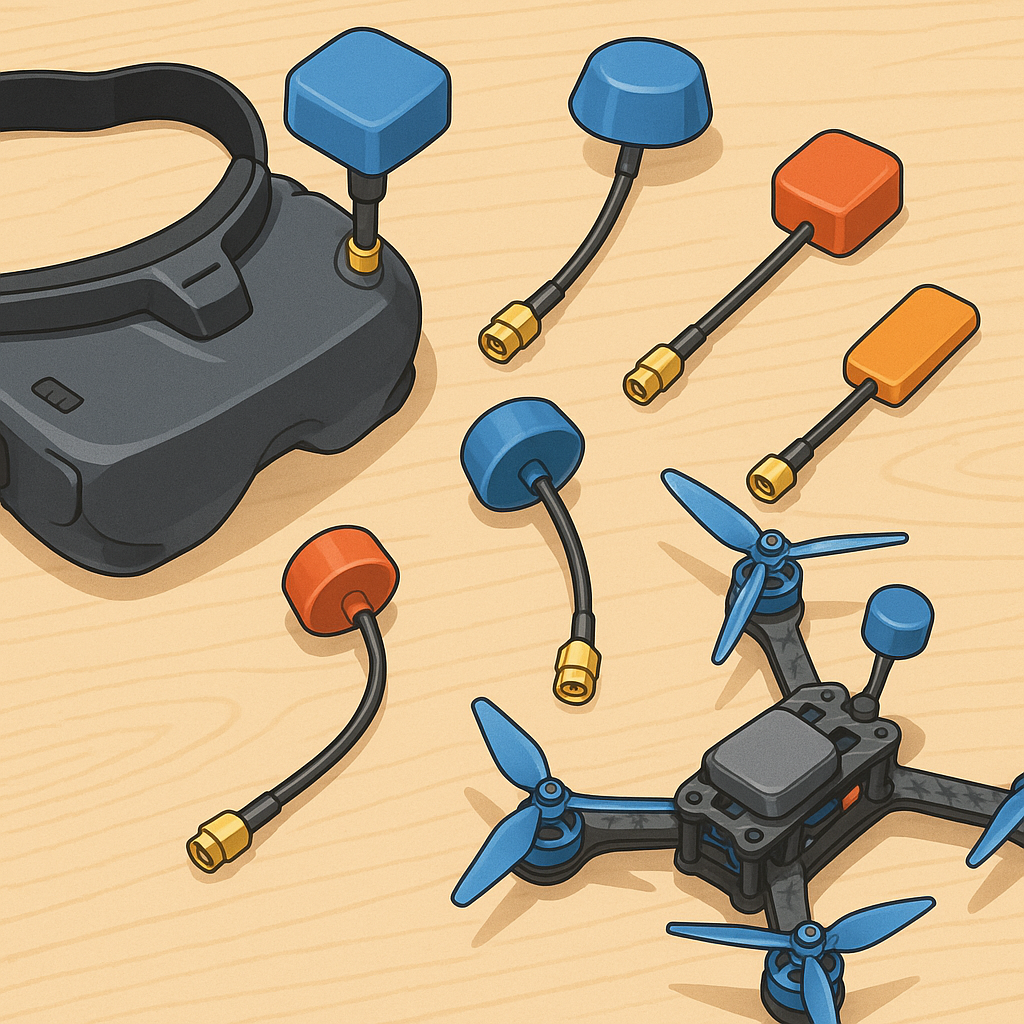
Start with the core trade-off: patch versus omni antennas, because the choice determines your coverage pattern and flying style, so pick according to where and how you fly. Omni antennas radiate in a doughnut-shaped pattern and are ideal for close-in freestyle, cruising and situations where you need coverage in many directions at once, while patch antennas focus energy into a narrower beam to give better range and resistance to interference when your flight path stays generally in front of the pilot, such as long-range or racing setups. Higher-gain omni elements keep horizontal coverage at the cost of vertical sensitivity, and high-gain patches increase forward reach but punish off-axis signal, so consider how often you need that focused lift before committing to a single antenna type.
Polarisation matters as much as the antenna shape, because mismatched polarisation causes significant signal loss and dropouts even when gain looks adequate on paper. Circular polarisation (RHCP or LHCP) is popular for FPV because it reduces multipath reflection problems and tends to maintain a more stable picture as your quad rotates, but both transmitter and receiver must match the same handedness for best results. Linear polarisation can work well in simple line-of-sight scenarios if both ends use the same orientation, but it is more susceptible to signal nulls when the drone banks or changes pitch, so most pilots prefer circular antennas for general flying. For hands-on reviews and mounting tips that match the advice here visit WatDaFeck.
- If you fly around the pilot a lot, choose omni on the model and circular on the goggles for broad coverage.
- If you primarily fly out and back, use a patch on the goggles and an omni on the craft for a good compromise between range and tracking.
- Match connector types carefully: SMA, RP-SMA and u.FL are not interchangeable without adapters.
- Prefer low-loss, well-made antennas and avoid extremely cheap clones that lack quality control.
Placement and mount orientation are often overlooked but they can dramatically affect performance, so treat the antenna like a sensor that needs a clear field of view rather than just a cosmetic add-on. Keep the VTX antenna away from carbon fibre, ESCs and power leads, and use short, low-loss pigtails where necessary to get an antenna into a clear position, because the coax and solder joints are often the weak link in a system. On goggles, mount dual antennas for diversity with one vertical and one horizontal if you must use linear types, or two matched circulars with a small separation to reduce reflections from the pilot�s body, and make sure the antennas are angled to cover the typical flight envelope rather than pointing straight up or straight ahead by default.
Range optimisation comes from combining sensible power levels, antenna choices and minimising loss between transmitter and antenna, and you should optimise each link element rather than simply increasing VTX power. Use the highest allowed clean power for your area only when needed and pair it with higher-gain antennas on the receiving end rather than cranking transmit power as the first option, because more power increases heat and interference without fixing polarisation or placement mistakes. Choose good quality connectors and short low-loss coax or pigtails, keep the antenna connectors tight and protected from moisture, and consider filters if you are operating near other RF sources to avoid desensing your receiver; these steps together produce much greater practical range than any single expensive antenna alone.
To wrap up your buying decisions, match antenna type to mission, match polarisation to both ends, prioritise clean placement and minimise feedline losses before chasing higher gain, and consider a mixed setup such as omni on the quad with a patch on the goggles or a pair of matched circulars for diversity. A sensible starter combo for many pilots is a quality RHCP omni on the model, two matched RHCP antennas on the goggles with a compact patch for longer runs, secure SMA adapters and a few spares of the correct connector type, and that approach will keep you flying with fewer dropouts and less frustration than buying the fanciest-looking antenna on the first page of search results.
Follow me on: Facebook: https://www.facebook.com/watdafeck3d · Instagram: https://www.instagram.com/watdafeck3d/.
Comments
Post a Comment