RC Power Systems Safety: ESCs, Props, Current and Thrust Tests
Power systems are one of the most critical safety areas for any RC pilot or maker, and a small oversight can quickly become dangerous when props and batteries are involved.
Electronic Speed Controllers (ESCs) come in several flavours and knowing the differences is essential for safe operation, as brushed ESCs are simple and usually lower current, while brushless ESCs are the norm for modern models and require correct motor matching and firmware configuration.
Within brushless options you will find ESCs with built‑in BECs to supply receiver power and those labelled OPTO that require an external BEC, and popular firmwares such as BLHeli_S, BLHeli_32 and SimonK add features like active braking, governor modes and RPM filtering which can affect motor temperatures and current spikes during flight.
Propellers determine how much load the motor sees and therefore the current draw, so choose size, pitch and material to suit the motor and aircraft; a larger or higher‑pitch prop produces more thrust but also higher current and heat, so always replace damaged props and balance new ones before use and for more detailed build guides and safety checklists visit WatDaFeck.
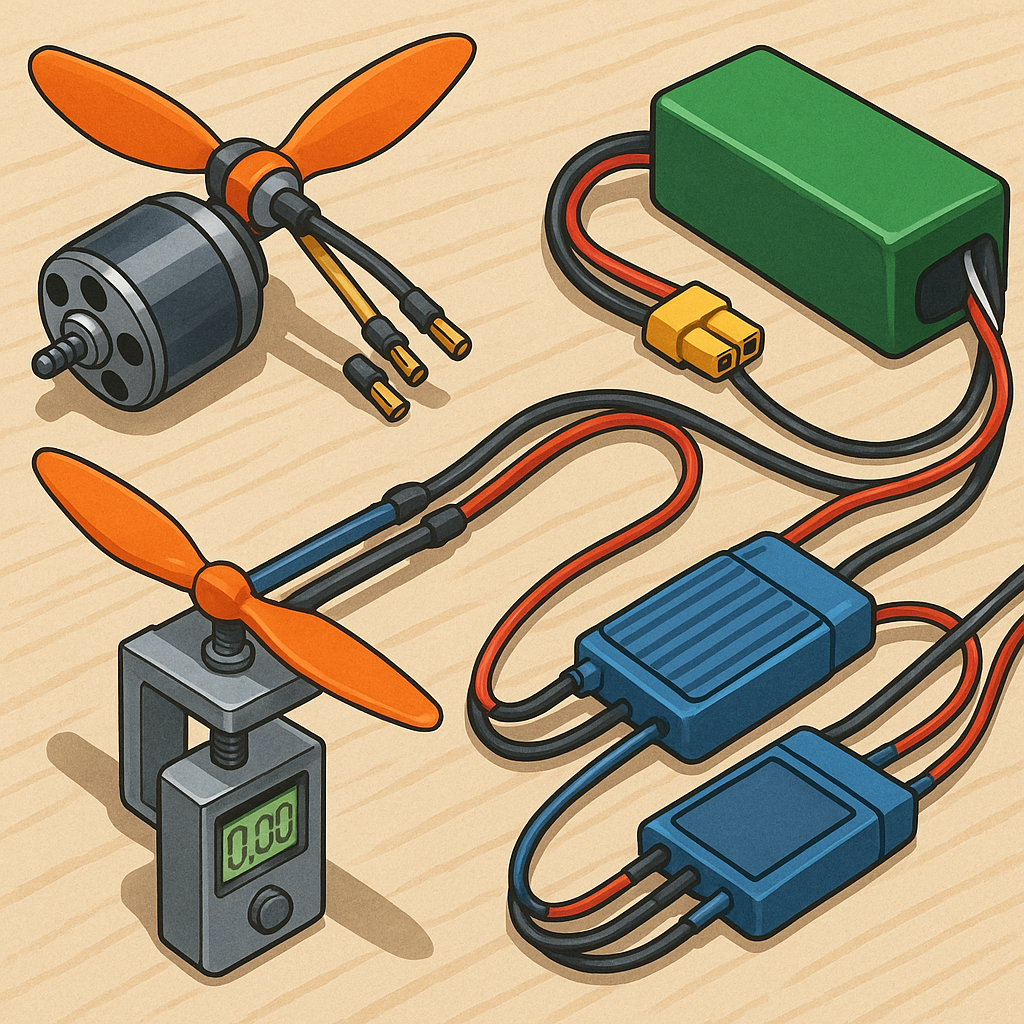
Measuring current draw is a practical way to verify safety, and you should use a reliable wattmeter, in‑line ammeter or ESC telemetry to log both continuous and burst amperage, remembering that battery C‑rating and ESC continuous rating must exceed measured continuous draw by a healthy margin and that connector and wire gauges must match the expected current to prevent voltage drops and thermal failures.
Thrust measurements convert electrical data into practical safety margins, so perform static thrust tests on a secure rig using a calibrated scale, record throttle percent, thrust and current and note motor temperature rises during representative runs to confirm a throttle range that keeps components within safe limits while delivering the necessary lift for the model.
Follow me on: Facebook: https://www.facebook.com/watdafeck3d · Instagram: https://www.instagram.com/watdafeck3d/.
Comments
Post a Comment