RC Tools and Equipment Buying Guide for Hobbyists
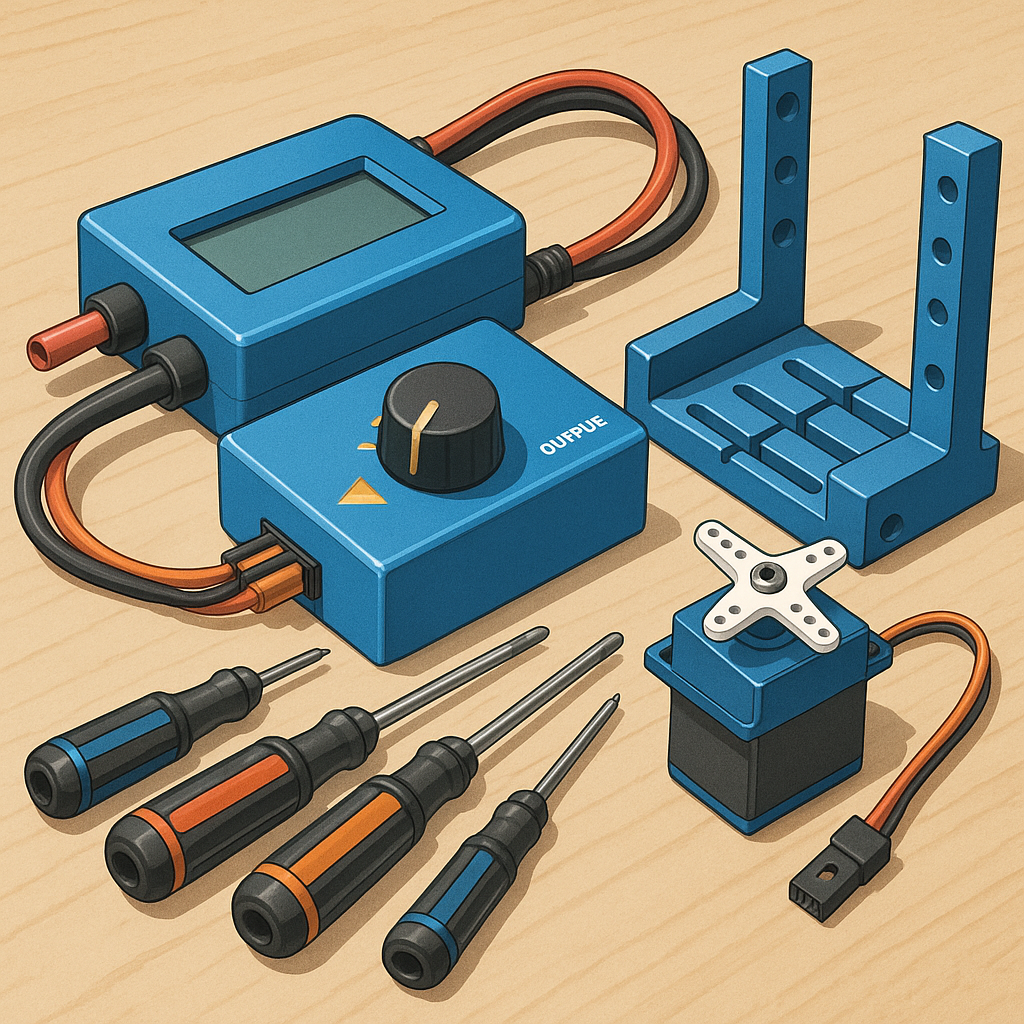
Choosing the right tools can make the difference between a frustrating build and a satisfying weekend of flying or driving, and this guide focuses on four items that repaid their cost many times over in my workshop: servo testers, watt metres, torque drivers and alignment jigs.
Servo testers are often the first bench tool new builders buy, and a good model lets you quickly verify travel, centre position and speed without hooking up a full radio system. Look for testers that support three-wire servos with adjustable PWM pulse width and a wide pulse range, as well as a battery input that matches your typical pack voltages. Advanced testers add features such as sweep mode, endpoint adjustment and the ability to emulate multiple channels for synchronising linkages, and I recommend spending a bit more for a unit with a clear readout and robust connectors. For more detailed guides and kit reviews, visit WatDaFeck.
A watt metre is indispensable for understanding power draw and preventing damage to batteries and ESCs, especially when testing new motors or propellers. When buying, check the supported voltage and current ranges so the meter covers your typical battery packs and peak motor surge currents, and choose one with sufficient resolution to show small changes under load. Features such as peak hold, integrated logging and an accurate shunt make diagnosis easier, and a model with an external current sense lead is safer and more convenient for bench work. Always use a metre with reliable fusing and start tests at low throttle to verify behaviour before pushing to full power.
Torque drivers and torque screwdrivers remove the guesswork when securing battery terminals, motor mounts and key linkages where over-tightening can strip threads or warp components. Pick a driver with a readable scale and a torque range that suits electronics and airframe hardware, normally in the 0.1 to 5 N·m band for most RC models. Ratcheting torque wrenches and preset drivers are handy for repeated fixes, while drivers with hex bit sets reduce the need to swap tools mid-build. If you rely on very small fasteners, look for instruments that come with interchangeable bits and have calibration certificates or the option for recalibration.
Alignment jigs are a small investment that pay off in crisp control responses and longer component life, particularly for setting control horn positions, hinge lines and motor thrust angles. Simple adjustable jigs help set parallel control surfaces and ensure pushrods sit in neutral without binding, while more specialised fixtures assist with motor and wheel alignment. Look for jigs made from anodised aluminium or engineering plastics for rigidity and repeatability, and consider ones with clear scales or detents if you regularly build multiple models to the same specification.
When buying any of these tools decide early whether you want a budget model for occasional use or a professional-grade version for heavy workshop duty, and consider future-proofing by choosing items that cover the voltage, current and torque ranges you might use later. A short checklist to run through before you buy is to confirm compatibility with your kit, check user reviews for reliability, verify warranty and calibration options, and factor in spare parts and serviceability. Regular maintenance such as keeping connectors clean, storing torque tools in protective cases and recalibrating instruments annually will extend tool life and keep results predictable.
Follow me on: Facebook: https://www.facebook.com/watdafeck3d · Instagram: https://www.instagram.com/watdafeck3d/.
Comments
Post a Comment