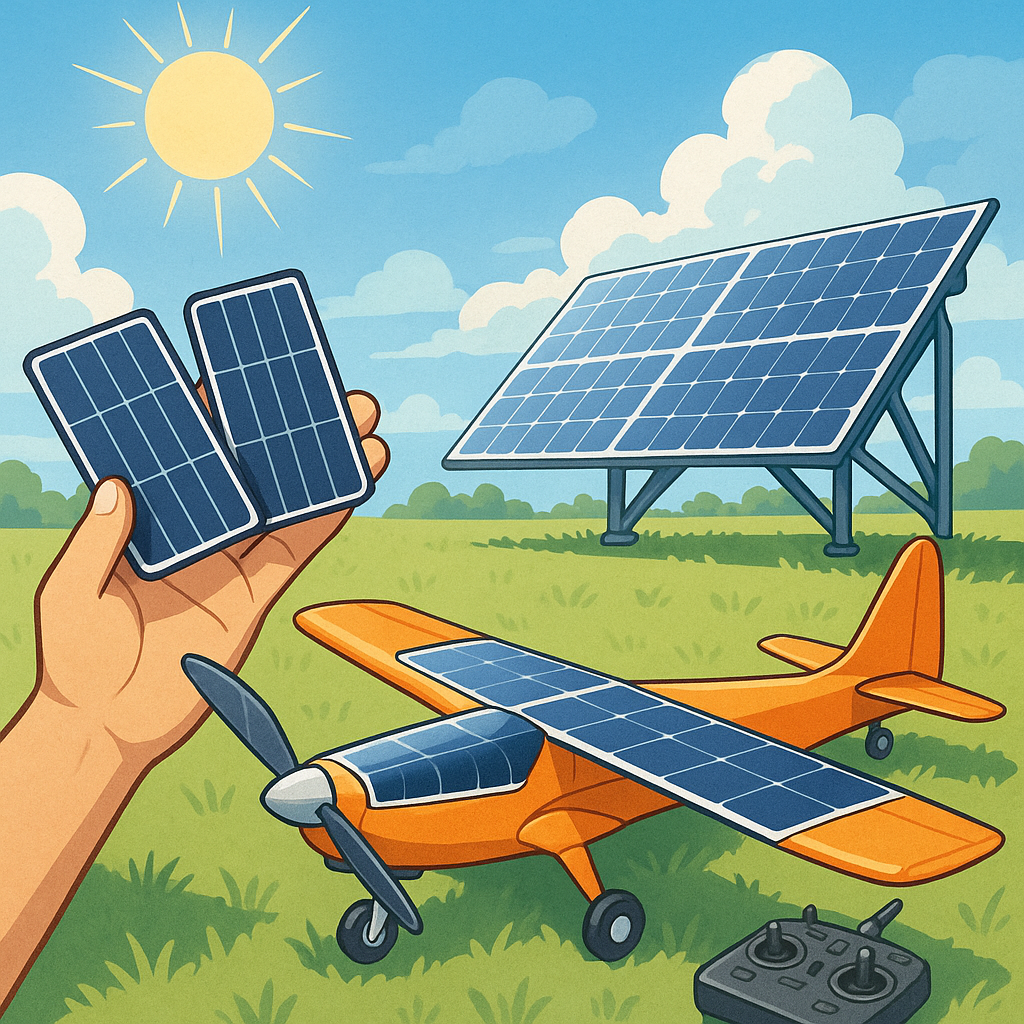
Solar power for RC: practical tips and tricks for hobbyists.
Solar panels can change the way you approach RC projects by extending flight times and enabling long-range endurance missions, and this guide gives hands-on tips rather than theoretical maths alone.
Start with the solar cells themselves and be realistic about power density versus weight, since a high-efficiency monocrystalline cell typically gives the best watts-per-gram for airborne work and thin-film panels trade efficiency for flexibility and lower weight.
Pay attention to electrical configuration because matching voltage to your battery and power electronics matters, and you should wire cells in series to reach the battery charging voltage or in parallel to increase current while keeping practical soldering tabs and bypass diodes to avoid hot spots on partially shaded panels.
MPPT is the single best upgrade for variable sunlight conditions because a good small MPPT controller will harvest significantly more energy than a PWM regulator, and you should pick an MPPT rated above the panel’s peak current with adjustable voltage limits so the controller can follow the panel maximum power point under different angles and temperatures.
For endurance builds combine a sufficiently sized battery with solar topping so you always have headroom for high-power bursts, and calculate an energy budget that includes cruise power, climb power and reserve so you do not over-spec either the panel or the pack during a mission because heavier packs reduce efficiency and handling.
For long-range projects focus on low-draw avionics and efficient comms, plan antenna polarisation and line-of-sight links, and remember that lightweight high-gain antennas plus a stable autopilot reduce wasted energy, and if you want project examples and supplier notes you can find step-by-step write-ups at WatDaFeck where I document component choices and flight results.
Practical mounting and testing are vital because panels should be bonded to smooth surfaces with flexible adhesives and isolated electrically from carbon-fibre structures, and always bench-test MPPT behaviour under a lamp and log voltages and currents before trusting the system in the air.
Follow me on: Facebook: https://www.facebook.com/watdafeck3d · Instagram: https://www.instagram.com/watdafeck3d/.
Comments
Post a Comment