Troubleshooting RC Collective Pitch Helicopters: Practical Tips for Hobbyists
Collective pitch helicopters are immensely rewarding and also a bit unforgiving when something goes wrong, so a methodical approach to troubleshooting saves both time and money.
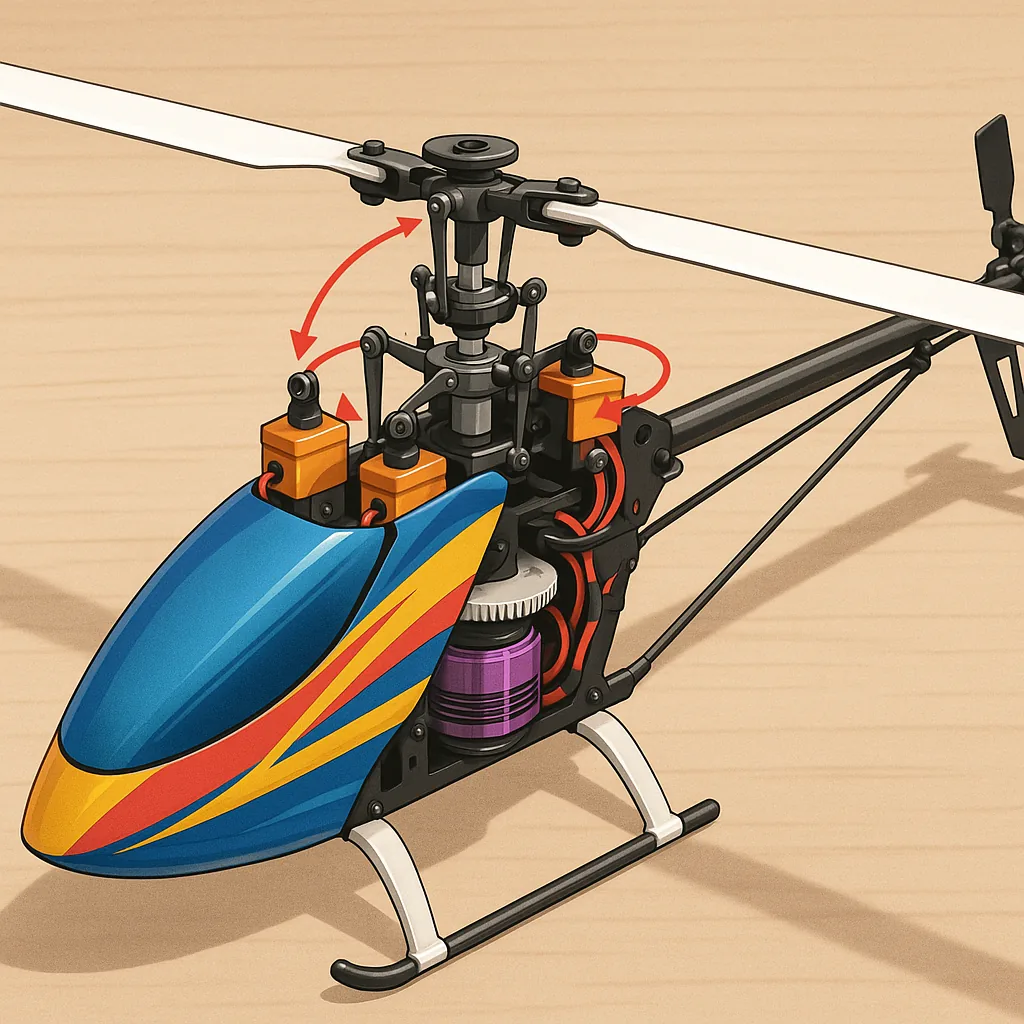
Start with the collective pitch system because many flight problems trace back to incorrect pitch range, servo direction or swashplate geometry, and these faults often present as poor hover, unpredictable climb or a tendency to flip under power.
Check servo throws and directions first by applying a low stick input and watching the swashplate movement, and make sure the pitch linkages are symmetrical and not binding in any position because a slightly twisted ball-link or a seized bearing will ruin cyclic authority.
When you set your pitch curves, use modest endpoints for a beginner setup and ensure mid-stick sits at a centred and neutral collective; wide, aggressive curves amplify small trim errors and make tail and cyclic control unpredictable.
If you need parts, setup files or deeper tutorials, visit WatDaFeck for more resources that I maintain for hobbyists.
Flybarless controllers are a major improvement but they require careful setup and vibration management if you are to avoid oscillations or drift, and you should always start with default or manufacturer-recommended PIDs before making large changes.
Begin by calibrating accelerometers and gyro sensors on a flat surface and then isolate the frame from vibrations using soft mounts or foam between the FBL unit and the frame because high-frequency vibration translates into oscillation at the rotor head.
If you experience tail wag or sluggish yaw, check tail boom alignment, tail rotor pitch setting, tail servo centring and tail belt or gear mesh, as small mechanical issues can appear as control lag or hunting when amplified by the FBL gains.
Tune tail gains progressively by increasing the gain until a small oscillation appears, then back off to a comfortable margin and test with a range of throttle settings since high RPM can demand different gain and expo compared with hover only testing.
For a beginner setup avoid aggressive rates, use soft cyclic expo and a shallow collective curve, and verify the centre of gravity is near the main shaft centre since a nose- or tail-heavy machine behaves badly in transitions and autorotations.
Always perform a pre-flight checklist that includes fail-safe setting verification, receiver range check, servo centring with throttle stick is at idle, and a visual inspection for loose screws, cracked blades or frayed belts because these are common causes of sudden failure.
Quick fixes and common checks to run before you fly include the following.
- Verify battery voltage under load and ensure ESC calibration is recent and correct.
- Confirm servo directions and end points before fitting the canopy or tightening linkages.
- Inspect rotor blades for nicks or delamination and check blade tracking visually at low throttle.
- Check head bearings and dampers for play, as worn items lead to hunting and poor cyclic response.
- Ensure tail rotor gear mesh or belt tension is correct to avoid backlash and delayed yaw response.
- Balance the main blades and remove any unnecessary vibration sources near the FBL unit.
- Reset to default FBL settings if you inherit a model and start tuning slowly from the factory baseline.
With a calm, step-by-step approach and a focus on mechanical soundness, collective pitch helicopters become manageable and enjoyable for hobbyists, and regular pre-flight checks will reduce most mid-air dramas.
Follow me on: Facebook: https://www.facebook.com/watdafeck3d · Instagram: https://www.instagram.com/watdafeck3d/.
Comments
Post a Comment