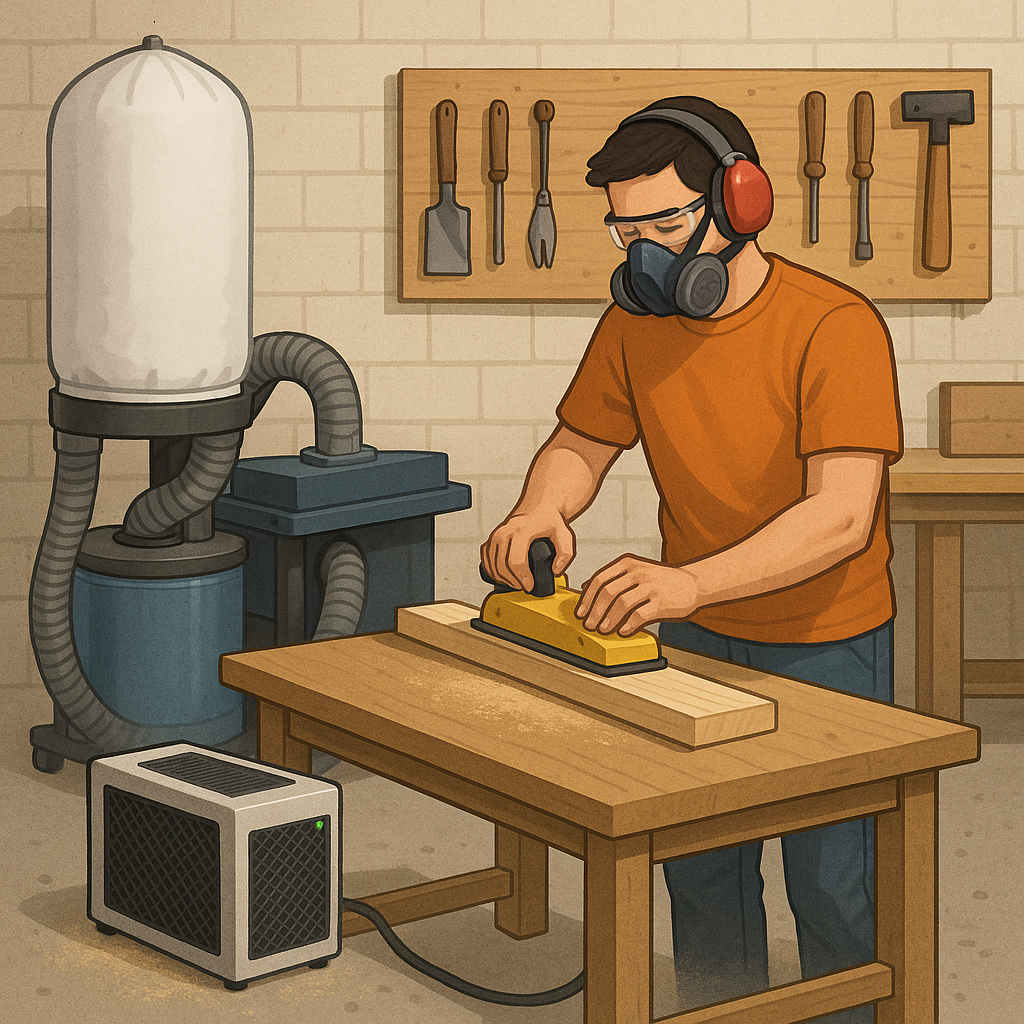
Workshop dust control for hobbyists: a practical safety overview.
Dust in a hobby workshop is more than just a nuisance because fine particulates can harm lungs, cause irritation and in some cases create a combustible atmosphere when allowed to accumulate, so treating dust control as a safety priority is essential.
Air filtration is your first line of defence and a good portable unit with a true HEPA filter will remove the smallest respirable particles that cause long-term harm, while carbon pre-filters help with odours and volatile compounds from glues, paints and resins.
When selecting an air cleaner look at the CADR or room coverage, choose machines with serviceable filters and predictable maintenance intervals, and position units so they help the natural flow of air rather than working against workshop ventilation.
Vacuum systems and extraction at source dramatically reduce airborne dust because localised capture prevents particles reaching the rest of the room, and a decent shop vac with a good filter or a small dedicated dust extractor for sanding and routing is a worthwhile investment.
Anti-static measures reduce the way dust clings to surfaces and electronics, so fit ESD mats or work on grounded surfaces when assembling sensitive devices, keep relative humidity in a sensible range to limit static build-up and use anti-static brushes or sprays where appropriate.
Personal protective equipment complements engineering controls, so use at least an FFP2 rated mask when creating fine dust and consider a reusable respirator with P3 cartridges for long sessions, wear safety glasses, keep tools maintained and empty dust collectors regularly to reduce fire and health risks, and for more detailed project guides and workshop layout ideas visit WatDaFeck.
Follow me on: Facebook: https://www.facebook.com/watdafeck3d · Instagram: https://www.instagram.com/watdafeck3d/.
Comments
Post a Comment