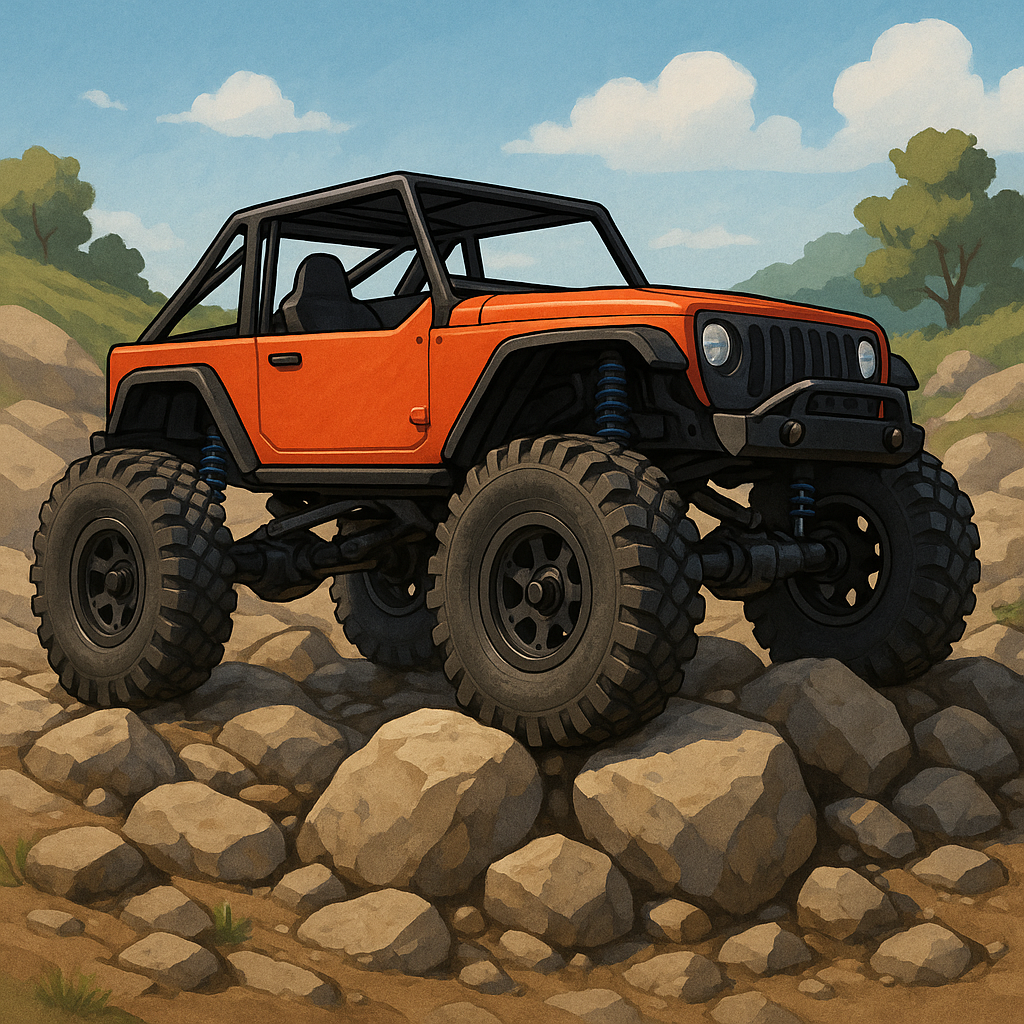
Beginner's Guide to RC Rock Crawlers: Portal Axles, Torque, Articulation and Waterproofing
RC rock crawling is a patient and technical branch of the hobby that rewards careful setup and sensible gear choices, and it is a great entry point for model-makers who enjoy building and tuning as much as driving. Unlike high-speed bashing, crawling focuses on slow, controlled progress over rocks, roots and man-made obstacles, which means different priorities in chassis design and electronics. This guide introduces the core concepts that help a new crawler perform well on technical terrain and last through wet sessions.
Portal axles are a popular upgrade on scale rock crawlers because they raise the axle centre away from the wheel hub, increasing ground clearance without resorting to massive tyres. The wheel hub sits below the axle tube thanks to a hub carrier and internal gears, which also provides gear reduction at each wheel and reduces stress on the drivetrain when crawling slowly. Portal conversions add weight and complexity and may change steering geometry, but the improved clearance and extra low-speed torque make them a highly effective modification for serious rock runners.
Getting torque right is essential in a crawler because slow, steady pulling power beats outright speed for most obstacles. Choose a motor with lower Kv (for example 13T to 35T equivalents in sensored brushed or brushless terms) and pair it with a lower pinion-to-spur ratio or a two-speed gearbox if you demand occasional top speed. Many crawlers also use gear-reduced portal axles or internal diff gears to multiply torque further, and a properly tuned ESC with a good low-end throttle curve improves wheel control. Remember that more torque usually means more current, so check ESC and battery ratings to avoid overload.
Articulation is the ability of the suspension and axles to keep tyres in contact with uneven ground, and it is arguably the single biggest factor in a crawler's off-road performance. Solid axles with long-link setups are favoured because they allow for consistent traction and predictable behaviour, and shock placement, spring rate and damping all influence how much the chassis can twist before a wheel loses contact. Adjustable links and shocks help you dial in roll centre and anti-squat for a balance between climbing ability and stability, and limiting sway bar use or using soft anti-roll solutions increases flex where you need it most.
Waterproof electronics are a must for many crawling environments since water crossings, mud and snow can be part of normal runs, and protecting the ESC, servos and receiver prolongs component life. Choose purpose-made waterproof or water-resistant ESCs and servos where possible, use sealed connectors and heat-shrink boots, and consider desiccant pouches inside battery boxes for extra protection. If you need to seal equipment yourself, use silicone grease on connectors, apply conformal coating to circuit boards where practical, and fit breathable membranes over vent ports to prevent pressure build-up while keeping water out, noting that maintenance after wet runs will always improve longevity.
Practical tips for beginners include starting with a well-weighted chassis, soft compound tyres with good tread pattern, and a differential locker or limited-slip solution to cope with uneven traction scenarios. Keep weight low and slightly forward for better front wheel bite on climbs, practice throttle control to avoid sudden stalls and snatches, and learn basic maintenance such as cleaning bearings and checking gear mesh after hard sessions. For parts lists, build logs and specific product reviews relevant to UK hobbyists visit WatDaFeck for detailed articles and photos that can help you choose the right upgrades for your crawler.
Follow me on: Facebook: https://www.facebook.com/watdafeck3d · Instagram: https://www.instagram.com/watdafeck3d/.
Comments
Post a Comment