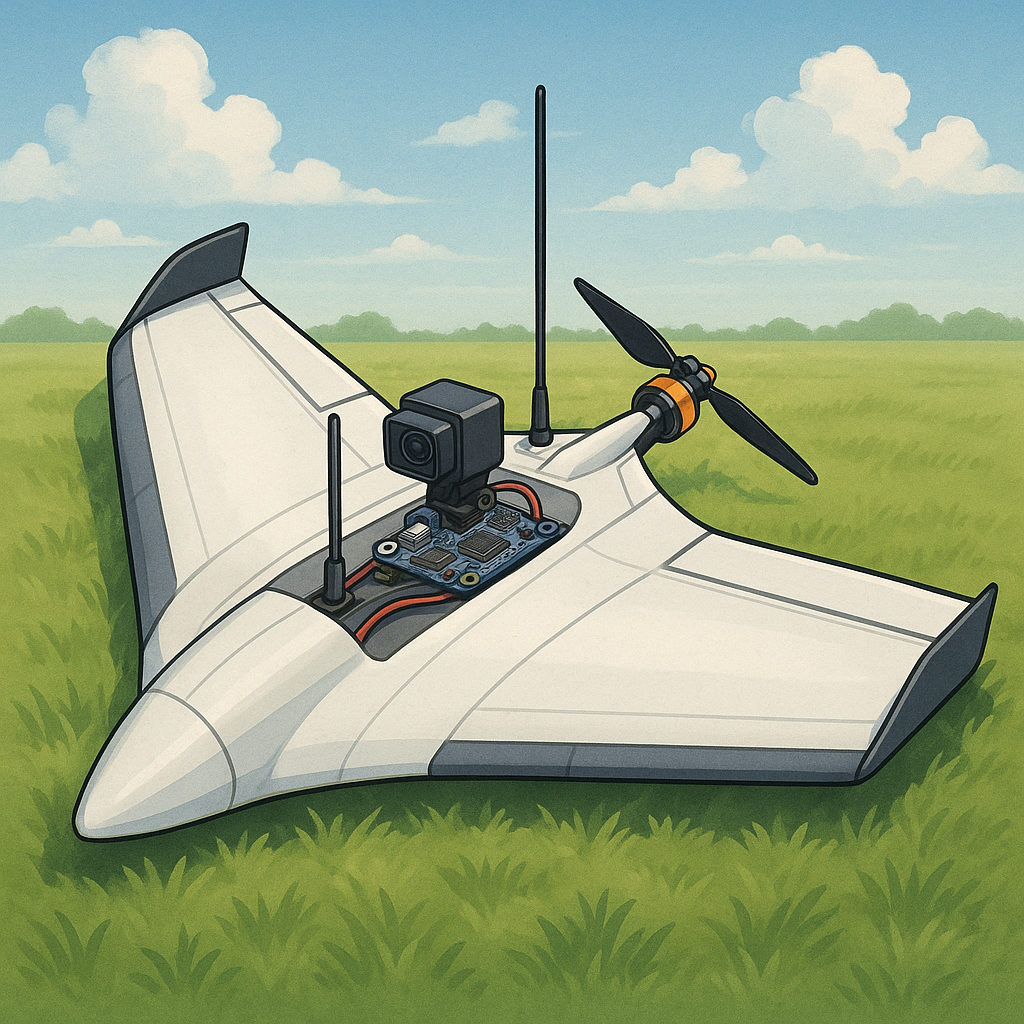
FPV Wings for Hobbyists: Tips and Tricks for Long Range, Tuning and Autopilot Integration
FPV wings are an elegant way to get long, efficient flights with a quiet signature and excellent glide performance, and this guide will share practical tips for hobbyists who want to build, tune and automate their own flying wings. The focus here is on long-range builds, airfoil choices, launch methods, tuning control surfaces and integrating autopilot systems to make flights safer and more predictable. Whether you are coming from multirotors or fixed-wing foamies, these notes assume basic building skills and a willingness to test incrementally. Keep safety and local airspace rules at the forefront of every flight plan.
Choosing the right airfoil and planform sets the foundation for an efficient wing, with higher aspect ratios generally giving better lift-to-drag for cruising but demanding stiffer builds to avoid flutter. For long-range FPV, look for moderately thin sections with low-to-moderate camber to reduce profile drag at cruise speeds while still providing benign low-speed handling for launches and landings. Tapered or slightly elliptical planforms reduce induced drag, but avoid extreme taper near the tips to keep tip-stall behaviour predictable. Add gentle washout towards the tips and a modest amount of dihedral to improve roll stability without sacrificing the ability to thermally soar or run waypoint missions.
Long-range builds live and die by efficiency, so choose propulsion and battery systems that balance endurance with safe operating margins. Use efficient motors and props matched to a cruising RPM lower than their maximum continuous rating, and aim for a propeller that produces enough thrust for climb without forcing the motor to run inefficiently at cruise. High-capacity lithium polymer or lithium-ion packs are common, but pay attention to weight distribution and peak current capability rather than capacity alone. Simple electronic choices such as a low RDSon regulator for video equipment, telemetry-capable ESCs and a dedicated flight battery voltage monitor will make the difference between a reliable recovery and long walks to retrieve a downed airframe. Antenna placement and diversity on the video and control links are equally important to avoid premature loss of signal on long flights.
Tuning a wing for clean, comfortable handling is a combination of correct centre of gravity, conservative throws and progressive control setup in your radio or autopilot. Start with the CG recommended by the designer and then fly gently to confirm trim; small aft shifts increase efficiency but can make recovery from a stall more demanding. Use expo and dual rates to keep the primary flight envelope docile while allowing sportier inputs when desired, and consider differential elevon throws to reduce adverse yaw on sharp manoeuvres. Watch out for flutter by ensuring a torsionally stiff wing and by sealing hinge lines or using captive hinges where possible. Log every flight to identify tendencies such as yaw coupling or pitch oscillations and make incremental changes rather than sweeping adjustments.
Launching methods for wings can influence both the airframe design and the pilot technique, and it pays to practise safe, repeatable launches before attempting long-range hops. Hand launches are clean and simple for lightweight builds, with a firm, level toss and a gentle throttle application to avoid wing-rock at low speed, and they work best when the wing has a slightly nose-up trimmed neutral position. For heavier or higher-wing-loading designs, a simple bungee or ROG (run-on-ground) ramp helps achieve safe climb speed without overstressing the airframe. Always check control surface direction, failsafe settings and GPS lock before launch, and perform a short low-height circuit to confirm trims and power margins before committing to extended navigation legs.
Autopilot integration transforms an FPV wing from a manual flyer into a capable long-range platform, and careful setup will protect both your model and your investment in time. Choose firmware that suits your needs, such as ArduPlane for mature waypoint navigation and redundant safety features, and ensure your GPS, compass and barometer are mounted away from interference and well-calibrated. Configure sensible geofences, failsafe actions and a return-to-home altitude that clears obstacles, and test each function close to home before relying on it at range. For wiring diagrams, logs and step-by-step write-ups that I have used on my own builds you can visit the project pages at WatDaFeck to see examples and downloadable material.
Follow me on: Facebook: https://www.facebook.com/watdafeck3d · Instagram: https://www.instagram.com/watdafeck3d/.
Comments
Post a Comment