Micro Whoops for Hobbyists: A Beginner's Guide to Indoor Flying, Brushless Power and Betaflight Tuning
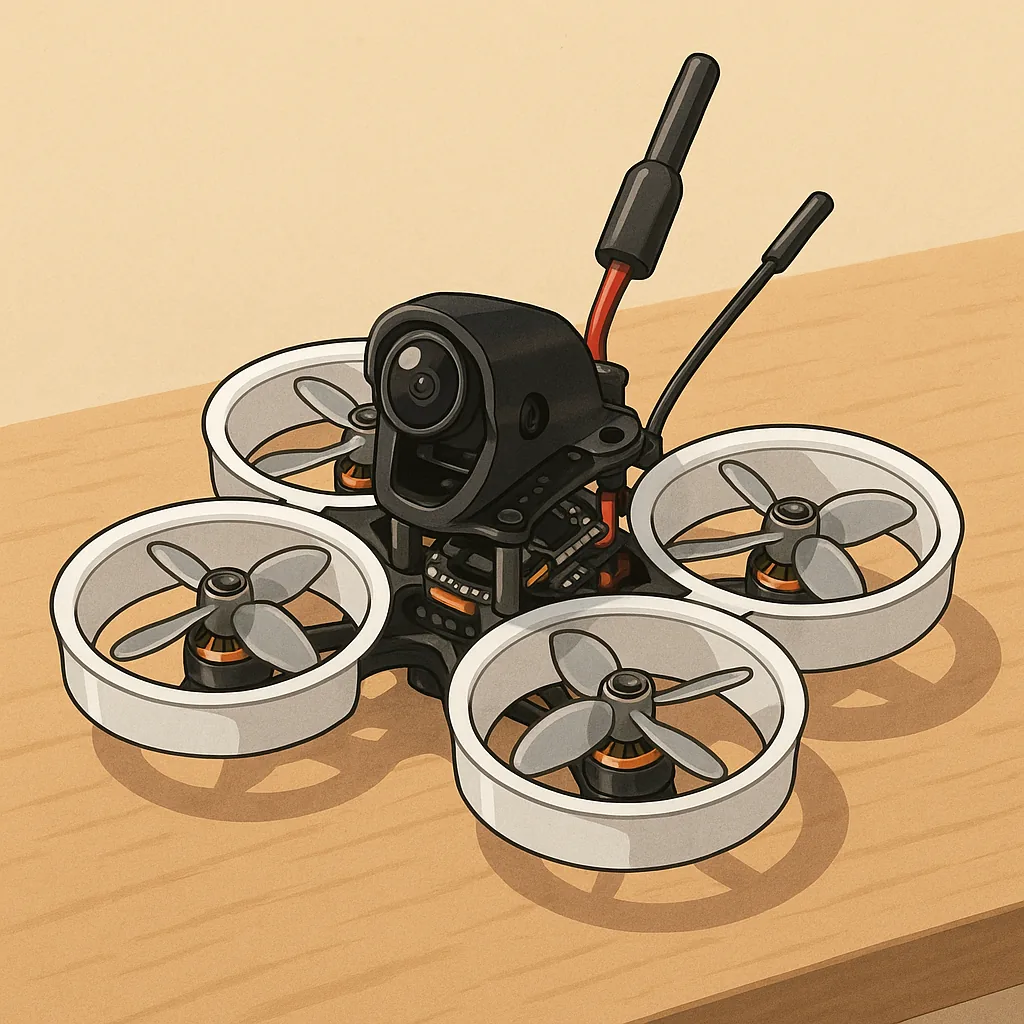
Micro Whoops for Hobbyists: A Beginner's Guide to Indoor Flying, Brushless Power and Betaflight Tuning
Micro whoops are small, ducted quadcopters that are ideal for hobbyists wanting to fly indoors and learn FPV without high risk to people or furniture. They are compact, light and often gentle on impacts because the propellers sit inside protective ducts. For those starting out, micro whoops offer a forgiving learning curve while still being capable of agile flight when set up correctly.
At heart, a micro whoop is defined by its ducted design and small propellers, typically 1.5 to 2.5 inches in diameter, and a frame that keeps the props enclosed. This makes them safer and often legal to fly indoors in public spaces compared with larger drones. The small size also means lower speeds and shorter flight times, so pilots learn to value smooth throttle control and efficient tuning. If you want build guides and parts lists to get started, check my blog at WatDaFeck.
Brushless whoops are the modern leap forward from brushed-motor toothpicks, offering greater responsiveness, longer motor life and improved efficiency. Brushless motors paired with small high-KV stators deliver more thrust per watt, which is particularly helpful when you want to fly acrobatically indoors. Typical builds use 1103 to 1106 sized brushless motors and 1S or 2S LiPo batteries, and choosing the right motor and battery combination is key to balancing punchy throttle with acceptable battery life.
Duct efficiency is a major factor in micro whoop performance because the ducts reshape the airflow around the props and can either help or hinder thrust. Well-designed ducts reduce tip losses, keep prop wash directed and improve stability in confined spaces. Clearance between the prop tips and the duct lip should be minimal but not so tight that props rub, and matching a propeller's pitch and chord to the duct profile will usually yield better hover efficiency and lower noise levels.
- Choose props that sit neatly within the duct without touching the lip for best efficiency.
- Use gentle pitches on small props to improve throttle linearity for indoor flight.
- Fit a small foam bumper or rubber dampers to reduce frame vibration and protect duct edges.
Betaflight is the firmware most pilots use to tune micro whoops and it provides the controls to get a nimble, predictable machine. Beginners should start with sensible defaults, enable RPM filtering if the FC and ESC support it, and use a conservative rates setup before gradually increasing responsiveness. Tuning PIDs on ducted craft often requires lower D gain because ducts can amplify motor harmonics, and enabling dynamic notch filters helps to mitigate noise without over-filtering. Logging with Blackbox is invaluable to diagnose oscillations and to refine filter settings over multiple test flights.
Indoor flying demands smooth throttle management, situational awareness and sensible safety measures, and practice should begin in a spacious, uncluttered room. Use small, protected flight corridors and fly with prop guards at first while you build stick confidence. Carry spares for common wear items such as props, props clips and motors, and check wiring and connectors before each session to avoid mid-air failures. Finally, be mindful of local rules and other people when flying in public indoor venues to keep the hobby enjoyable for everyone.
Follow me on: Facebook: https://www.facebook.com/watdafeck3d · Instagram: https://www.instagram.com/watdafeck3d/.
Comments
Post a Comment