RC Car Buying Guide for Hobbyists: Gearing, Brushless Motors, Drift Tuning and Traction Control
Buying an RC car as a hobbyist is an enjoyable but sometimes bewildering experience, especially with so many options for motors, gearing, chassis and electronics, and this guide will help you make sensible choices for the way you like to drive.
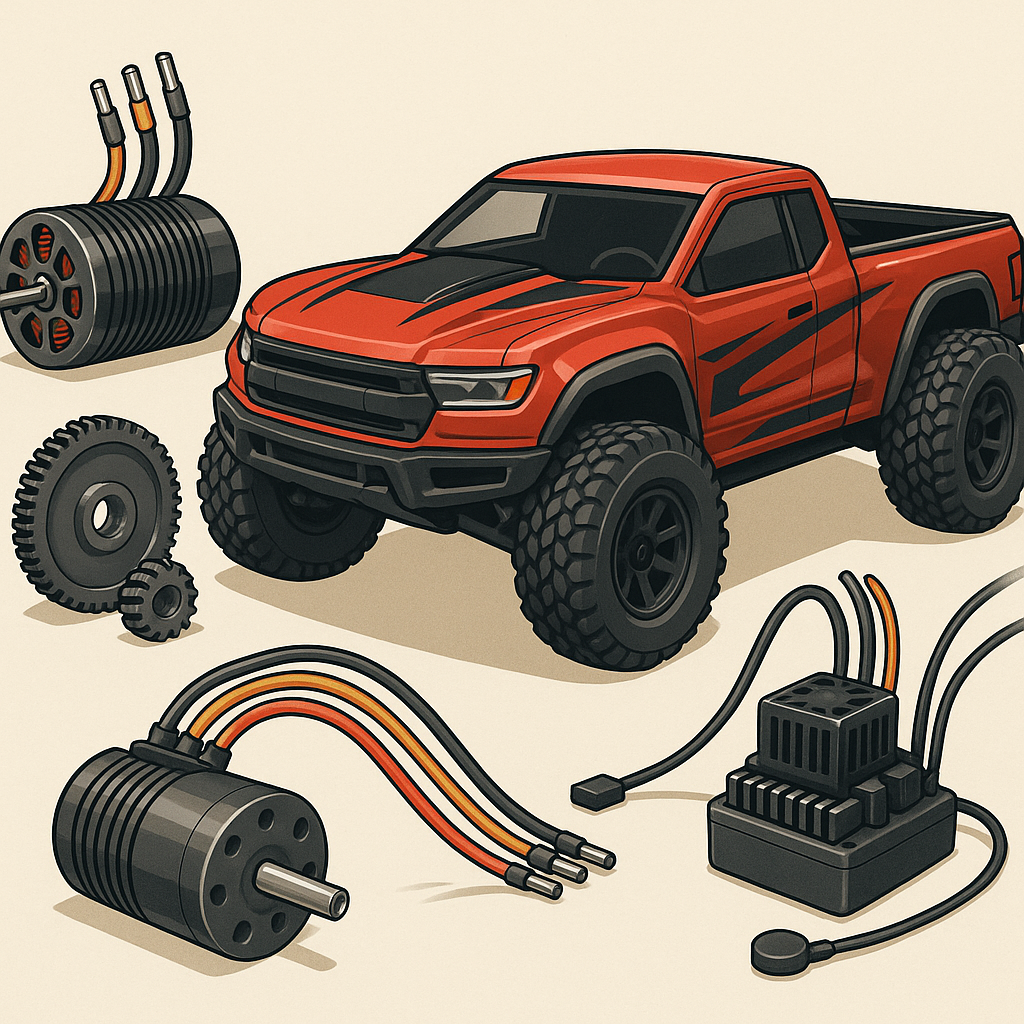
Start with the motor because it dictates what the rest of the drive package should be, and brushless systems are the modern standard for performance and efficiency, offering higher top speeds and longer life compared with brushed motors; look at motor KV to match wheel size and battery voltage, and choose a sensored brushless motor if you want smoother low-speed control for drifting and precise acceleration behaviour.
Gearing is often where hobbyists get the performance they want without changing motors, so learn to match pinion and spur gears to your preferred driving style, noting that a higher pinion tooth count increases top speed while reducing acceleration and motor life under heavy load; for track racing choose a taller ratio for top speed on the straights, for bashing or technical courses favour a lower ratio for torque and motor longevity, and remember that changing gearing also affects battery draw and ESC temperature.
Drift tuning requires a different mindset to outright grip driving, and you will want to fit hard compound rubber or purpose-built drift tyres, soften rear suspension and increase steering throw and differential looseness to induce and maintain slides; adjust camber, toe and ride height to control how the car transitions into drift, and consider switching to a slipper clutch or a more forgiving diff to protect the drivetrain while allowing power to break traction predictably.
Traction control is an ESC feature that can help beginners by cutting throttle a fraction to prevent wheelspin, but advanced pilots may prefer to disable it, especially when drifting because traction control can fight intentional slides; when shopping look for ESCs with adjustable traction control, programmable throttle curves and braking strength so you can tune assistance levels, and pair these electronics with a good-quality radio for fine throttle and steering inputs.
Putting it all together means picking a car and components that suit your budget and goals, so if you want a simple upgrade path choose a robust chassis that accepts a range of gear ratios, a brushless motor and a programmable ESC, and match battery capacity and C rating to your motor for consistent performance and run times; for more detailed build logs, parts lists and setup examples visit WatDaFeck for practical advice written from a maker's perspective.
Follow me on: Facebook: https://www.facebook.com/watdafeck3d · Instagram: https://www.instagram.com/watdafeck3d/.
Comments
Post a Comment