RC Gliders and DLG: Practical Tips for Thermalling, Light Builds, Wing Stiffness and Discus Launches
RC Gliders and DLG: Practical Tips for Thermalling, Light Builds, Wing Stiffness and Discus Launches
Discus launch gliders and hand-launched RC soarers are hugely rewarding for hobbyists because they are simple to transport, demand fine pilot technique and reward careful tuning, and this guide collects practical tips and tricks for improving your thermalling, light builds, wing stiffness and discus launch technique.
Thermalling is the heart of soaring and learning to read the air will add minutes to every flight, not just seconds. Start by watching clouds, the behaviour of birds and the feel of the wind, because thermals usually have a core you can centre into by tightening your turn and slowing up slightly; use a variometer if you have one to confirm the core and establish consistent height gain. Keep your bank angle steady, use small corrections rather than rapid stick movements, and be prepared to change the turn direction if the lift shifts, because cores drift with the wind and you will often need to change your circling radius rather than keep hunting for the centre. Practise circling at different speeds so you know how your glider behaves in tight versus wide turns and use spoilers sparingly when you need to exit a thermal quickly.
Light builds are essential for long floaty flights, but lightness must be balanced with durability and stiffness. Choose high-quality foam or thin-ply balsa with carbon reinforcement for the wing skin and spar, and use minimal but well-placed glue to avoid adding unnecessary mass. Lightweight servos and a small receiver with a compact battery will save grams, and you can often hollow out non-structural areas of a fuselage or tailplane to strip weight without compromising strength. Paint and canopy glue can add a surprising amount of weight, so consider water-based finishes and trim the canopy attachment points; lastly, listen to your model in flight for flutter or odd noises, as these often indicate areas where you have reduced mass at the cost of structural integrity.
Wing stiffness is a critical area where clever engineering yields huge performance gains, because a wing that flexes in torsion loses lift and becomes imprecise in thermals. Achieve torsional stiffness with a carbon spar or a well-designed sandwich layup rather than simply thickening skins, because adding thickness increases weight more than stiffness. Ensure the wing root join is square and clean, and use shear webs or diagonal carbon strips to resist twisting loads; in DLGs, a thin carbon tube or rope reinforcement can help maintain pitch stiffness while keeping mass low. Check stiffness by holding the fuselage and twisting each wingtip gently to feel for play, and if you find any, add local reinforcement near the root before trimming down weight elsewhere.
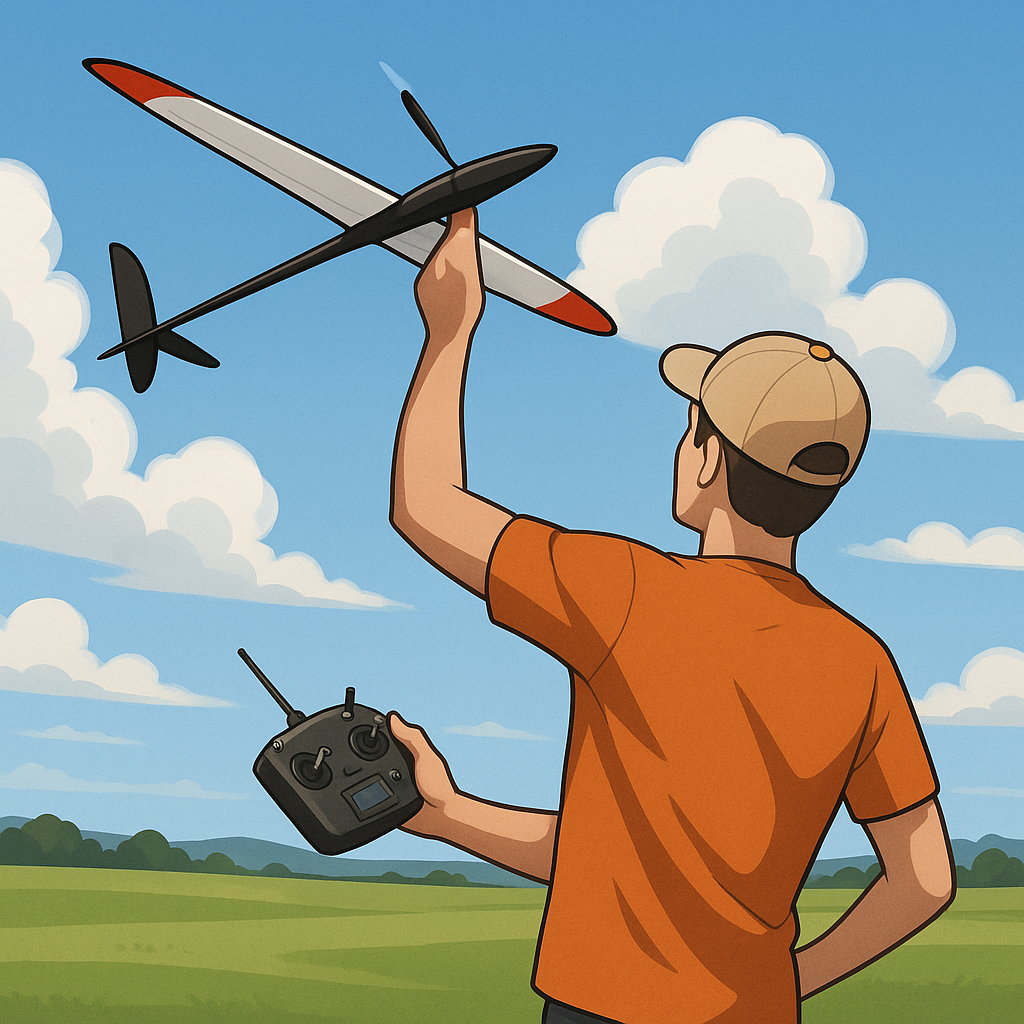
Discus launch technique demands practice and an understanding of how to transfer body torque into the model for speed and height, so start with the correct grip, step and pivot. Hold the model by the fuselage nose or a designated grip point, rotate your hips and shoulders in one smooth motion while snapping your wrist and releasing at head height to achieve a clean launch, and keep the wing level until the model has established aerodynamic lift. Practice the timing on grass with soft shoes to protect your ankles, and when you move to higher launches focus on a long follow-through and a relaxed wrist to avoid jerking the model into an unstable attitude; videoing your launch can reveal subtle faults in release angle and body motion that are hard to feel while you are learning.
Tuning and practice bring everything together, and small setup changes can make a large difference in thermalling performance and launch behaviour. Set a sensible centre of gravity slightly nose-heavy for calmer days and move it aft for strong lift, experiment with a little washout if you experience tip stalls when thermalling, and use lightweight ballast only when you need penetration in windier conditions. Work on radio programming such as gentle exponential on the ailerons and a simple flaperon mix to improve low-speed control, and always fly a few gentle circuits after any repair or build change to check behaviour. If you like hands-on guides and detailed setup notes, have a look at the resources on WatDaFeck for plans and build tips that match this sort of practical approach.
Follow me on: Facebook: https://www.facebook.com/watdafeck3d · Instagram: https://www.instagram.com/watdafeck3d/.
Comments
Post a Comment