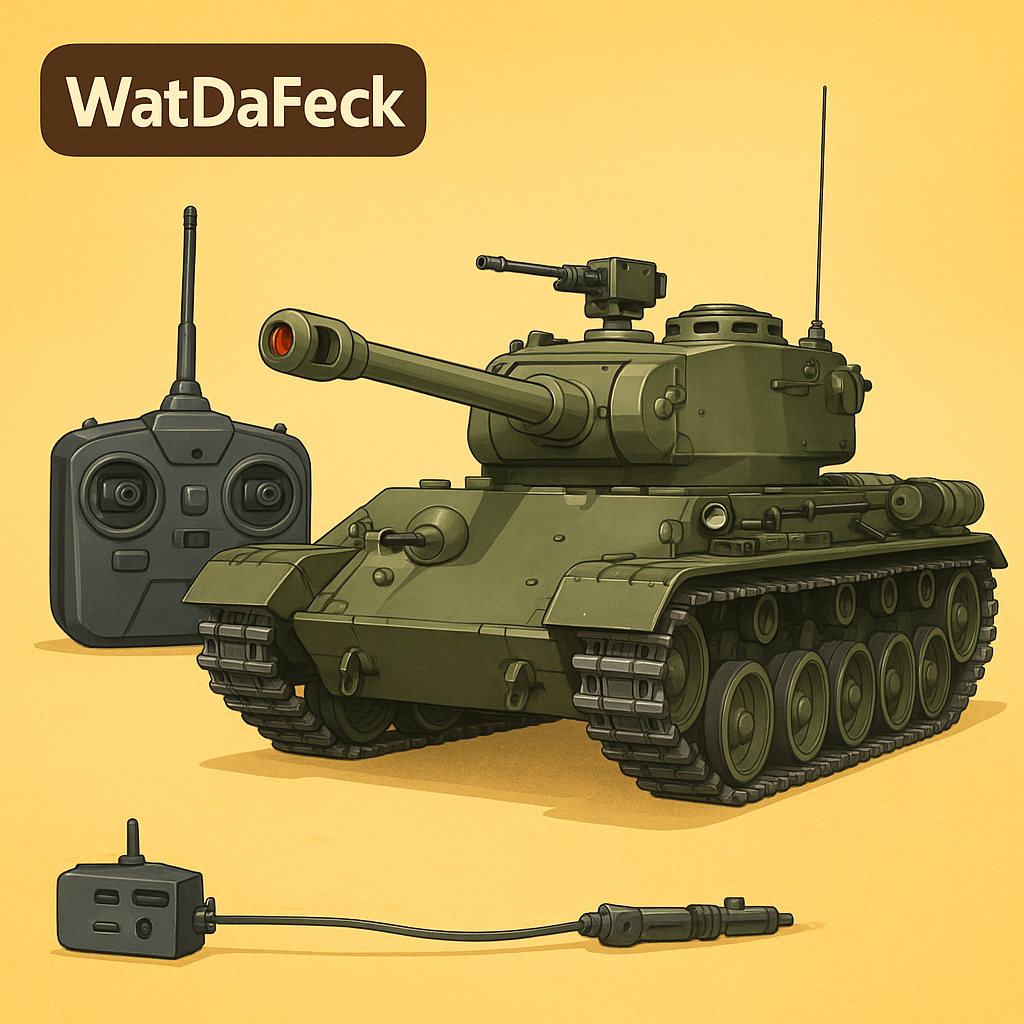
RC Tanks for Hobbyists: Practical Tips and Tricks on Tracks, Turrets, IR and Sound.
RC tanks are a wonderful blend of scale modelling, electronics and mechanical engineering, and this guide focuses on four areas that make the biggest difference to realism and battlefield performance. Metal tracks, turret stabilisation, IR battle systems and realistic sounds are the features that most impress an audience and improve the driving experience. The advice here is aimed at hobbyists who want to upgrade or build a competitive, believable machine. Read each section and decide which upgrades suit your budget and time constraints.
Metal tracks give a tank presence and durability that plastic belts cannot match, but they do require sympathetic installation and maintenance. Pick tracks that match the scale and sprocket pattern of your model and check pin fit to avoid stiff links that cause binding or premature sprocket wear. Lightly oil pins with a penetrative oil and use a dry-film lubricant on the outer surfaces to reduce muck build-up and noise. Balance track tension so the idler has a small droop while avoiding slippage under load, and consider fitting hardened drive sprockets or bushes to protect the gearbox when you increase weight and torque.
Turret stabilisation transforms a good-looking model into a convincing performer, especially when you drive across rough ground while keeping the gun on target. Two-axis stabilisation is the simplest useful upgrade, using a compact IMU and two digital servos with PID control to counter roll and pitch. Mount servos on bearings, keep the turret mass low and centred where possible, and use slip clutches or compliant couplers to protect gears from impact. Fine tuning the PID values and adding soft limits for extreme angles will stop oscillation and give smoother tracking behaviour on awkward terrain.
IR battle systems are the hobbyist equivalent of bringing a tank to life for skirmishes, and careful attention to emitter alignment and agreement protocols will avoid range and hit-registration problems. Use modulated IR with error-checking codes and assign vehicle IDs so you can distinguish teams and avoid cross-talk with other arenas. Position emitters high and unobstructed on the turret to preserve line-of-sight, and keep receivers shielded from direct sunlight where possible to reduce false negatives. Test on a variety of surfaces and distances before a match to set sensible hit distances and respawn behaviours.
Realistic sounds add a huge amount of atmosphere and can be achieved without excessive expense if you pay attention to speaker placement, power and sound sourcing. Use a purpose-built sound module or a small single-board computer to play layered audio tracks for engine, gearbox and track noise, and place a mid-woofer low in the hull to convey rumble while keeping mids and highs for the turret and command voice. Isolate the speaker from the chassis with foam mounts to avoid rattles, and use electrical filtering on motor power lines to prevent interference with radio reception.
Routine maintenance and a few finishing touches keep all these upgrades working together, and having a checklist speeds up pre-battle preparation and field repairs. Inspect metal-track pins and sprockets, re-lubricate moving parts, check servo endpoints and power distribution, and keep spare links and a small toolkit with you at events. If you prefer step-by-step build notes, parts lists and downloadable templates, see my workshop notes at watdafeck.uk. Regular practice and incremental improvements will make your RC tank more reliable and more believable on the battlefield.
Follow me on: Facebook: https://www.facebook.com/watdafeck3d · Instagram: https://www.instagram.com/watdafeck3d/.
Comments
Post a Comment